
Last updated November 17, 2026
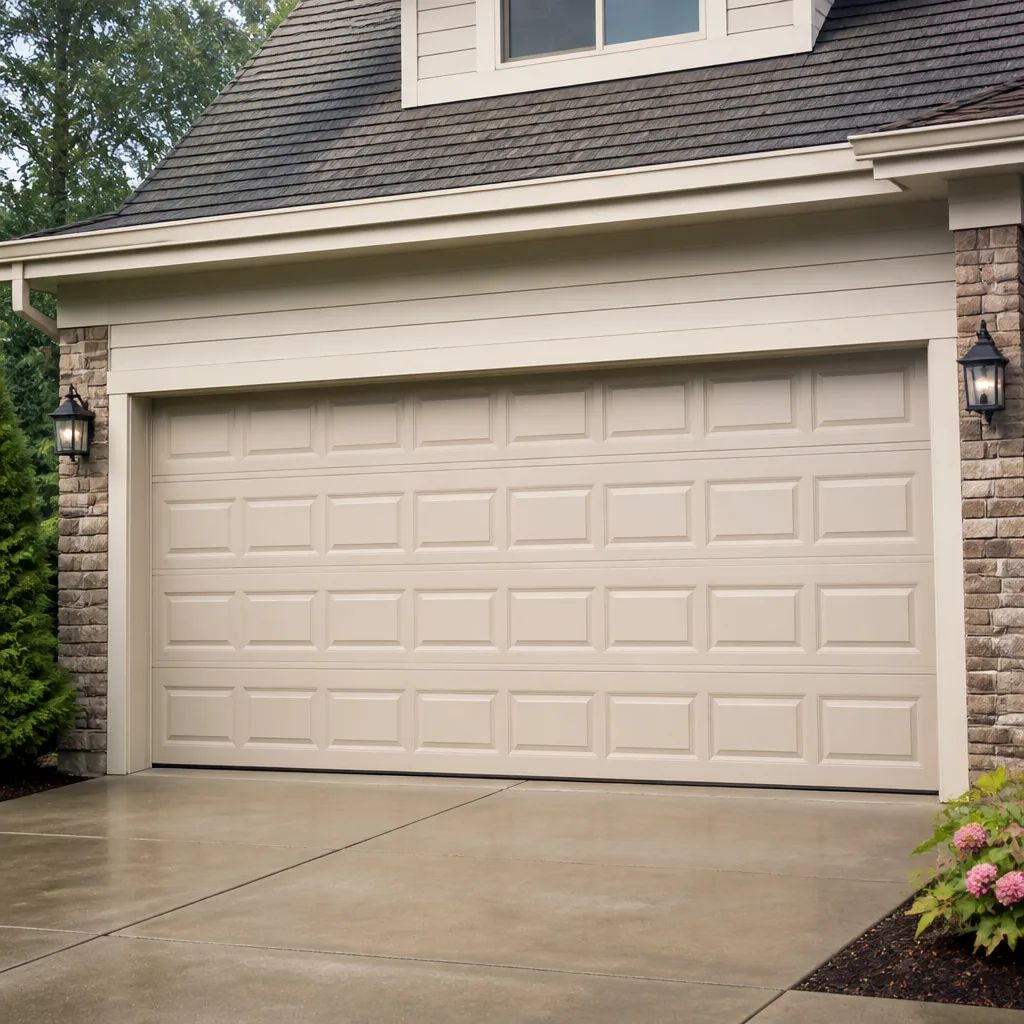 Raised-panel steel
 Carriage house
 Modern flush
 Full-view glass
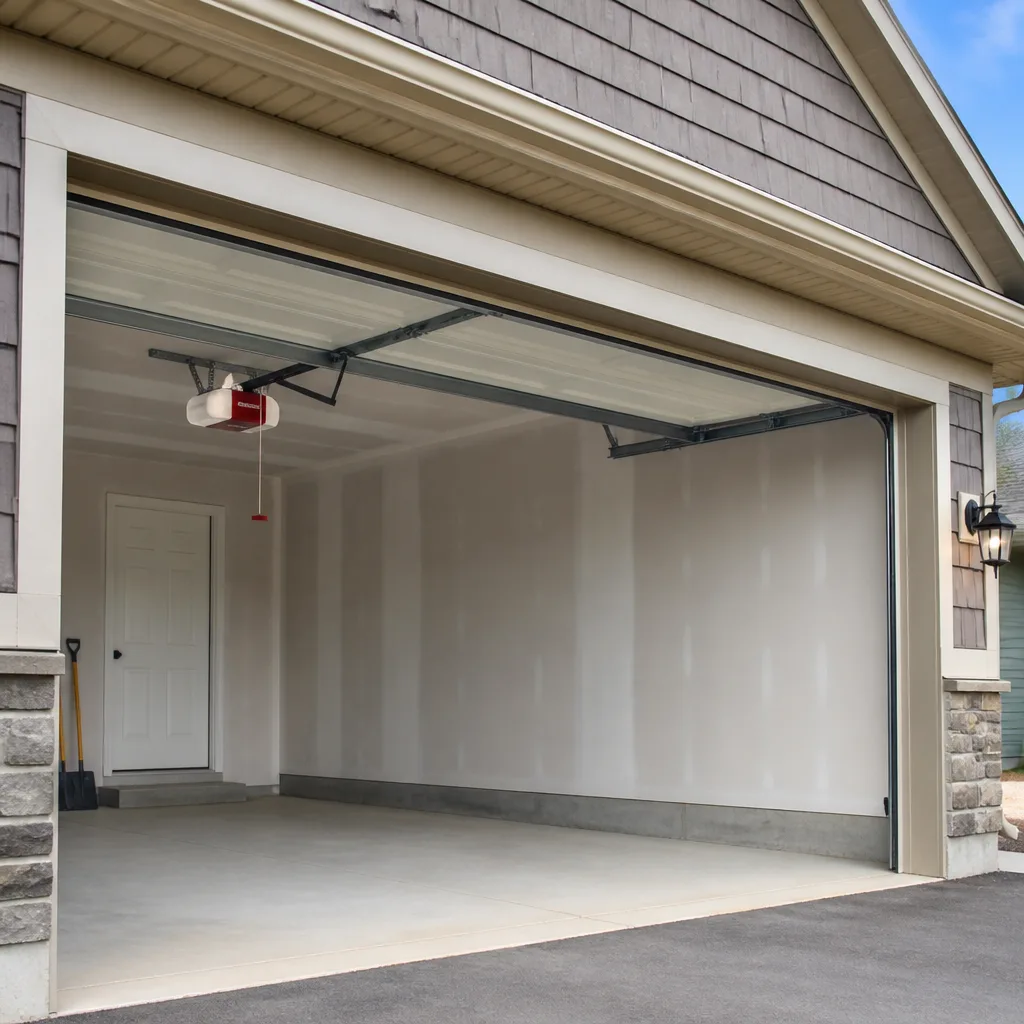 LiftMaster openers
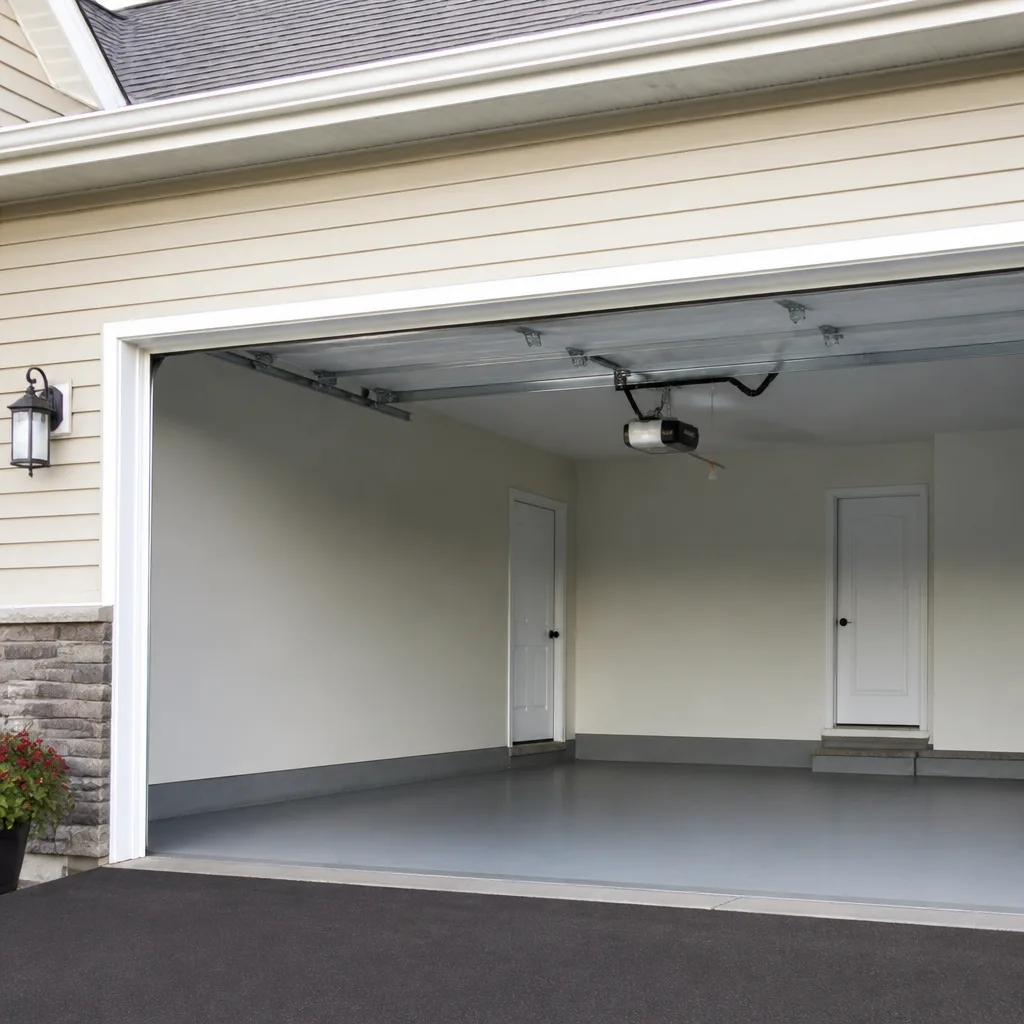 Chamberlain openers
Full 25-point door and opener safety check with every visit - springs, cables, rollers, tracks, and your LiftMaster or Chamberlain opener included
You get a price before we start. It does not change when the pro arrives.
Get your free estimateGarage Door Repair Maintenance Checklist for Mesquite Homeowners
Nine out of ten emergency calls we get could have been prevented by one thirty-minute walkthrough the homeowner never knew to do. That’s not an exaggeration to sell service – it’s what we actually see. A door that shrieks, shudders, or drops a spring on a Sunday night almost always gave warning signs for weeks. The trouble is nobody told you what to look for. So here’s the whole thing, task by task: what you’re checking, what a failing part looks and sounds like, and what happens if you ignore it another month in Mesquite heat. By the end you’ll know exactly what to do yourself and where the line sits that you should never cross.
Quick Answer
A garage door maintenance checklist for Mesquite means checking springs, rollers, cables, hinges, and weather seals once a month in summer and twice a year otherwise, lubricating moving metal parts (never the springs) with a proper garage door lubricant, and having a professional inspect the torsion system and cables annually. The tasks you can safely do yourself are visual inspection, lubrication, and balance testing; spring tension adjustment and cable replacement are jobs for a licensed technician – a door is 200 pounds riding on two springs, and that’s not a place to learn by doing.
Styles & brands we work with
- Raised-panel steel
- Carriage house
- Modern flush
- Full-view glass
- LiftMaster openers
- Chamberlain openers
Table of Contents
- Why Mesquite Doors Fail Faster Than You Think
- The Monthly Walkthrough: What to Check and What to Look For
- Three Things Mesquite Heat Does Between May and September
- What You Can Safely Do Yourself vs. What Needs a Licensed Tech
- The Lubrication Mistake That Accelerates Wear
- The Frequency Guide: Monthly, Twice a Year, and Once a Year
- Common Mistakes to Avoid
- When to Call a Professional
Why Mesquite Doors Fail Faster Than You Think
Mesquite sits in the Mojave at roughly 1,600 feet, and that means something specific for your garage door: summer highs that climb past 110°F, single-digit humidity most of the year, and a daily temperature swing in spring and fall that can run thirty degrees between dawn and afternoon. Metal expands and contracts through that swing every single day. Rubber seals dry and pull away. Lubricant cooks off metal and leaves it bare. Your door isn’t failing because it’s old – it’s failing because it works in a harsh little climate that punishes moving parts.
We’ve seen this pattern across the valley. Doors facing west and taking the full afternoon sun – common on the streets off Sandhill and around the Oasis community – wear their seals and finish faster than doors in shade. Homes near the Virgin River corridor get a touch more humidity, which works the other way: fewer dried seals but more opportunity for corrosion on bare steel hardware if the door was never lubricated properly. It’s not that Mesquite is uniquely cruel. It’s that a door here lives a different life than the same door in a mild coastal town, and the checklist has to match.
The good news: thirty minutes a month catches almost everything before it becomes an emergency. That’s the whole idea behind this guide. If you’d rather read about what a full repair involves, our garage door repair service in Mesquite page walks through the actual fixes.
The Monthly Walkthrough: What to Check and What to Look For
This is the thirty-minute walkthrough. Do it in the morning before the garage heats up, with the door closed and nobody standing under it. You’re not fixing anything here – you’re looking and listening, the way you’d eyeball your tires before a road trip. Each step tells you what a healthy part looks like and what a failing one looks like, because “inspect springs” means nothing if you don’t know what you’re looking at.
- Watch the door travel up and down once. A healthy door moves in a smooth, steady line. A failing door jerks, shudders, or lurches to one side. Any wobble points to a worn roller or a stretched cable.
- Listen. A healthy door hums. A failing one squeaks, grinding at the hinges, pops at the rollers, or thumps when it starts moving. Squealing usually means dry metal; popping usually means a hinge working loose.
- Eyeball the torsion spring above the door. A healthy spring is a solid, painted coil. A tired one shows a visible gap in the coil when the door is down, or looks visibly rusty. Never try to touch it under tension – just look.
- Check the cables on each side. They should run straight and tight along the edges. Look for fraying, kinks, or slack hanging away from the drum. Slack or frayed cable is a call-us-now item, not a someday item.
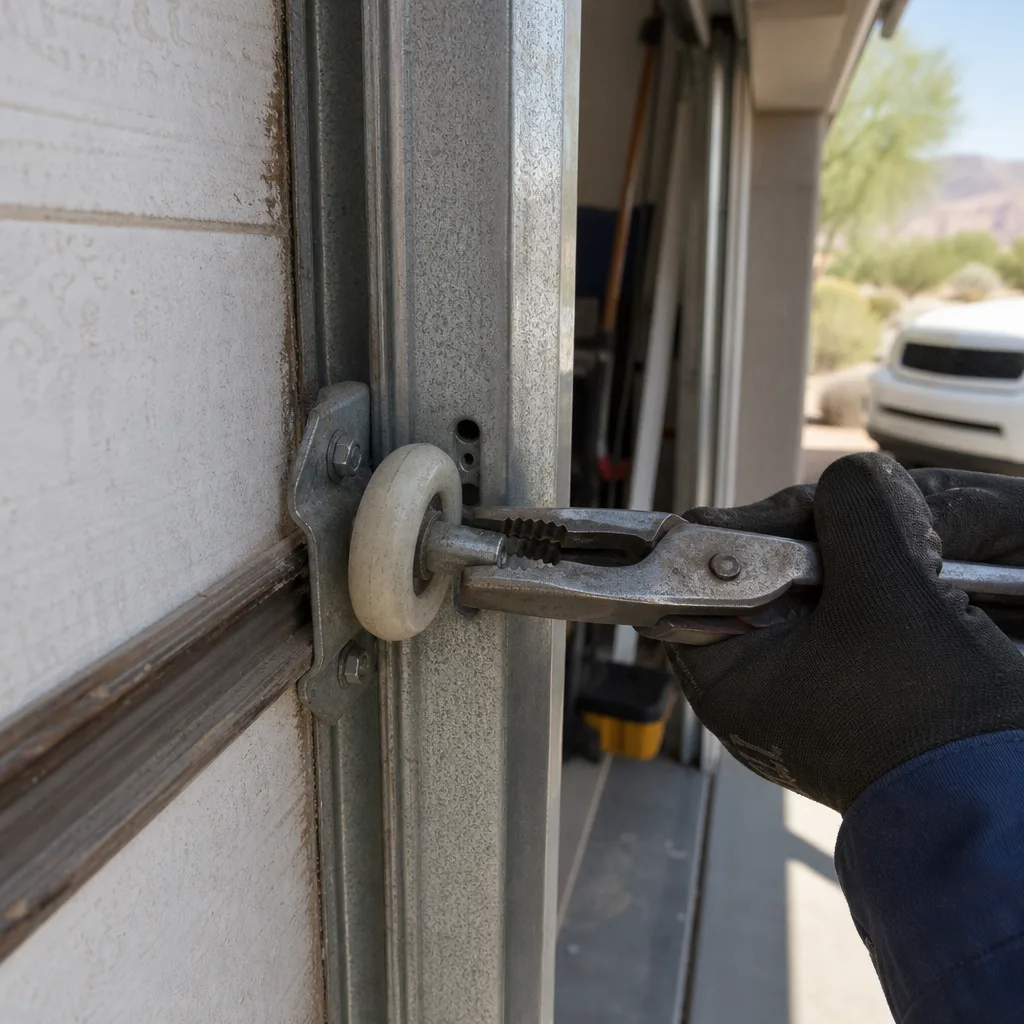
- Wiggle the rollers in their brackets. A healthy roller spins freely and sits snug. A failing one wobbles, feels flat-spotted, or has a worn bearing that grinds when you turn it by hand.
- Look at the weather seal at the bottom. Run your hand (gloved) along the bottom seal. It should be pliable and touching the floor all the way across. Dry, cracked, or gapped seal means it’s time to replace.
- Test the safety reverse. Lay a two-by-four flat under the door and close it. It must reverse on contact. This is the one safety feature to test every month – it’s what stops the door on a toy, a pet, or a child.
Write down anything that looked or sounded off. A running list is more useful than a memory, especially when you call us – describing the symptom saves a diagnostic step. For a sense of what repairs cost, our opener repair and installation page covers opener-specific fixes.
Three Things Mesquite Heat Does Between May and September
Between May and September, Mesquite does three things to a garage door that milder climates just don’t. Knowing them helps you spot trouble before it strands you.
Seal shrinkage
The rubber bottom seal and the side weather strip dry out and pull back from the door frame. You’ll see daylight at the corners or feel a breeze through a closed door. That gap lets dust, insects, and Mojave heat into the garage, and it makes the door work harder to seal. A shrunk seal is a cheap, fast replacement – but ignored, it lets dust into the bottom bracket and accelerates roller wear too.
Roller warp
The nylon or steel rollers take the full afternoon sun on west-facing doors and expand, then cool overnight and contract. Over a season that warp flattens the roller’s bearing surface, so the door starts to rumble or hang up on one side. You can feel a flat spot by spinning a roller by hand – it’ll catch on a cycle instead of spinning free.
Cable stretch
Steel cables stretch under heat and constant load. A cable that was snug in April can hang with visible slack by August, and a slack cable is the setup for a sudden snap that drops the door. This is the single most important thing to check in summer, and the one you should never fix yourself – it’s under load even when the door looks down.
We see this on almost every summer tune-up. If you’ve noticed the door doing any of the three, that’s exactly the moment to get an extra set of eyes on it before it becomes a Saturday-night emergency. A new door under that same sun benefits from a quality line like Clopay or Amarr installed with the seal and hardware rated for it – see garage door installation in Mesquite for the full picture.
What You Can Safely Do Yourself vs. What Needs a Licensed Tech
We’re all for homeowners doing what they can. But there’s a line, and we draw it honestly: any part that holds the door’s weight under tension is not a homeowner job. Here’s the split.
Safe for you to do
- Visual inspection of springs, cables, and rollers (looking, not touching under load)
- Lubricating hinges, rollers, and tracks with a proper garage door lubricant
- Testing the safety reverse and the balance of the door (lift it halfway by hand and see if it holds)
- Wiping dust and grit from the tracks with a damp cloth
- Tightening the bolts on hinges and the track brackets with a basic wrench – snug only, never cranked
- Replacing the bottom weather seal on a door with a simple slide-in seal
Leave it to a licensed tech
- Adjusting torsion spring tension – a wound spring stores enough energy to break a wrist or worse
- Replacing or re-tensioning cables, which are under load even when the door is down
- Replacing a broken torsion or extension spring
- Realigning a bent track – a misaligned track carries the full weight of the door and can drop it
- Any repair on a door that won’t stay balanced when lifted halfway
Our reasoning is simple. We’ve done this for years, our technicians have up to 22 years of experience, and we still treat a wound torsion spring like what it is: a loaded gun. Someone who’s never handled one has no feel for how much energy is coiled up there. If the spring is the problem, the smart call is the cheap one. If you need a quote on a tune-up or a spring, our home page for Otto’s Garage Door Mesquite has the standing offers, including $40 off any repair over $200 and a free second opinion on any written estimate.
The Lubrication Mistake That Accelerates Wear
The one lubrication mistake we see constantly is spraying WD-40 on the torsion springs. It feels right – it’s the can under the kitchen sink – but WD-40 is a solvent, not a long-term lubricant. It cuts through old grease, thins out, and evaporates, leaving the spring drier than it started. On a steel spring in Mesquite summer heat, that’s the worst combination: bare metal plus daily expansion and contraction equals accelerated rust and fatigue.
What we use instead is a proper garage door lubricant – a white lithium or silicone-based spray, or a purpose-made garage door lube. The difference matters: those stay put, don’t attract dust, and hold up through the temperature swings. Here’s the right way to apply it:
- Start with the door closed and the power to the opener off.
- Spray lubricant on the hinges, the roller bearings, and the pivot points – a light coat, not a soak.
- Apply a thin coat to the torsion spring by spraying from a distance so you don’t hit the moving coil at close range.
- Wipe the tracks with a dry cloth – tracks should be clean and dry, not lubricated. Grease in the tracks collects grit and does more harm than good.
- Run the door up and down a couple of times to work the lubricant into the bearing surfaces.
Do this once a month in summer and once per season otherwise. Your opener – whether it’s a LiftMaster, a Genie, or any other brand – also benefits from a clean, lightly lubricated door, because a straining opener is usually telling you the door itself is stiff.
The Frequency Guide: Monthly, Twice a Year, and Once a Year
You don’t need to remember every task separately. Just match it to the calendar. In Mesquite, summer earns its own slot because heat does its own damage.
Every month (year-round, summer especially)
- Watch and listen to a full up-and-down cycle
- Test the safety reverse with a two-by-four
- Eyeball springs and cables for visible gaps, rust, or slack
- Lubricate hinges and rollers with a proper lube
Twice a year (spring and fall)
- Test the door’s balance: lift it halfway by hand; if it doesn’t hold, the springs or cables need a pro
- Tighten hinge and bracket bolts (snug, not cranked)
- Wipe down the tracks and check for dents or bends
- Inspect and replace the bottom weather seal and side weatherstrip if they’re dry or gapped
- Check the photo-eye alignment on the opener if you have one
Once a year, with a pro
- A full inspection of the torsion spring, cables, drums, and track alignment
- A cycle-life check on the springs – this is what we mean when we say we count spring cycles the way you count tire miles
- Opener force and travel adjustment, plus a check on the safety sensors
That annual pro inspection is the cheapest insurance you can buy on a garage door. It catches the issue while it’s still a tune-up instead of a Sunday-night emergency. If you want to know what the door will need down the road, an inspection gives you a written, honest picture – and no trip charge inside the county.
Common Mistakes to Avoid
- Spraying WD-40 on the springs. It strips the lubricant and leaves the metal dry – use a proper garage door lube instead, and use it on the springs and hinges, not the tracks.
- Greasing the tracks. Tracks should be clean and dry. Grease and grit turn a smooth track into a grinding one, especially with Mesquite dust blowing in.
- Ignoring a wobble or a squeal until it’s a fall. A door that shudders or squeals is telling you a roller or hinge is going. Fix it at the squeak, not the crash.
- Force-lifting a door that won’t stay up by hand. If the door won’t hold halfway, the springs or cables are the problem – forcing it is how people get hurt.
- Adjusting a torsion spring to save a service call. This is the one mistake that regularly sends homeowners to the emergency room. Don’t.
- Skipping the annual inspection because the door “seems fine.” A door can seem fine right up to the moment a fatigue-cracked spring lets go – and it always lets go at the worst time, usually with the car sealed inside.
- Letting a west-facing seal dry out all summer. A shrunk bottom seal lets heat and dust in, and it works the whole door harder. Replace it early, not after the first cold snap.
When to Call a Professional
Call us when the door won’t stay balanced at the halfway point, when you see slack or fraying in a cable, when a spring shows a visible gap or rust, when the door shudders, pops, or hangs on one side, when the opener strains to move the door, or when the safety reverse fails the two-by-four test. Any of those mean the door is telling you it’s not safe to keep using until someone looks at it. Don’t wait for a Sunday-night emergency – a phone call now is cheaper than a dropped door later. Call Otto’s Garage Door Mesquite at (844) 320-6569 for a free estimate – a live person answers, we quote on the call, and the price holds when we arrive.
See the difference
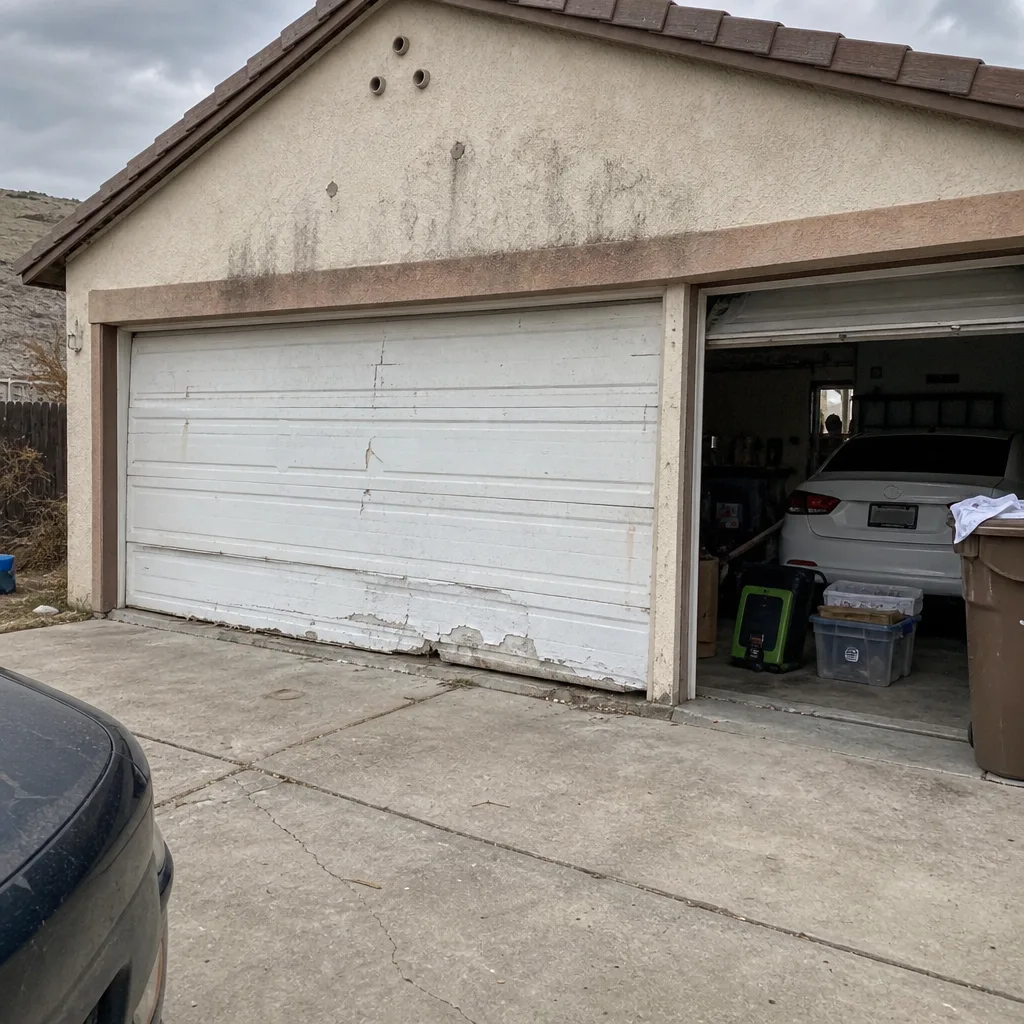 Before
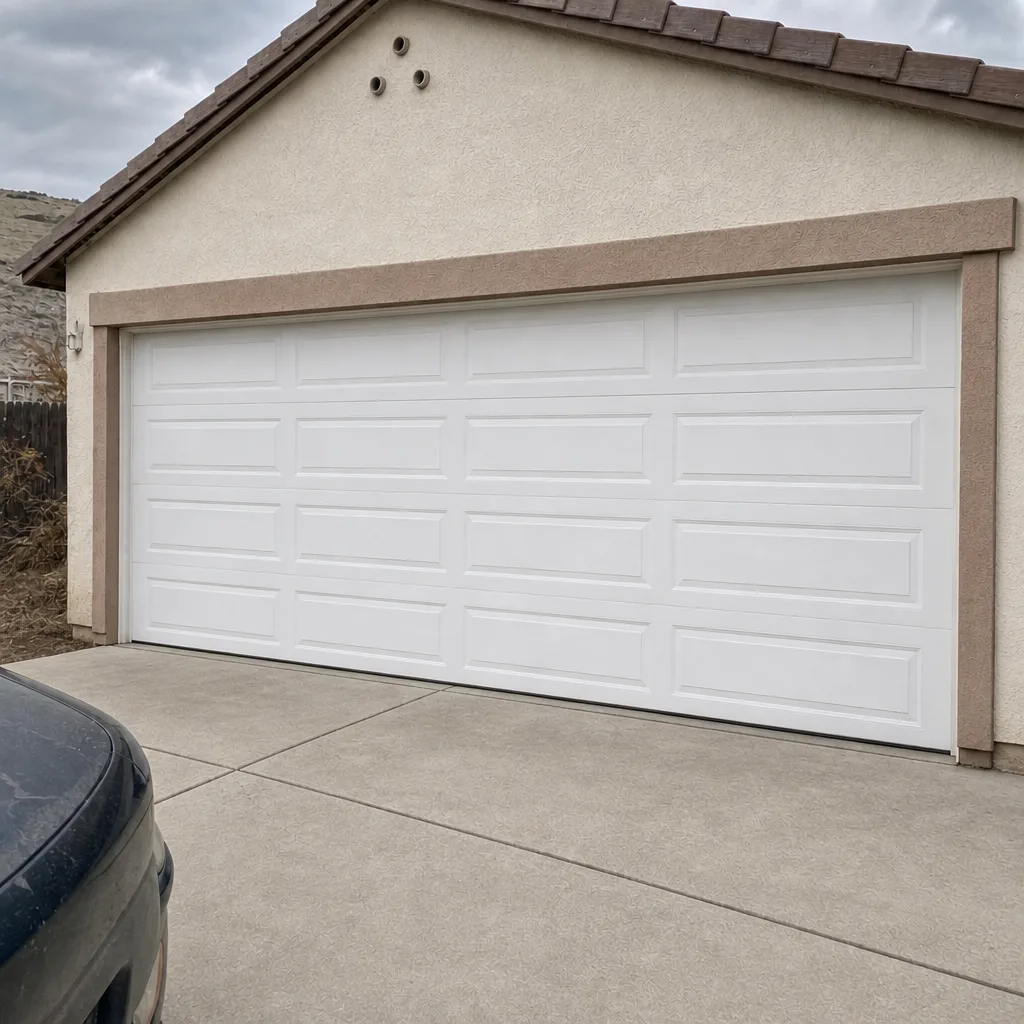 After
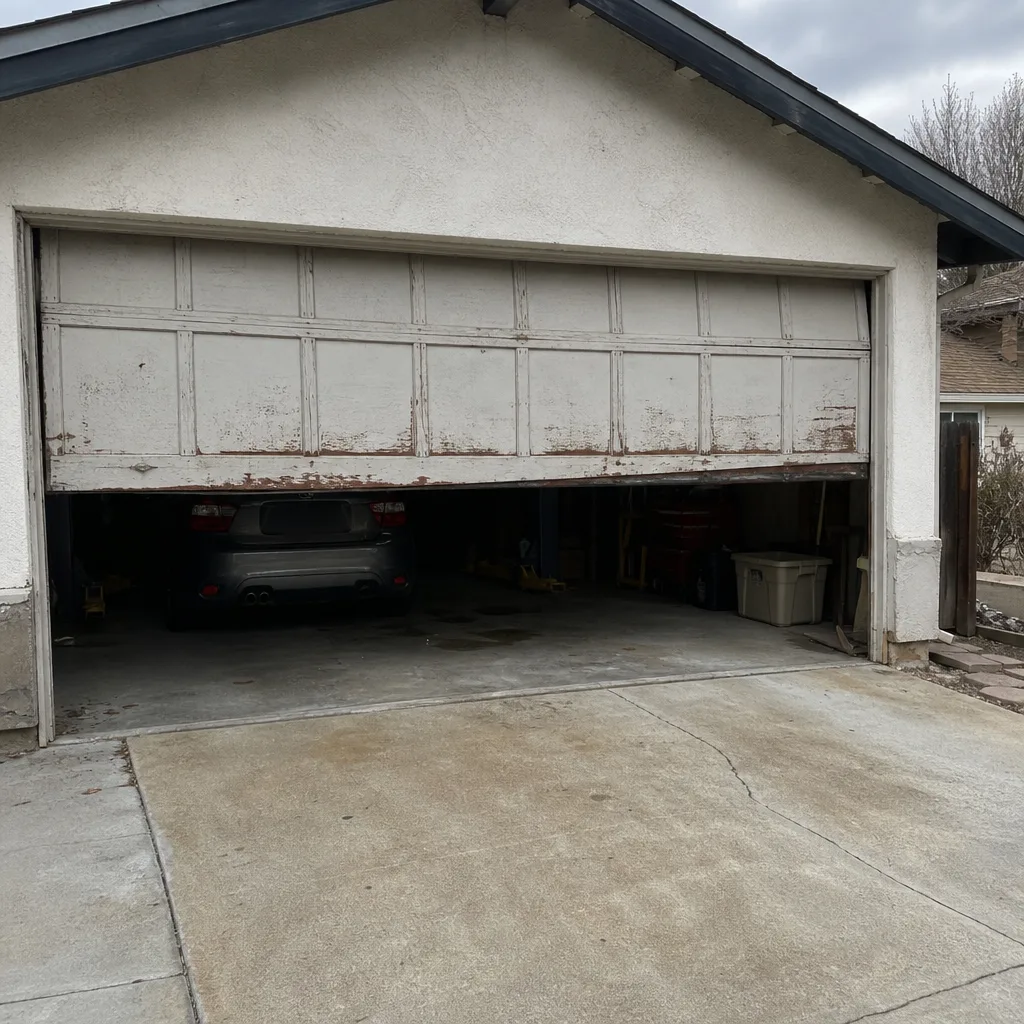 Before
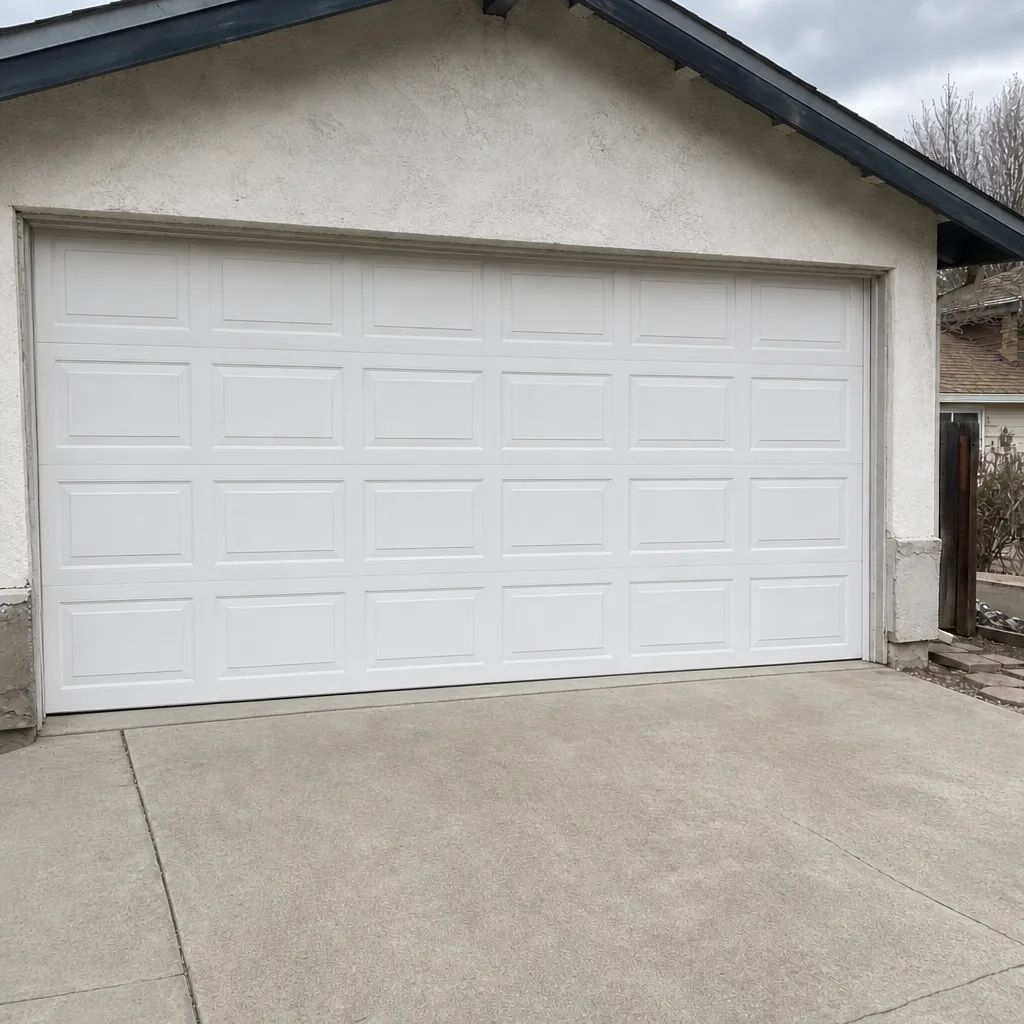 After
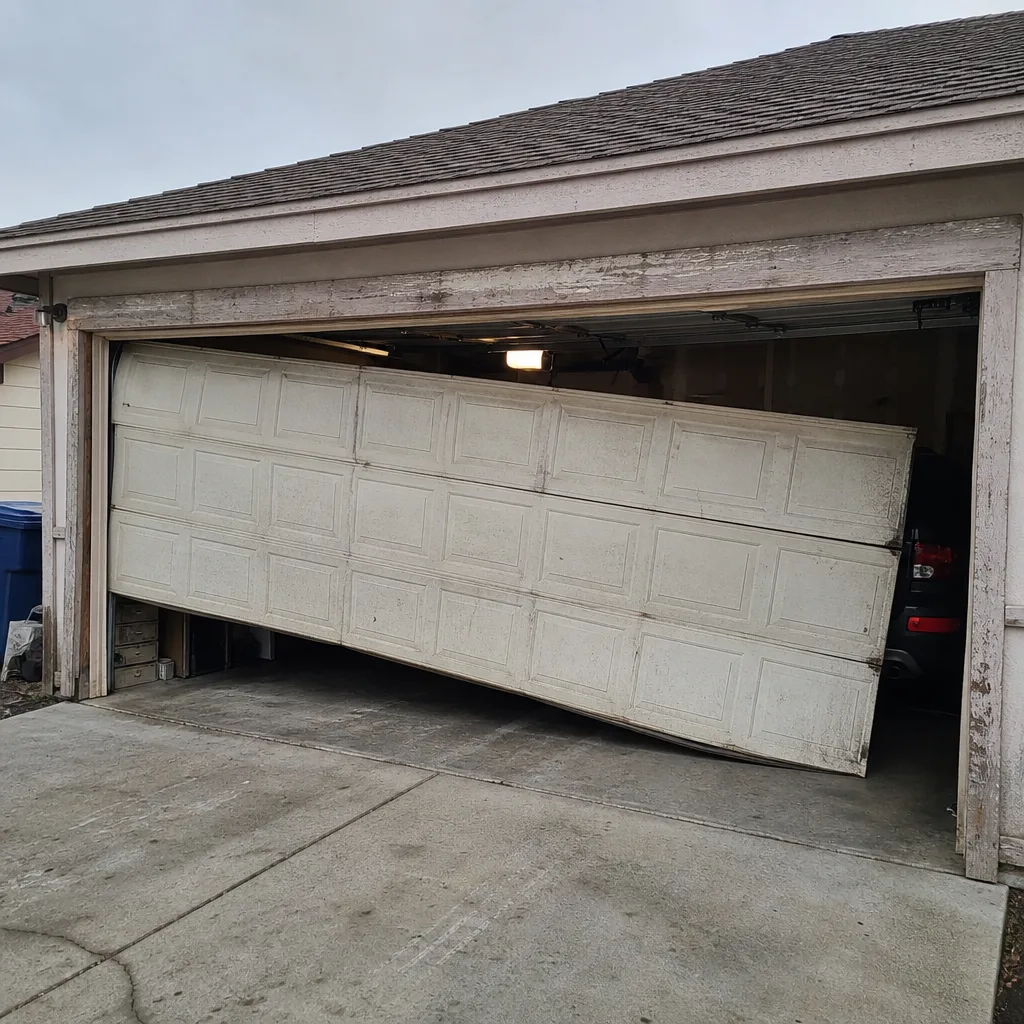 Before
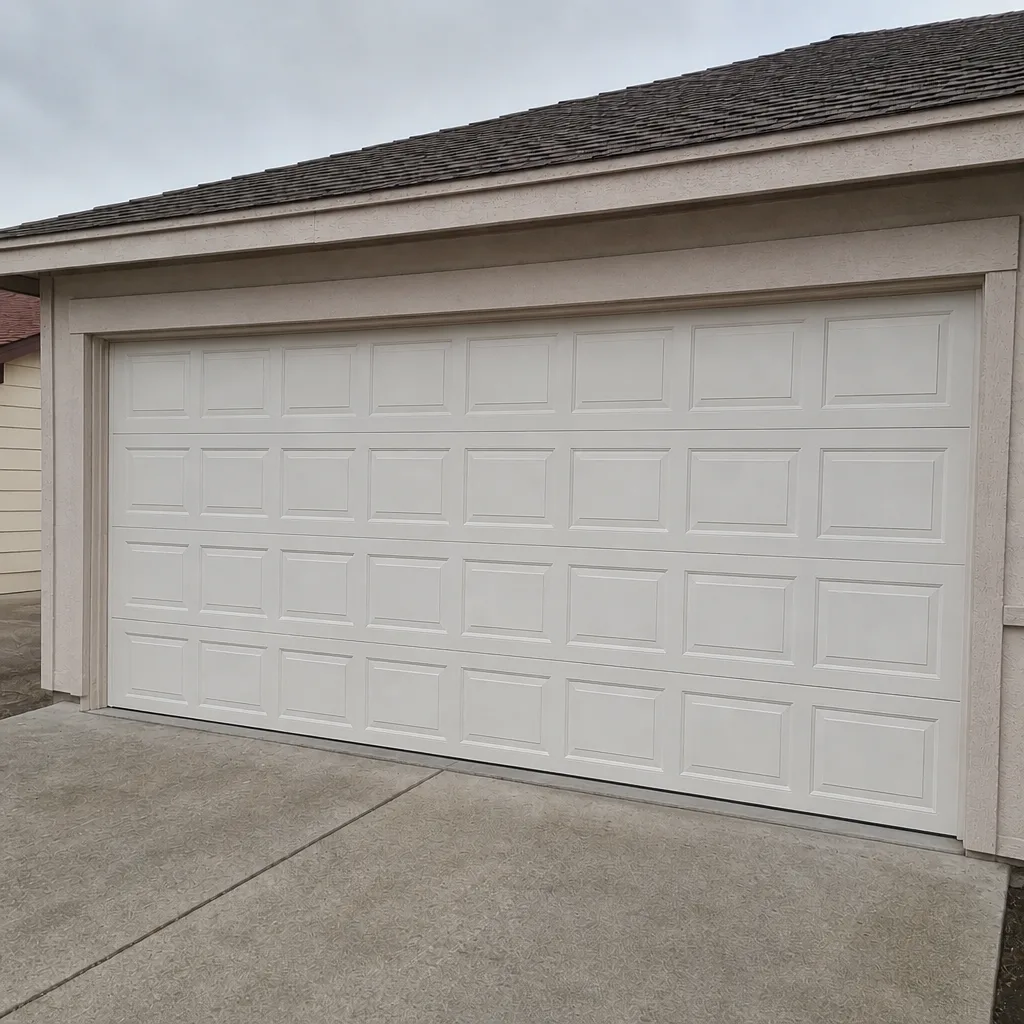 After
Frequently Asked Questions
Check the door once a month in summer and twice a year the rest of the year, with a full professional inspection once a year. Mesquite’s heat and dry air dry out seals, warp rollers, and stretch cables faster than milder climates, so the summer months deserve a monthly walkthrough.
No. A torsion spring is under extreme tension even when the door is down, and adjusting it can cause serious injury – it’s a job for a licensed technician. Visual inspection is safe; hands-on adjustment is not.
Use a proper garage door lubricant – white lithium or silicone-based – on hinges, rollers, and the springs. Don’t use WD-40 on the springs; it’s a solvent that strips the lube and leaves the metal dry.
Usually dry metal. Heat cooks off the lubricant and the rollers and hinges start to squeal and pop. A proper lubrication pass on the hinges, rollers, and spring fixes most of it – if the noise is a rumble or a bang, that’s a roller or a cable, and it needs a pro.
Look for a visible gap in the coil when the door is down, rust on the spring, or a door that won’t stay balanced when lifted halfway by hand. Any of those mean it’s close to failure – get it looked at before it lets go.
Yes. A live person answers and quotes on the call, the price holds when we arrive, and there’s no trip charge inside the county. Call (844) 320-6569 for a free estimate.
The Bottom Line
A garage door maintenance checklist earns its keep only when it tells you what to look for and why. In Mesquite, the heat does three specific things – shrinks seals, warps rollers, and stretches cables – and a thirty-minute monthly walkthrough catches almost all of it before it strands you. Do the safe tasks yourself: inspect, lubricate properly, test the safety reverse, keep the tracks clean and dry. Leave the springs and cables to a licensed technician. Get the annual inspection, count your spring cycles like tire miles, and the emergency calls never happen. That’s the whole secret.
If you want a second set of eyes on your door, or a written quote before anything happens, give us a call at (844) 320-6569 for a free estimate. A live person answers around the clock – often the person who’ll be there in person.
Written by the team at Otto’s Garage Door Mesquite.