
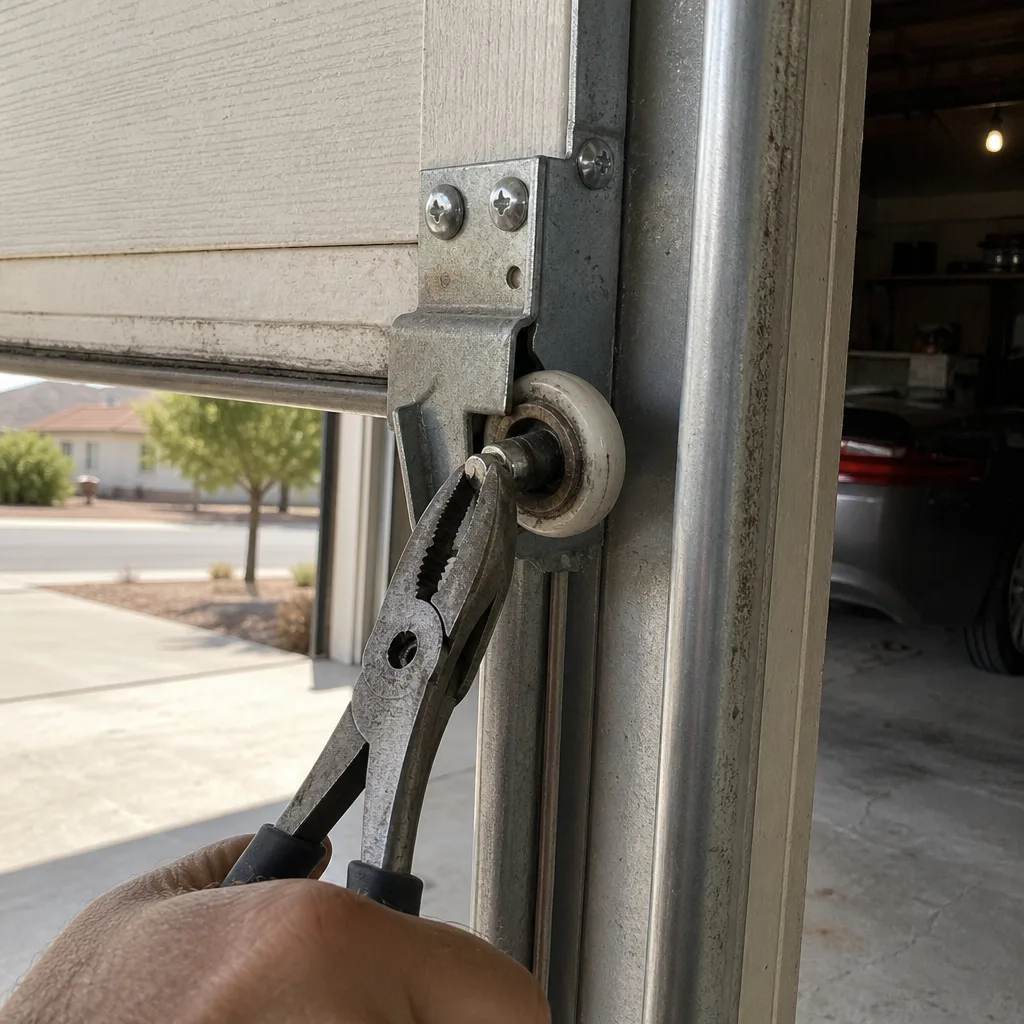
Last updated November 17, 2026
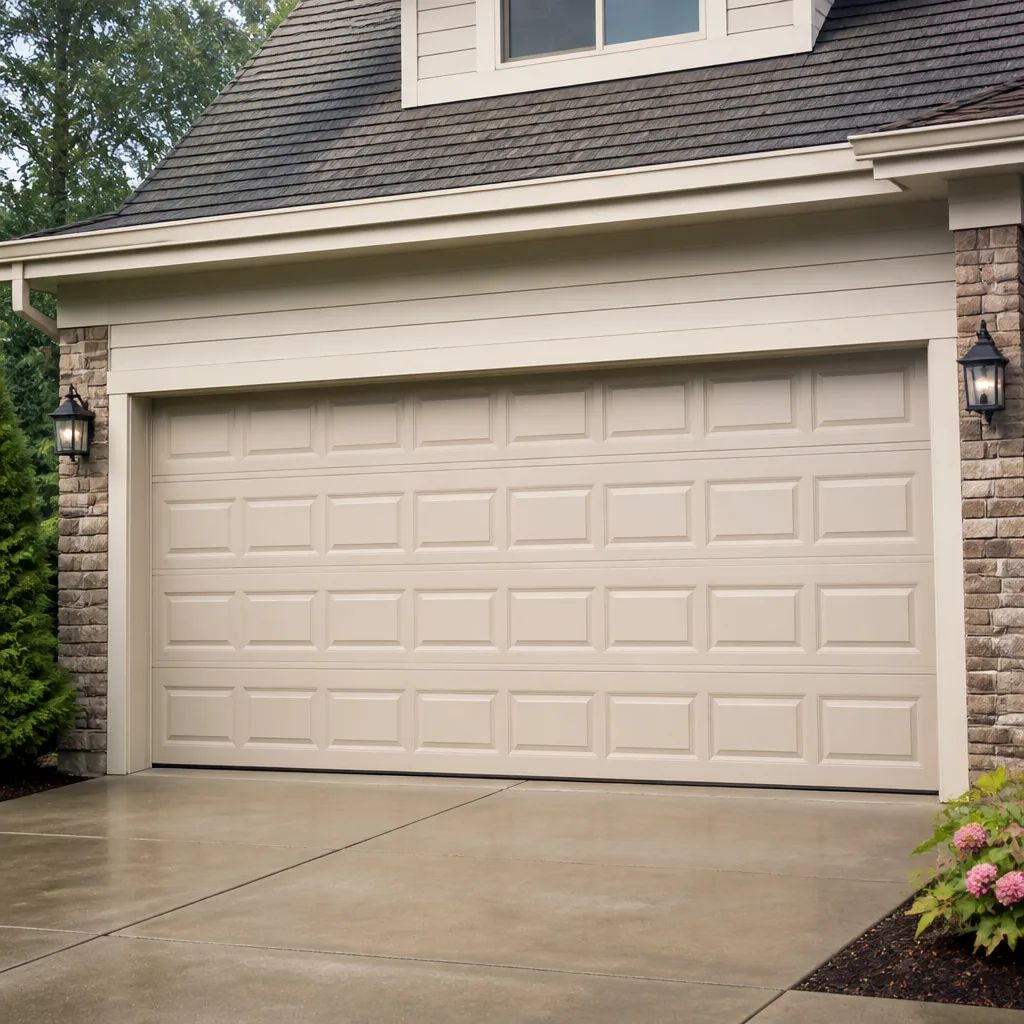 Raised-panel steel
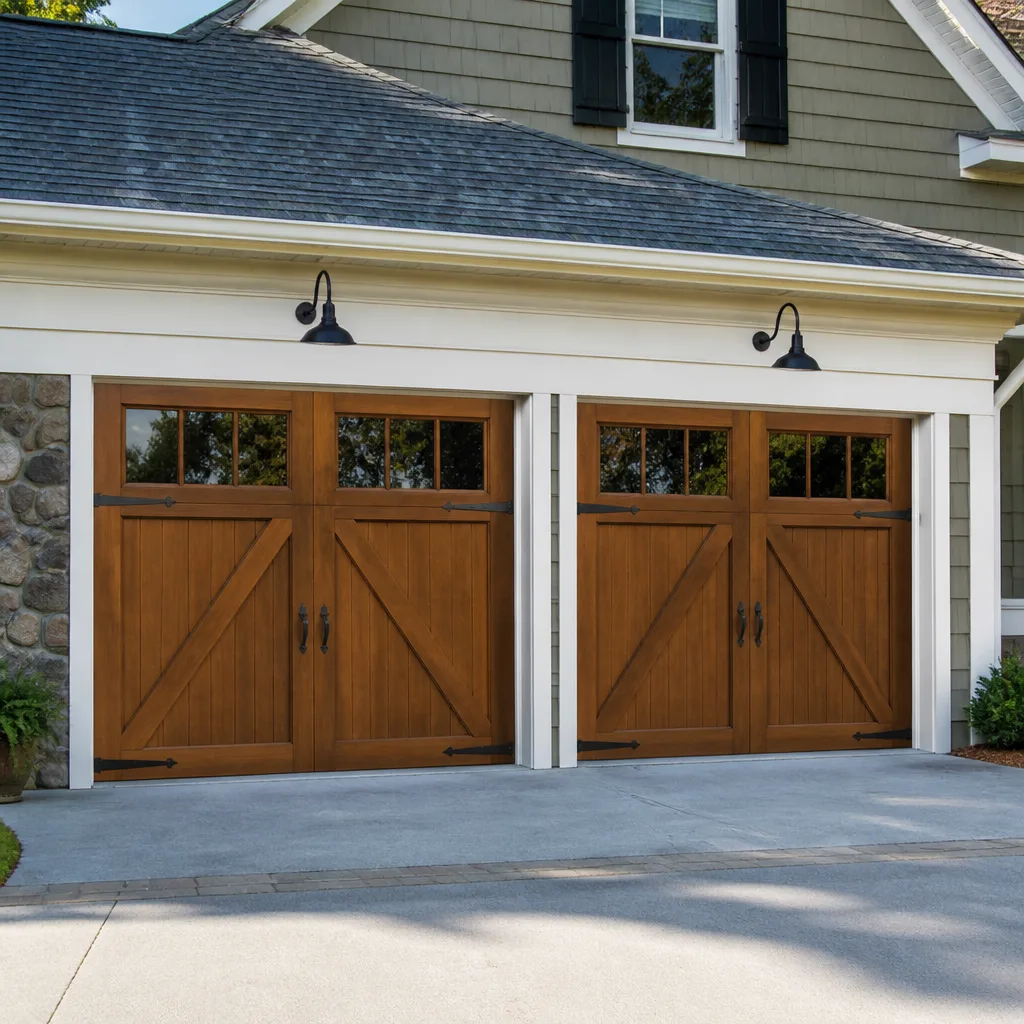 Carriage house
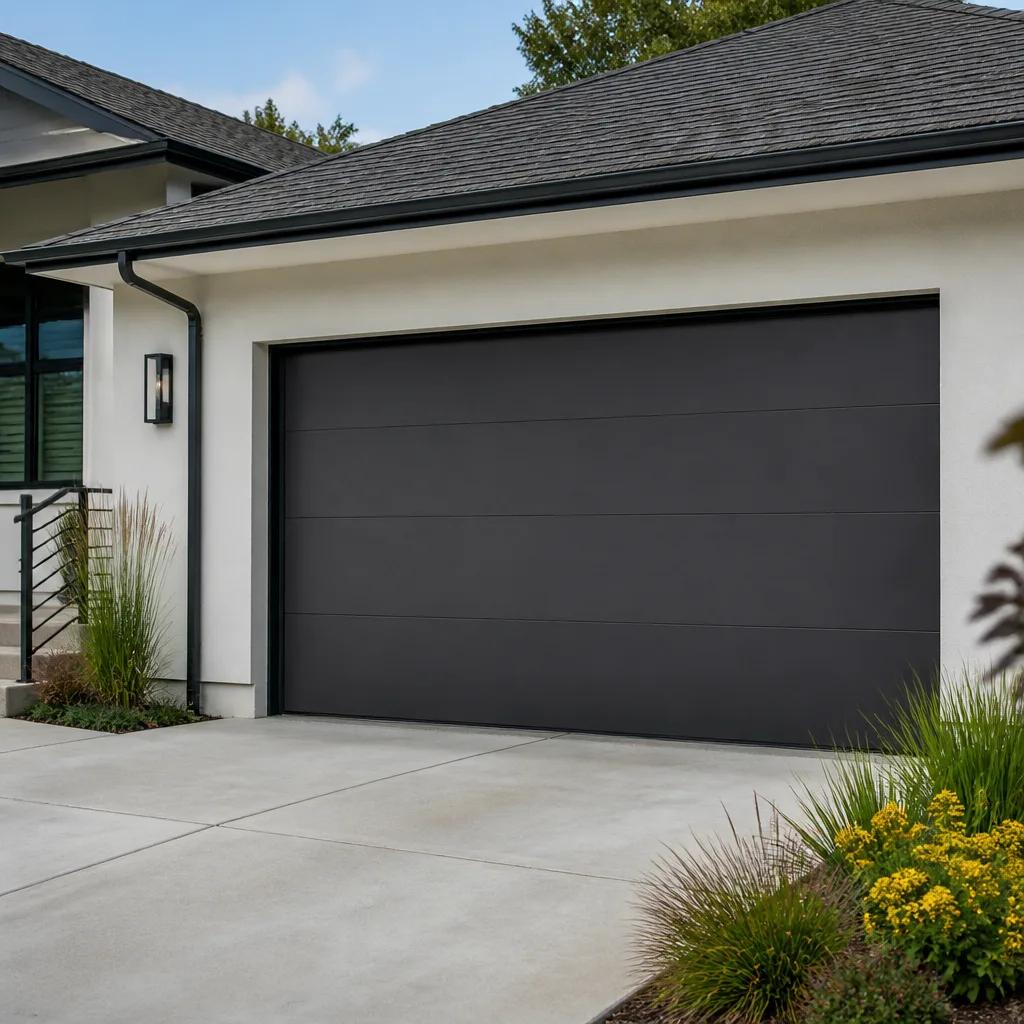 Modern flush
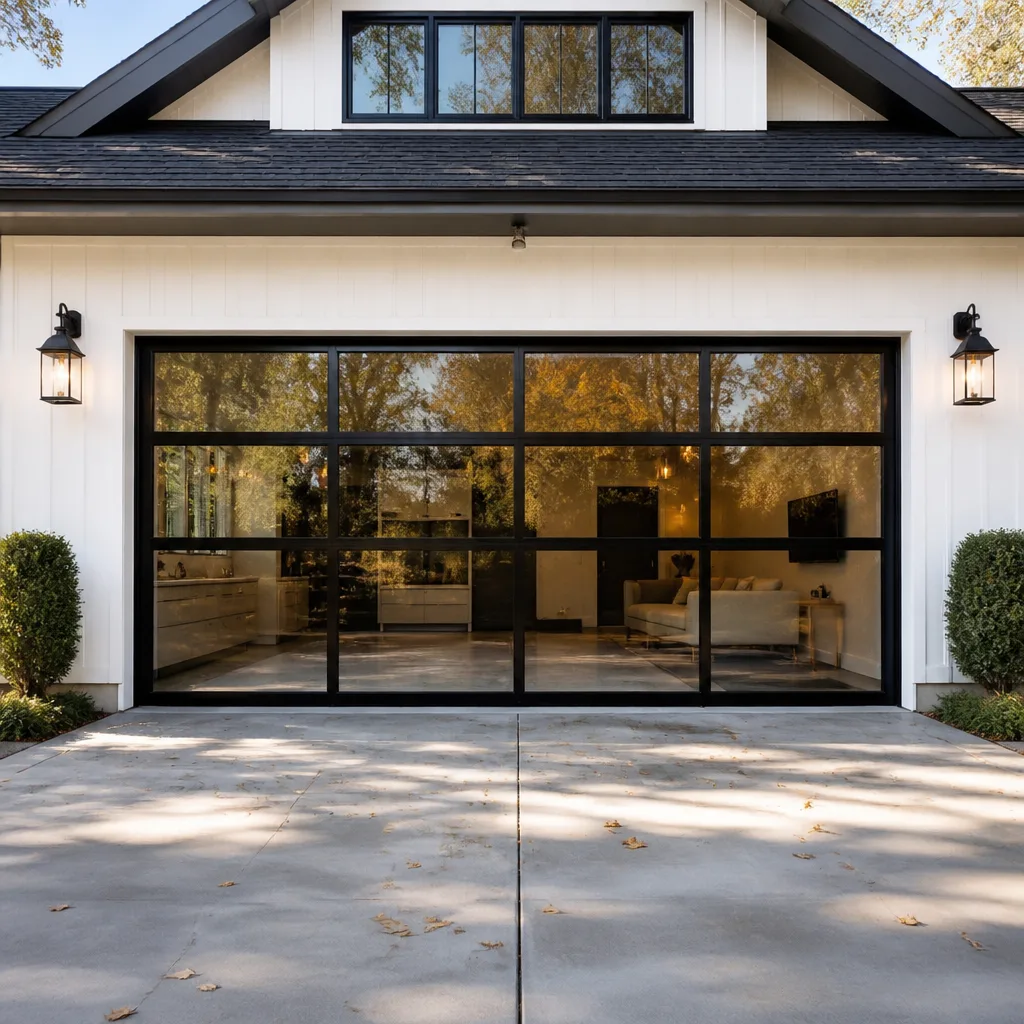 Full-view glass
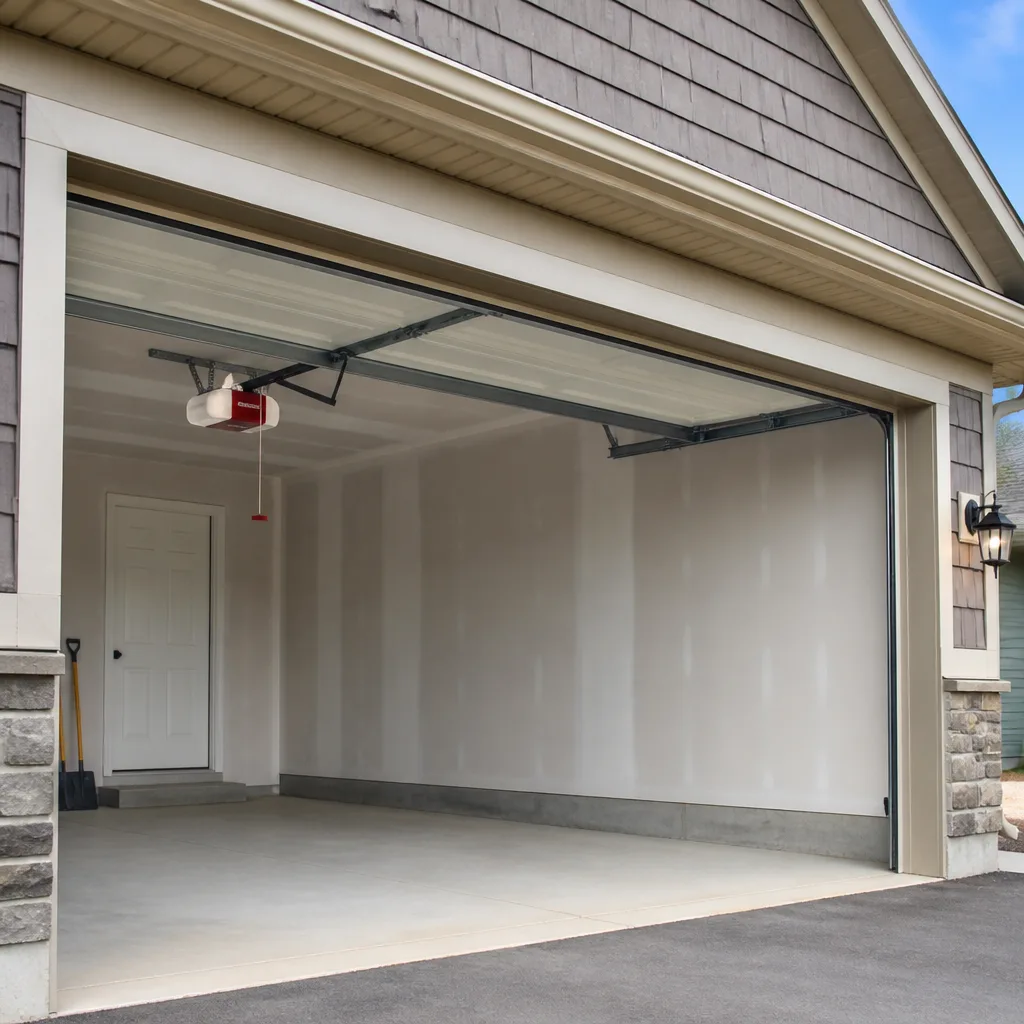 LiftMaster openers
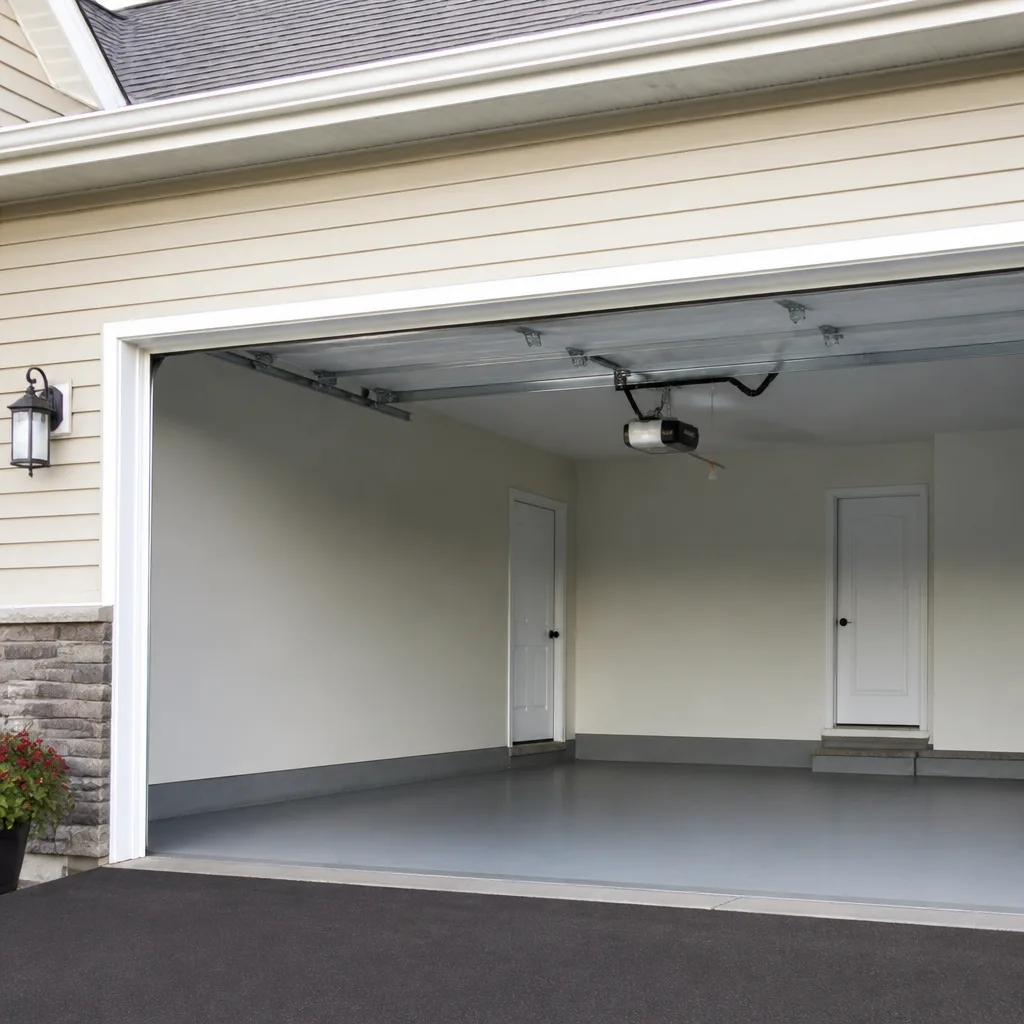 Chamberlain openers
Full 25-point door and opener safety check with every visit - springs, cables, rollers, tracks, and your LiftMaster or Chamberlain opener included
You get a price before we start. It does not change when the pro arrives.
Get your free estimateGarage Door Repair Warning Signs Every Homeowner Should Know
Here’s something most homeowners never hear until it’s too late: a garage door spring doesn’t just snap out of nowhere. It telegraphs the break for weeks first. A slightly slower climb. A louder rumble. A door that feels heavier when you lift it by hand. We’ve walked up driveways in Mesquite and called a spring failure two months out just from the sound of the door opening. The homeowner was surprised. We weren’t. Your door is talking to you right now. This guide names the sounds, movements, and patterns that actually mean something – and the ones you can safely ignore – so you can fix a cheap problem before it turns into a 10 p.m. emergency with your truck sealed inside.
Quick Answer
The most reliable warning signs of an impending garage door failure are: a door that opens noticeably slower than it used to, grinding or popping sounds during travel, visible fraying or kinks in the lift cables, one side of the door lagging behind the other, and a door that no longer lifts smoothly by hand. Any one of these means something is wearing. Two or more together means call someone before the door stops moving entirely – usually within 30 to 90 days.
Styles & brands we work with
- Raised-panel steel
- Carriage house
- Modern flush
- Full-view glass
- LiftMaster openers
- Chamberlain openers
Table of Contents
- The Four Sounds That Matter (And What Each One Means)
- Why “It Just Runs Slow Now” Is the Sign Homeowners Dismiss Most
- Where to Look: Cable Drums, Bottom Brackets, and the Torsion Bar
- The Asymmetry Test
- How Mesquite’s Climate Masks Warning Signs
- The Manual Lift Test
- What Repair Actually Costs in Mesquite
- Common Mistakes to Avoid
The Four Sounds That Matter (And What Each One Means)
Not every noise is bad news. A door humming quietly is normal. A door that sounds like a shopping cart with a bad wheel is not. The trick is matching the sound to the part. Here’s how we separate them, in plain terms, no jargon:
- A dry, squealing whine that starts soft and grows louder over a few weeks. This is usually a roller failing. The bearing inside the roller wears out and starts metal-on-metal contact inside the track. Cheap fix if caught early. Left alone, it chews the track and turns a $20 part into a $200 job.
- A sharp “pop” or “bang” you can feel through the floor. That’s spring-related. Either a spring has already broken or one is about to. If the door still works, stop using it and call. A 200-pound door riding on a cracked spring is a serious hazard, and we’ve seen them fail mid-travel with a car underneath.
- A grinding, dragging sound during the last two feet of travel. Cable fraying. The cable is starting to unwind or rub against the drum, and it’s stealing itself against metal every time you open the door. This one has a tight window – weeks, sometimes days.
- A rhythmic thumping or banging, like something hitting the door each cycle. A worn hinge or a loose bottom bracket, or occasionally a bent section of track. Less dangerous than the two spring sounds, but it announces its failure loudly before it becomes mechanical.
If you can’t tell which sound you’re hearing, that’s fine. Recording a 10-second video of the door opening is one of the most useful things you can do before you call. We can usually identify the failing part from the audio on a phone call from your driveway.
Why “It Just Runs Slow Now” Is the Sign Homeowners Dismiss Most
Here’s the one that gets skipped. A door that used to open in eight seconds and now takes twelve. Nothing’s broken. Nothing’s loud. It just… takes its time now. Homeowners figure it’s normal aging or a cold morning, and they’re usually wrong.
A door slows down because the opener is compensating for added resistance. That resistance almost always traces back to one of three things: a spring that’s lost tension, rollers that are seizing, or a track that’s been nudged out of alignment by a hit or a bad parking job. In our experience, the spring is the culprit roughly two times out of three. And a spring at the end of its life doesn’t get better. It gets slower, and slower, until one morning it snaps with the door up, the opener grinds itself to death trying to lift dead weight, and you’re stuck.
In Mesquite, this is compounded by something specific. The temperature swings here – 110 in July, down near 30 on winter nights – cycle the spring steel through expansion and contraction on a daily basis in some seasons. A marginal spring that would coast along for two more years in a coastal climate can fail inside one summer here. If your door has started acting sluggish in spring or fall when the temps are swinging, don’t wait to see if it “evens out.” Call for a free estimate before it becomes an emergency call.
Where to Look: Cable Drums, Bottom Brackets, and the Torsion Bar
You can do this inspection in about three minutes with a flashlight, and you don’t need to touch anything. Just look. Stop at anything that seems off and call.
- Cable drums (the spools at each end of the top of the door). Look for cable that’s starting to overlap itself on the drum or that’s wound unevenly. A clean drum has cable laid in neat, side-by-side coils. A drum with cable crossing over itself is telling you the door is out of balance and the cable is under uneven tension – a setup for failure.
- The lift cables themselves (the braided steel running down each side). Fraying looks like tiny broken wires poking out at a kink point. Kinks look like a bend that won’t straighten. Either one means replace the set, both sides, not just the broken one.
- The bottom brackets (where the cable attaches at the base of the door). Look for rust, cracking, or cable slipping out of its seat. This part is under constant tension. If it looks bent or cracked, stop using the door immediately and call – this is one of the few parts on a garage door that genuinely terrifies us when it fails.
- The torsion bar (the horizontal bar across the top of the door on torsion-spring setups). Look at the springs themselves for a visible gap in the coil. A broken spring has about an inch or two of space where the wire should be continuous. If you see that gap, the spring is dead.
Safety note: Do not reach up, adjust, or try to “fix” anything near a torsion spring, cable, or bottom bracket. These parts are under the kind of tension that has killed experienced people, and no homeowner should be putting hands on them. Look. Listen. Call. That’s the correct order every time.
The Asymmetry Test
Stand in your driveway and watch your door open from the front. Not from inside, from the front, ideally from about thirty feet back. Now ask yourself one question: does one side of the door reach the top before the other?
If yes, that’s not a quirk. That’s a real signal, and it matters because the answer tells you how urgent it is:
- Slight lag – under half a second, both sides still travel smooth. Usually means one torsion spring is losing tension faster than the other, or one side’s rollers are more worn. It’s a “call this week” problem, not a “turn off the door” problem. Left alone, it will get worse.
- Visible tilt – you can see the gap on one side with the naked eye. The door is out of balance. This stresses the opener, can bind the door in the track, and dramatically increases the chance the panel gets bent or the door comes down hard. Stop using the automatic opener. Call today. We’ve seen doors in this condition come off the track on a hot Mesquite afternoon; the metal expands, the track bows just enough, and the door pops out mid-travel.
- One side stopped moving entirely while the other keeps going. That’s a broken cable or a completely failed spring on one side. Stop the door, keep cars out of the way, and call for emergency service. This one doesn’t wait.
Once you know what to look for, the asymmetry test tells you more about your door’s health than any other two-second check in this guide. Make it a habit once a month.
How Mesquite’s Climate Masks Warning Signs
Garage door failures don’t happen in a vacuum. Ours happen in a very particular one: high desert, extreme heat, dry air most of the year, and a handful of nights a year cold enough to matter. Each of those plays against you, and each one is why we ask homeowners in Mesquite to check their doors on a schedule instead of waiting for a problem.
Heat expands metal and softens lubricants. By August, a torsion spring that’s been quietly losing tension all spring is running hotter, and the greased bearings in your rollers are running dry. Everything is running on borrowed time. But here’s the trick: everything moves so easily in dry, warm air that a marginal door feels fine. You don’t get the grinding hesitation you’d get in a wet climate. Then the first cold snap in November hits, the metal contracts, that oil turns to sludge, and suddenly the door is groaning and dragging. The warning was there in July; the climate just didn’t let you hear it.
Our recommendation for Mesquite homeowners: lubricate rollers, hinges, and the torsion spring with a lithium grease (not WD-40 – it’s a solvent, not a lubricant) twice a year, once in April, once in October. Do the visual inspection at the same time. And if your door was installed before 2010 and hasn’t had a spring replacement, don’t assume that “it’s been fine” means it’s fine now. Springs have a cycle life – a set number of open-and-close cycles before they’re expected to fail. We count cycles the way you count tire miles, and we can usually tell you what’s left on yours from a quick look. That’s what a professional assessment is for.
The Manual Lift Test
This is the test most homeowners haven’t been shown, and it’s the single best diagnostic for a spring that’s failing. Do it once a month. It takes thirty seconds and requires no tools.
- Park the car outside and away from the door. Do this before you start, not after.
- Disengage the opener. On most openers, including Chamberlain and Genie units, this is the red release cord or handle hanging from the trolley. Pull straight down and back.
- Lift the door by hand to about waist height. Two hands, from the bottom edge, straight up. What you’re feeling for is resistance. A door in good repair should lift with perhaps ten to fifteen pounds of pressure, feel balanced, and stay put when you let go at waist height.
- Note anything off. Too heavy to lift comfortably? Spring is losing tension or has failed on one side. Doesn’t stay put? Balance or spring issue. Hard to move in one spot? Roller or track problem.
- Lower it fully, then re-engage the opener. Pull the release cord again in the opposite direction or simply cycle the opener once and let it re-catch.
If the door fails this test, leave it disengaged and call. Every hour you run a door with a weak spring through the opener is an hour of wear on the opener’s motor, and opener failure is an expensive bonus problem you don’t want stacked on top of the spring repair you already needed.
What Repair Actually Costs in Mesquite
Homeowners ask us this all the time, and the honest answer is: it depends on the part, but here’s a realistic range you can plan around. These are Mesquite numbers, not national averages, and any reputable shop should quote you a firm price before the visit and keep it there.
- Broken torsion spring (both springs, as a set): $220 – $390 installed, depending on door size and spring type.
- Broken lift cable (both sides, as a set): $180 – $310 installed.
- Roller replacement (full set): $120 – $200 installed.
- Bottom bracket repair: $150 – $250 per side, plus cable if damaged.
- Opener repair (gear, capacitor, or logic board): $150 – $340, depending on brand and part availability.
- Opener replacement (basic belt-drive): $380 – $620 installed.
- Off-track and rebalance service: $180 – $320.
- Full tune-up (lube, tighten, adjust, safety check): $90 – $150.
What actually matters here is that the number you hear on the phone is the number on the invoice. Upfront pricing quoted before the visit and held at the door is the standard we work by, and if someone won’t quote you over the phone, that’s information. Call us at (844) 320-6569 for a free estimate. We’ll quote it, and it won’t move.
Common Mistakes to Avoid
- Greasing the track. The track should be dry. Grease collects dust and grit, and in Mesquite that dust is everywhere. Grease the rollers, hinges, and spring. Leave the track alone.
- Spraying WD-40 on everything and calling it maintenance. It’s a solvent, not a lubricant. It’ll quiet the door for a day and then dry out the bearings. Use lithium grease.
- Replacing one spring when both are tired. If one broke at 15,000 cycles, the other has the same cycles on it. Replace the set. Half the cost now is full the cost later when the second one breaks two weeks after the first.
- Assuming the opener is the problem when the door runs slow or heavy. If the opener is straining, the problem is almost never the opener. It’s the door. Fixing the door fixes the opener’s strain.
- Ignoring the manual lift test because the door works fine with the opener. The opener can power through a door that a human couldn’t lift. The opener is masking the problem, not solving it.
- Skipping the post-monsoon check. Mesquite gets a late-summer monsoon. Dust, wind, and the temperature swing that follows loosen bolts and jam tracks. A ten-minute check in early September catches most of it.
- Hiring someone with no verifiable address and no license number. You wouldn’t hire a roofer with a burner phone and no truck you can find. Don’t hire a garage door tech that way either.
See the difference
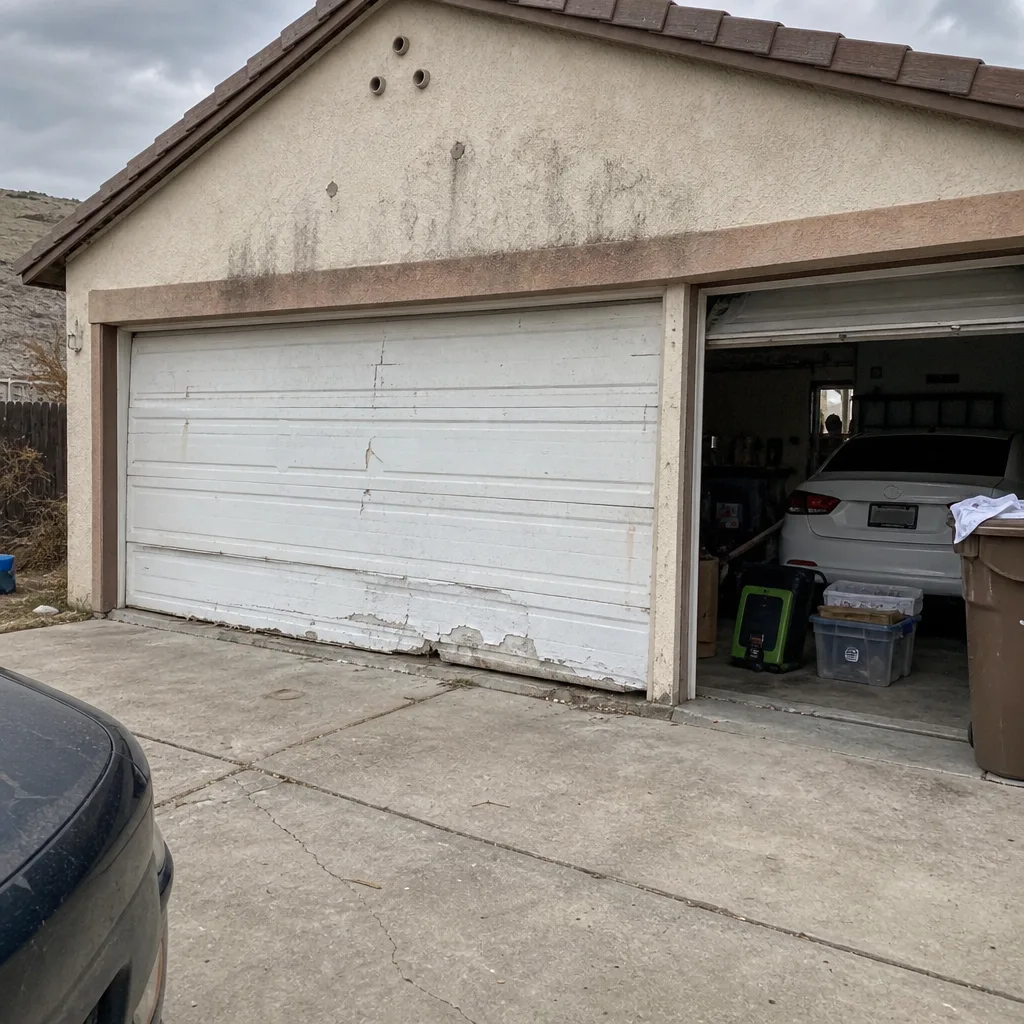 Before
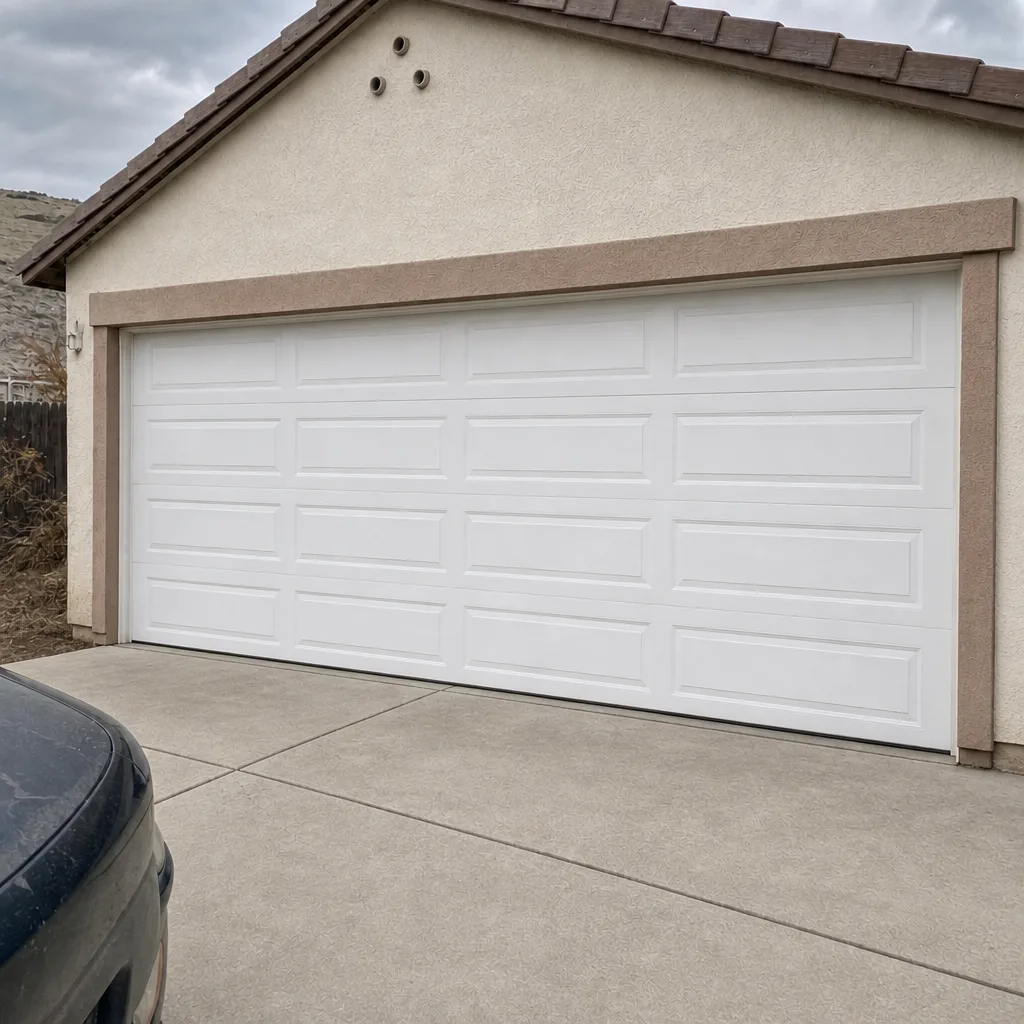 After
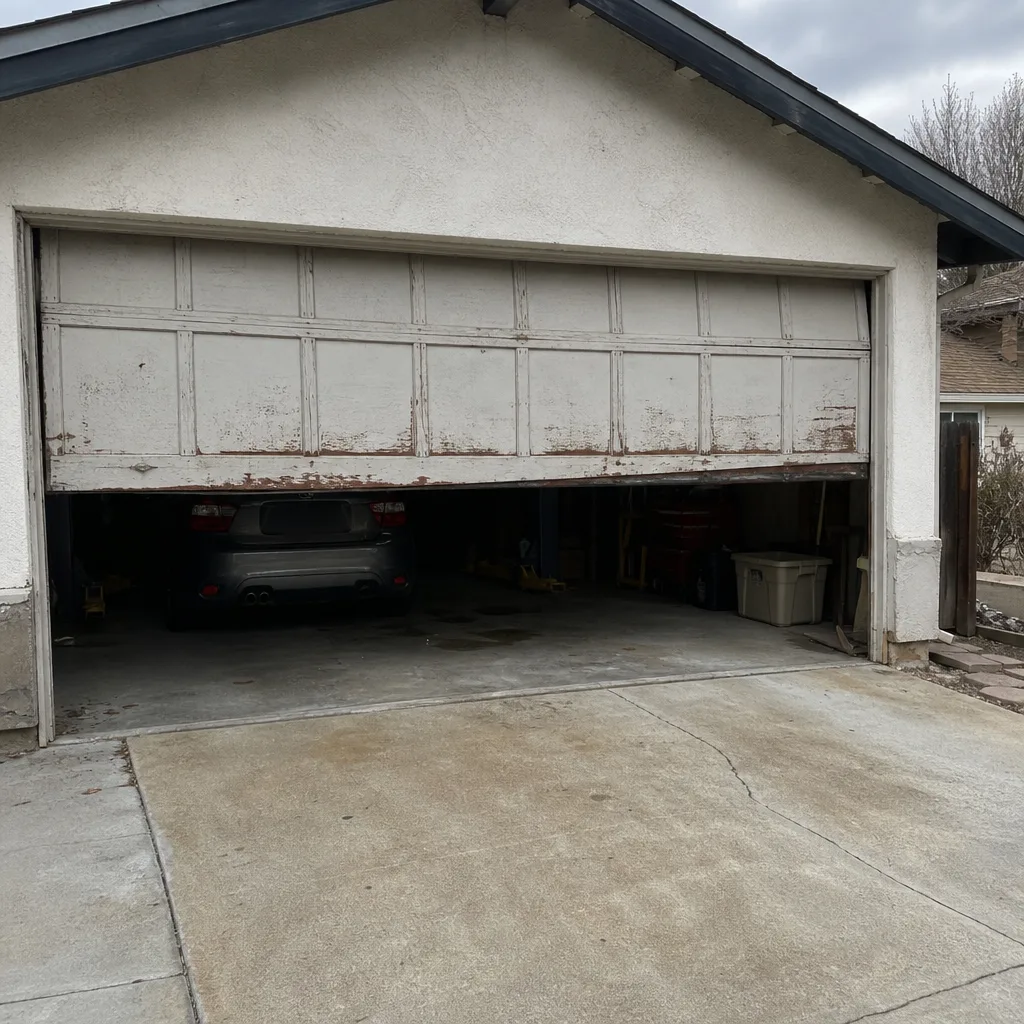 Before
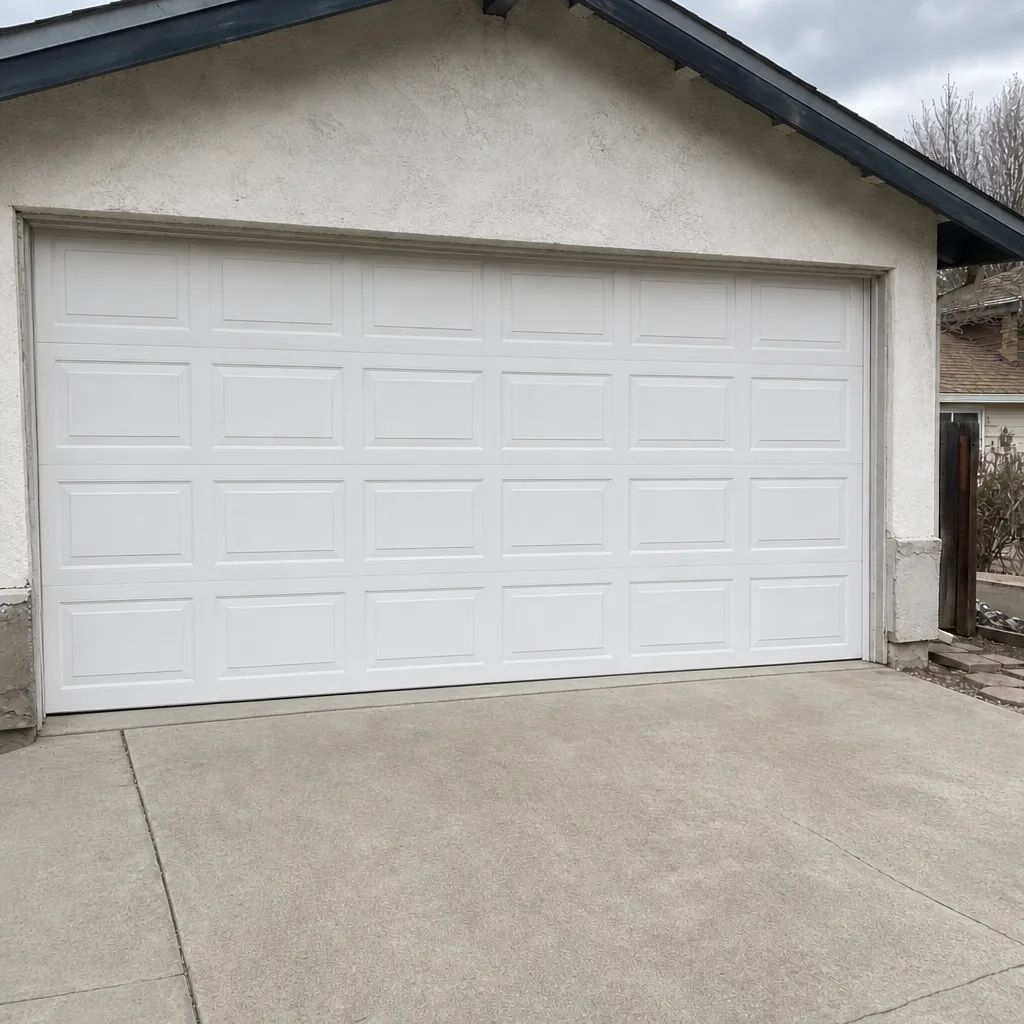 After
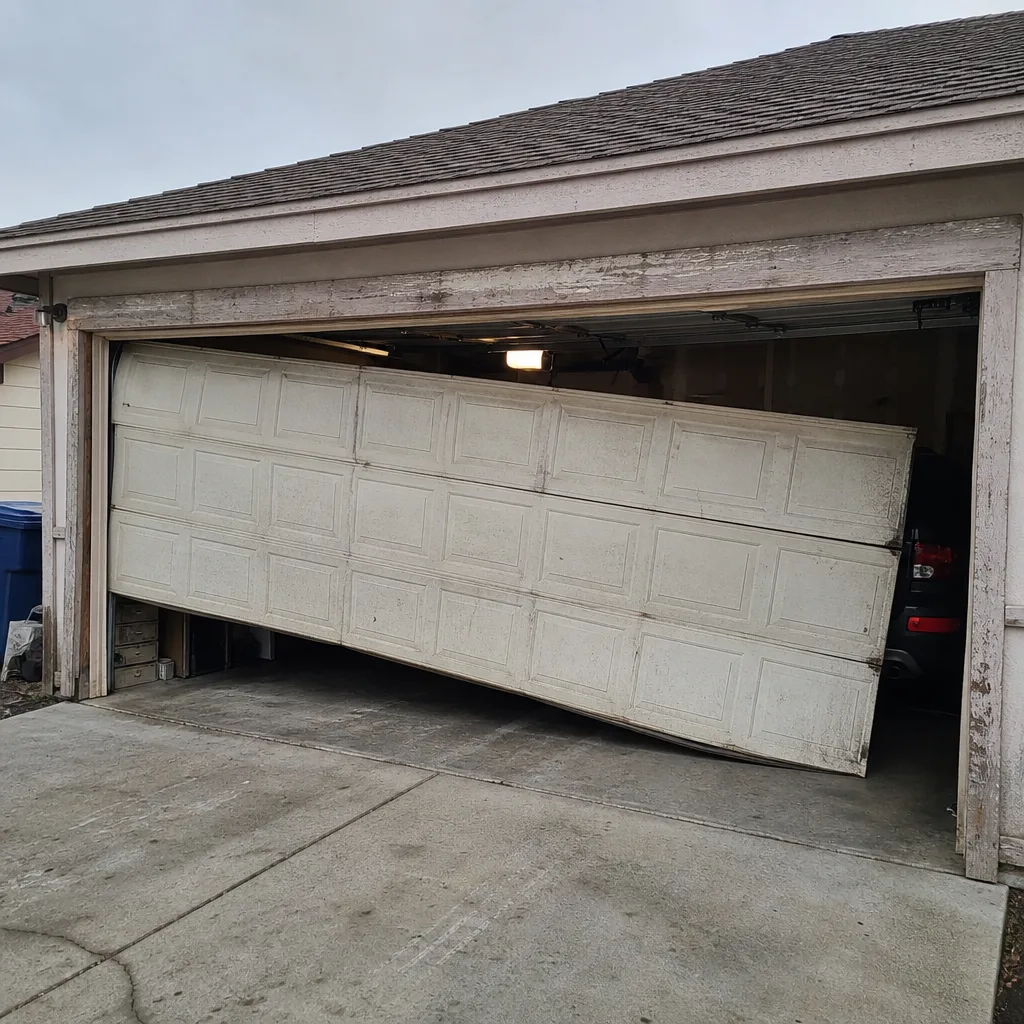 Before
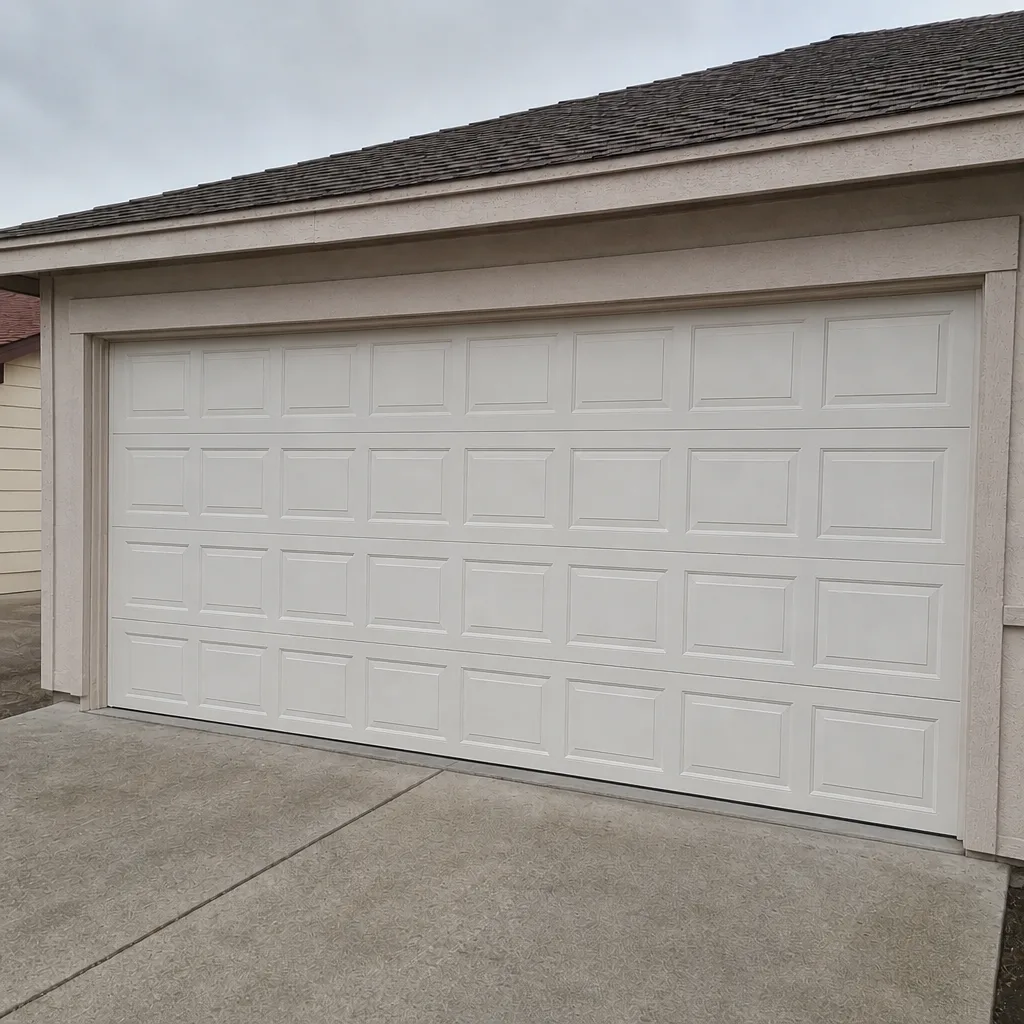 After
When to Call a Professional
Call right now if a spring has visibly broken, if a cable is dangling or badly frayed, if the door hangs crooked, or if the door has come off the track. Those are no-joke problems. Call this week – not “eventually” – if the door has slowed noticeably, if it’s making one of the four sounds we described above, if it fails the manual lift test, or if one side visibly lags behind the other. And call for a checkup before your door reaches the 10,000-cycle mark if it was installed before 2010: at that point, a spring failure is not a matter of if but when.
Otto’s Garage Door Mesquite offers free estimates in Mesquite – call (844) 320-6569. We answer the phone around the clock, including the night your spring lets go with your truck still inside. If you want to skip the phone call and read more about what we do first, here’s where to start: Otto’s Garage Door Mesquite home, or dive straight into Garage Door Repair in Mesquite, Garage Door Installation in Mesquite, and Garage Door Opener Repair & Installation in Mesquite. If you’re sorting out whether it’s the door or the opener, the opener page is where we walk through the diagnosis step by step.
Frequently Asked Questions
A standard torsion spring is rated for about 10,000 open-and-close cycles – roughly 7 to 10 years for a typical household, less in extreme climates. In Mesquite’s heat, we see them fail a couple of years earlier than that, and doors installed before 2010 are usually overdue. If you don’t know the cycle count, a visual inspection and a manual lift test will tell you where you stand. Call (844) 320-6569 for a free assessment before it fails.
Not always, but usually. A door that runs noticeably slower than it used to is most often fighting a spring that’s lost tension, but rollers seizing and tracks out of alignment cause the same symptom. The manual lift test separates them in about a minute. If the door is heavy to lift by hand, it’s the spring. Call (844) 320-6569 and we can usually narrow it down over the phone.
No. Torsion springs and lift cables are under extreme tension, and the parts that hold them can cause serious injury if worked on incorrectly. We don’t recommend any homeowner touch them, and no reputable shop will encourage it. Call a professional – the labor is modest and the alternative is not worth considering. Our line is (844) 320-6569.
Most repairs run between $120 and $390 depending on the part – a full roller set is on the low end, a spring or cable replacement in the middle, an opener part toward the top. The honest part is that the price is quoted before we arrive and doesn’t change at the door. Call (844) 320-6569 for an exact number – estimates are free and there’s no trip charge inside the county.
Yes, in most cases. A door stuck open or down is our priority call, and we answer the phone around the clock for emergencies. Call (844) 320-6569 and we’ll get someone moving. If it’s a routine tune-up or a new door install, we’ll schedule it out – that work is measured and ordered, not rushed.
Repair usually wins if the panels are sound, the track is straight, and the door is under about 20 years old. Replacement makes sense when panels are rotted or bent, when multiple parts are failing at once, or when you’re upgrading to a modern insulated door – Clopay and Amarr both make solid options for our climate. Call (844) 320-6569 for a free second opinion on any written quote you’ve got, yours or someone else’s.
The Bottom Line
Garage door failures announce themselves. They just do it quietly, in weeks not minutes. A door that’s slowed down, a door that’s started to make one of the four sounds, a cable that’s starting to fray, a bottom that’s started to tilt – every one of those is a chance to fix a small thing before it becomes a big one. Do the manual lift test once a month. Look at your drums and cables every season. Grease the parts that need it and leave the track alone. And when your door tells you something’s wrong, call someone you can verify. That’s the whole guide. The rest is just doing it.
If something in this guide sounded familiar, call us. (844) 320-6569, free estimate, upfront pricing held at the door, and the 90-Day Done Right Promise in writing on the invoice. Otto’s Garage Door Mesquite is here when your door needs us, and when it doesn’t, we’d rather you read this guide once a year, run the manual lift test, and never need to call. That’s the goal.
Written by the team at Otto’s Garage Door Mesquite.