
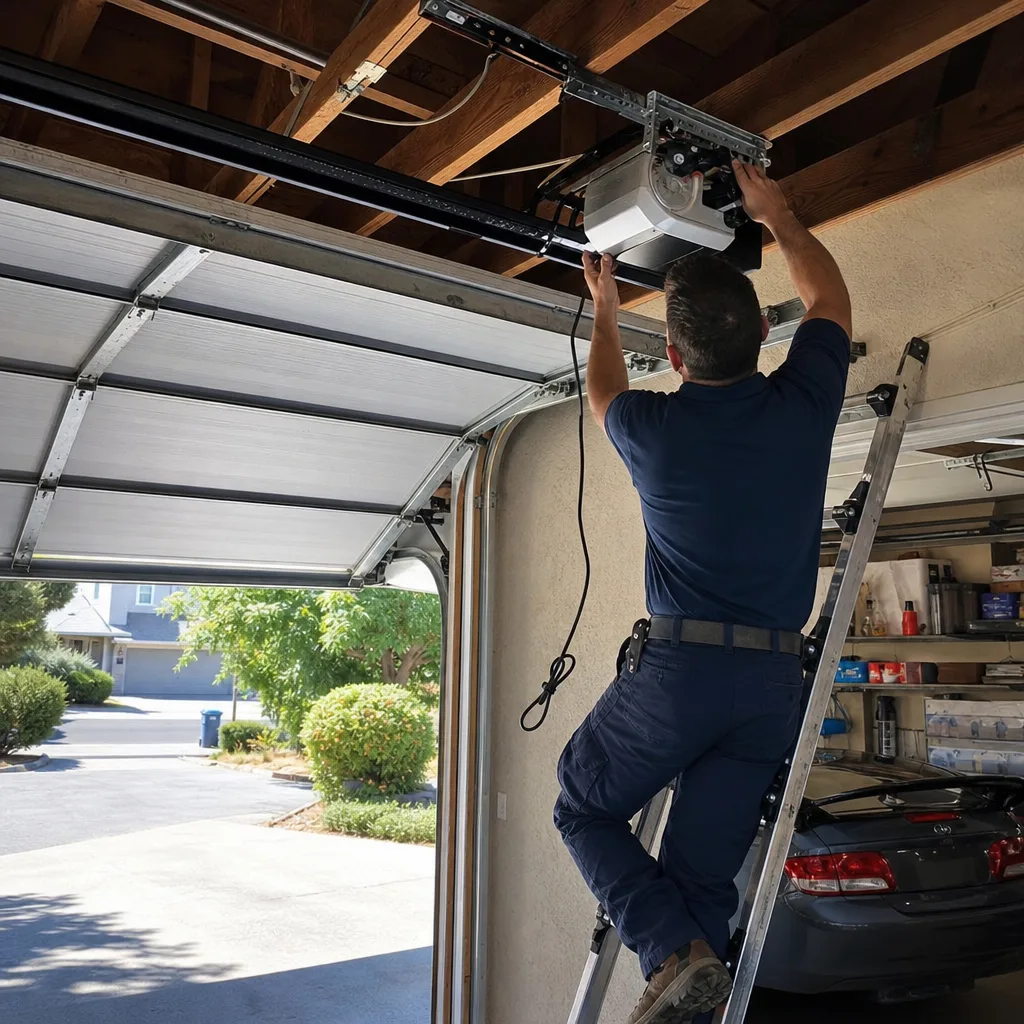
Last updated November 17, 2026
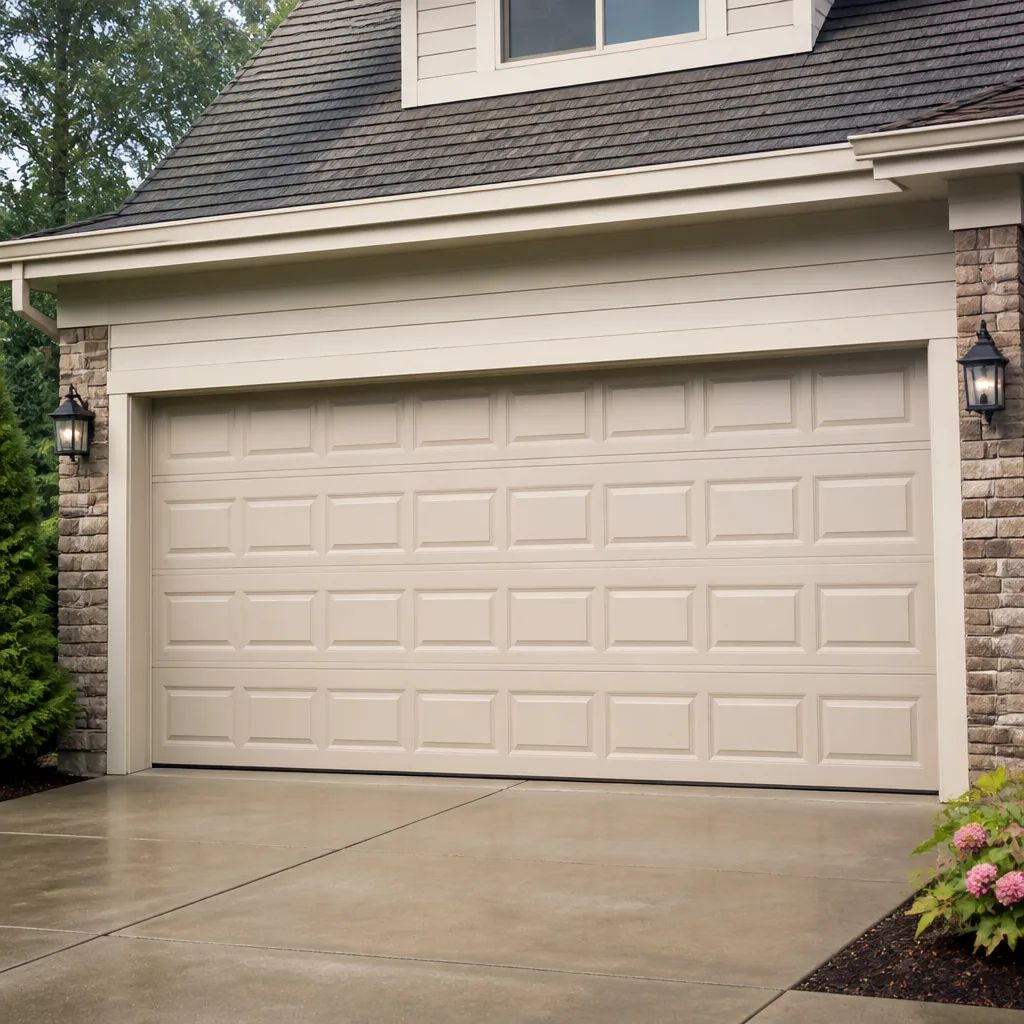 Raised-panel steel
 Carriage house
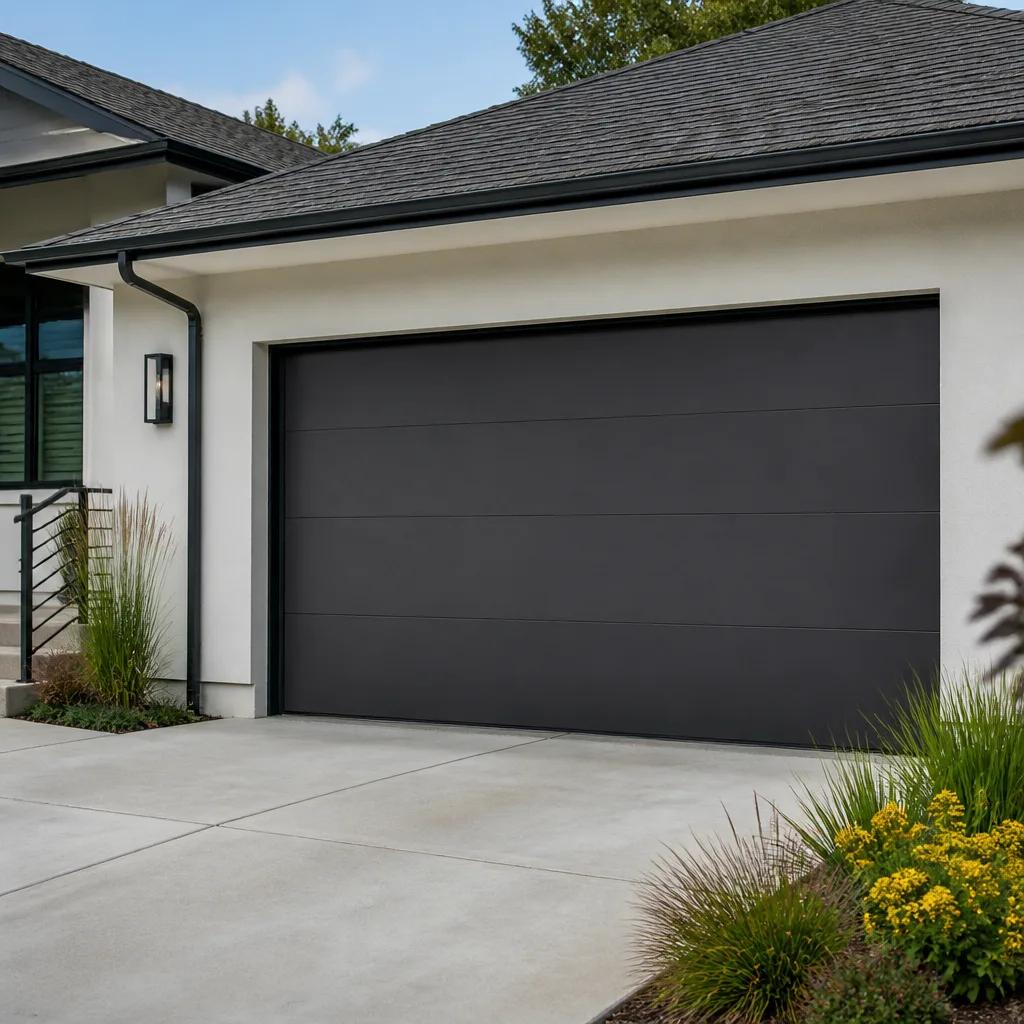 Modern flush
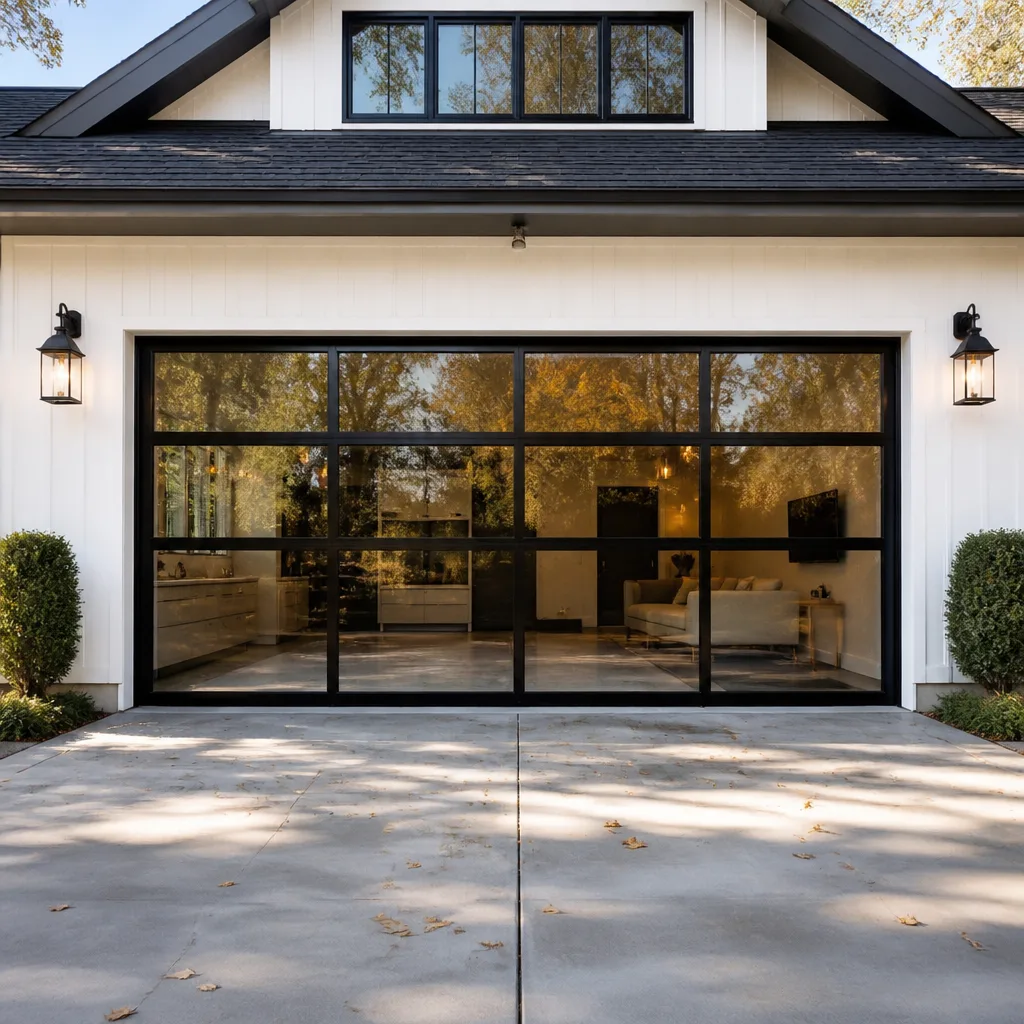 Full-view glass
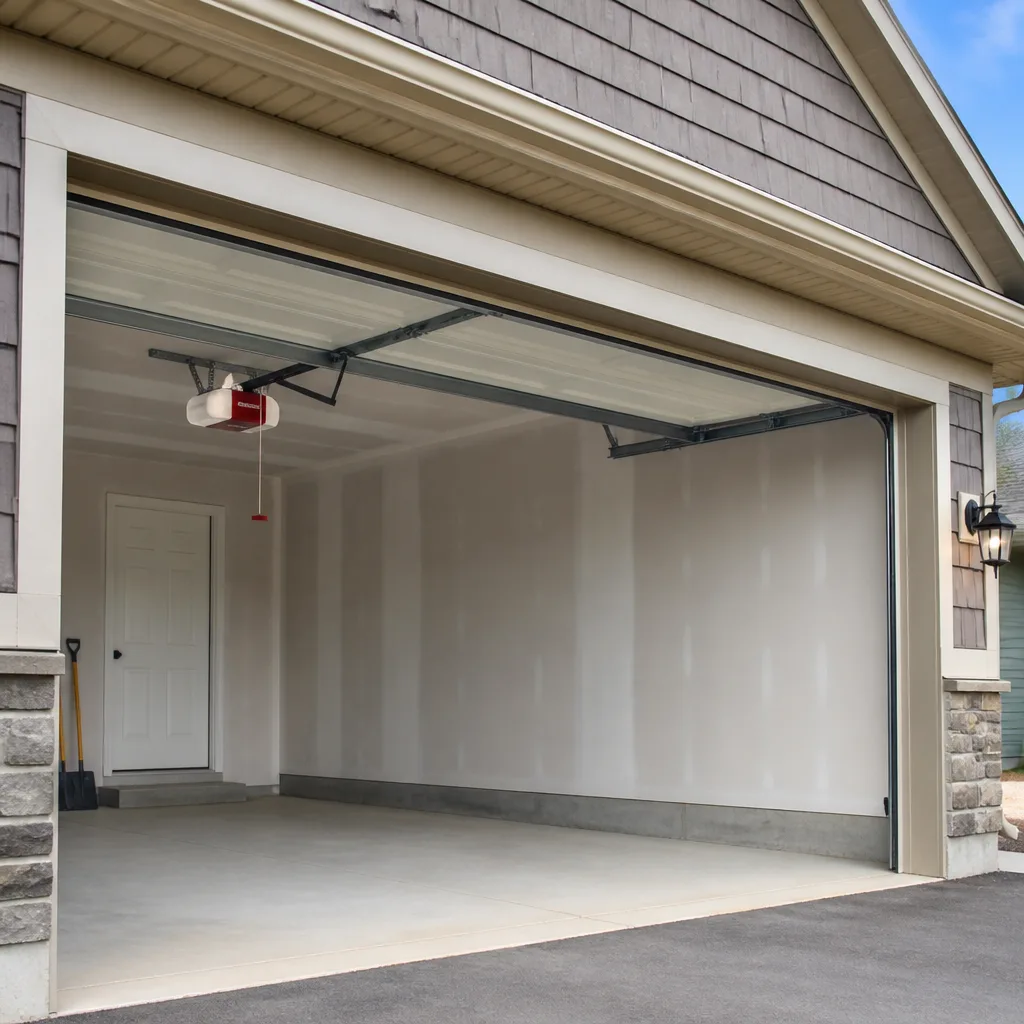 LiftMaster openers
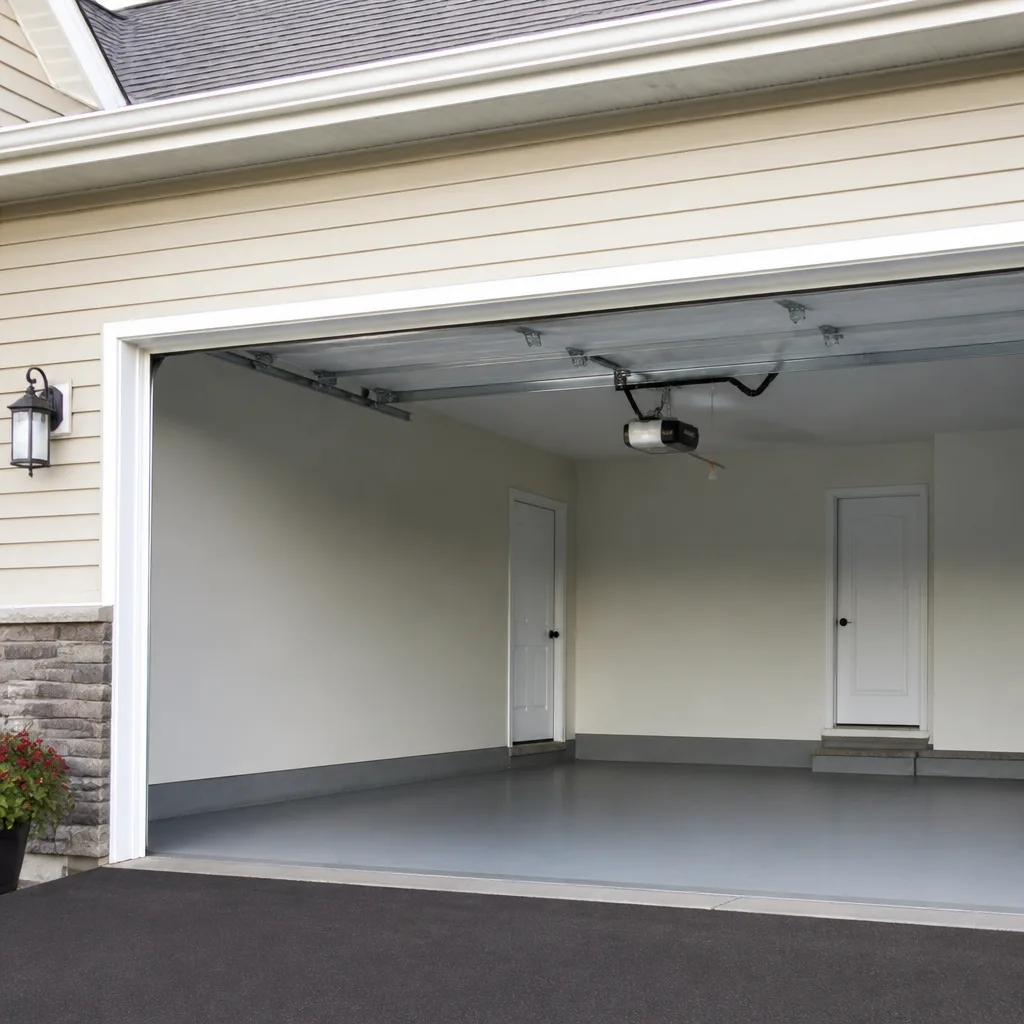 Chamberlain openers
Full 25-point door and opener safety check with every visit - springs, cables, rollers, tracks, and your LiftMaster or Chamberlain opener included
You get a price before we start. It does not change when the pro arrives.
Get your free estimateThe Complete Guide to Garage Door in Mesquite
Most garage door guides are written for Cleveland. Here’s one written for a town where June pavement temps hit 160°F and your door faces the sun for nine straight hours. Mesquite is a desert town, and it eats garage doors faster than the manufacturer’s maintenance chart says it should. Rubber seals crack before the sticker date. Plastic rollers go brittle. Painted steel panels fade and flake. We’ve been fixing doors around here since 2004, and we’ve watched the climate rewrite the rules. This guide covers realistic component lifespans under Mesquite conditions, what actually holds up at 110°F, the difference between what a local shop stocks and what a chain carries, and when a problem is small enough to watch versus big enough to call about.
Quick Answer
Garage doors in Mesquite wear faster than the manufacturer’s maintenance schedule predicts because of sustained UV exposure, 100°F-plus summer heat, and fine dust blowing off the Virgin River basin. Springs, rubber seals, and plastic rollers are the first components to go. Lubricating your door twice a year and watching roll-up speeds catches most failures early. When a spring or cable snaps, don’t touch it. That’s a trained-professional job.
Styles & brands we work with
- Raised-panel steel
- Carriage house
- Modern flush
- Full-view glass
- LiftMaster openers
- Chamberlain openers
Table of Contents
- How Mesquite’s Heat and UV Actually Degrade Your Door
- Realistic Lifespan for Each Component in Mesquite
- The One-Missed-Lubrication Failure (and What Works at 110°F)
- Local Parts vs. Chain Truck Inventory
- What the L.O.C.A.L. Values Mean at Your Doorstep
- Springs and Cables: Why This Is Not a DIY Job
- The Opener Is Rarely the Problem
- A Practical Maintenance Calendar for Mesquite Homes
How Mesquite’s Heat and UV Actually Degrade Your Door
Mesquite sits at about 1,600 feet in the Mojave, boxed in by the Virgin Mountains on one side and the Arizona border a couple of miles east. The valley traps heat. Summer highs regularly run past 110°F, and the pavement in front of a south-facing garage can hit 160°F by early afternoon. A garage door with an eastern or western exposure on a street like Mesquite Boulevard or out in the Sun City development catches a full nine hours of direct sun for months on end. That sun does not just heat the door. It breaks down the material.
UV radiation attacks polymers, which is why rubber weather seals and plastic hinge rollers are the first parts to fail on many Mesquite doors. A seal rated for five years by the manufacturer might crack in two or three here. Painted steel panels fade, and eventually the paint layer flakes, letting a windshield of oxidation start along the edges. Insulated doors with a plastic back skin can warp on the sun-facing side because the front and back of the door end up at different temperatures. The daily swing from a 75°F morning to a 105°F afternoon is a thermal cycle, and each one works a spring a little harder than a mild-climate door would see.
The dust is the other half of the story. Wind coming off the Virgin River basin carries fine silica and desert soil that settles into the tracks and rollers. In our experience it acts like a mild abrasive, wearing down the grease you put on last spring far faster than a homeowner in a wetter climate would notice. Doors that run fine in April can start binding by August without a second lubrication.
Realistic Lifespan for Each Component in Mesquite
Manufacturer maintenance charts are written for a national average. Here’s what we actually see in Mesquite homes. Use these ranges as planning numbers, not guarantees. A garage that faces the sun and gets driven in and out daily will land at the low end of each range.
- Extension and torsion springs: A cycle count is what kills a spring, not a calendar. Standard springs are often rated for 10,000 cycles. In a busy Mesquite household running the door four times a day, that’s under seven years. A higher-cycle spring rated for 15,000 to 20,000 cycles is worth the upcharge in a full-time-occupied home; a snowbird property that only runs the door a few months a year can stretch the same spring much longer. We count spring cycles the way you count tire miles, and we’ll tell you what’s left on yours.
- Cables: Typically inspected every two to three years here. The heat and dust accelerate strand fatigue at the drum end. A frayed cable is a failure waiting to happen.
- Opener: A quality opener serviced every few years often runs 10 to 15 years. Motor brushes, drive gears, and the logic board wear at their own rates. An opener that’s straining usually owes the problem to the door, not the motor.
- Panels: Steel panels last decades on a north-facing wall. On a full-sun west wall in Mesquite, expect paint fading around year five to seven and possible flaking after that. Fade is cosmetic; warping or visible rust at the panel seams is functional.
- Rollers: Cheap plastic rollers can go brittle and flat-spot within three to five years in the heat. Nylon rollers hold up better; sealed steel rollers hold up best.
- Weather seal: One to three years on a sun-facing door, longer on a shaded one. It’s a cheap, fast replacement and worth doing on schedule.
If a door is more than 15 years old and two or more of these components are failing at once, pricing out a replacement door alongside the repair is honest budgeting. A garage door repair in Mesquite can often keep a good door alive for years past that, but a real conversation about replacement cost belongs in there too.
The One-Missed-Lubrication Failure (and What Works at 110°F)
Most garage door failures at the homeowner level trace back to lubrication – and specifically, to using the wrong product. Standard white lithium grease and light spray lubricants thin out and run off in high heat. What’s left behind on a 110°F day is either a dry surface or an oily drip on your driveway. The door gets no protection where it needs it: the hinges, rollers, and spring coils.
What holds up in Mesquite is a heavier lithium soap grease or a dedicated garage door lubricant designed for high-temperature service. We’ve also seen good results with a silicone spray on the rubber seal (which keeps it pliable) – not on the metal parts, where it’s too light. Here’s the sequence that works:
- Park the car outside. Door down, opener unplugged.
- Wipe down the torsion springs, hinges, and roller shafts with a dry rag to clear dust. Skip this and you’re grinding grit into the grease.
- Apply a small amount of high-temp grease to each hinge pivot and roller bearing. Small is the right amount. Excess grease attracts the very dust you’re fighting.
- Spray silicone on the rubber weather seal along the bottom and sides. Wipe off the excess.
- Run the door up and down twice. Listen for grinding or popping. If you hear it, the problem is upstream from lubrication.
Do this twice a year in Mesquite – once in April before the heat ramps up, once in October after summer’s done. That’s it. It’s the cheapest insurance you can buy on a moving mechanical system that lives in the sun.
Local Parts vs. Chain Truck Inventory
Here’s the thing national guides won’t tell you: a big outfit’s truck is stocked out of a regional warehouse and loaded for a generic schedule. When the tech shows up and the job needs a specific spring for a 16-foot door with a Clopay panel profile, they may have it, or they may not. If they don’t, you’re looking at a second visit, a special order, or a suggestion that you replace the whole door instead.
A local shop sets its inventory by what Mesquite doors actually are. Most homes in the area run standard 16×7 single-car setups and 8×7 or 9×7 openings. Common brands in this housing stock include Clopay, Amarr, Chamberlain, and Genie. A local business with a physical address and a phone number can tell you over the phone whether the part for your door is on hand or how long a special order will take. We keep the parts that fail most often on the shelf: torsion springs in the common Mesquite wire gauges and lengths, nylon and sealed steel rollers, standard opener logic boards for the big brands, and weather seal stock in a couple of profiles. That’s a straight answer on availability, not a dispatch center promising a callback.
Before you book anything, ask one question: do you stock the part for my door, or is this a special order? A real local answer comes back within a minute. A generic answer comes back later. If you’re facing a failed door right now, the repair page walks through what to do first.
What the L.O.C.A.L. Values Mean at Your Doorstep
We put it on the invoice and we mean it. L.O.C.A.L. is the shorthand for how the shop runs: Local roots – we live here, we’re known here, and if we do a bad job you’ll see us at the hardware store. On time – we tell you a window and we aim to hit it. Community first – the senior and veteran discount is permanent, no exclusions, no seasonal blackout. Accountable – when the job needs warranty work, one call to the shop gets it handled. Loyal – we’d rather keep a customer for twenty years than win one big ticket. That’s the whole business model.
In practice, here’s what that means on a real job:
- The call is answered by a live person around the clock. Including nine at night when a spring lets go and your vehicle is sealed inside. You get a quote on that call and the price holds when we pull in the driveway.
- The price you’re quoted on the phone is the price at the door. No-hassle upfront pricing means the number doesn’t get revised upward after we see it. If the job turns out bigger than expected, you hear about it before any work starts.
- Every invoice has the 90-Day Done Right Promise on it. If it’s not done right, we make it right, and the one call that fixes it reaches the shop directly – not a customer-service queue.
- The crew is background-checked and the door techs carry a printed invoice with the shop’s name on it. They’re the same people who’ve done our Mesquite doors for years, not a rotating cast.
Our technicians have up to 22 years of experience across all major brands, and every visit backs the same promise. That’s less a marketing line than a challenge to ourselves: get the price right the first time, show up when we say, and stand behind it if something isn’t right.
Springs and Cables: Why This Is Not a DIY Job
This is the section where we stop being helpful-neighbor and start being safety-serious. A garage door is 200 pounds riding on two springs. Respect it. The torsion spring that lifts your door is under hundreds of pounds of tension even when the door is closed – and storing that energy is the whole point. When a spring lets go, it does so with enough force to bend steel, and it can happen without warning. Cables are under the same tension.
Here’s what we will tell you: the trouble signs to watch for, and what never to do.
- Watch for: a gap or break in a torsion spring, frayed or curled cable strands, a door that drops hard or slams, a door that won’t lift when you pull the release, or a loud bang from the garage at night.
- Never: try to wind or unwind a torsion spring with a pair of screwdrivers, disconnect a spring under tension, or cut a frayed cable to “make it safe.” Homeowners are hurt doing exactly this every year.
- Do: keep the door closed if a spring is broken. Pull the manual release only when you need to move the door, and never with a broken spring connected.
If your door’s spring has failed, leave it alone and call. That’s a garage-door emergency – the kind where you get a live answer at nine at night and a plan to fix it. We’re not being dramatic when we say: a professional weighs the risk on every job. You shouldn’t have to carry it yourself.
The Opener Is Rarely the Problem
If the opener is straining, the problem is almost never the opener. It’s the door. Tracks out of alignment, dry hinges, a worn roller, a spring that’s lost its lift – all of these push back on the motor, and the opener gets blamed for a mechanical problem it didn’t cause. A garage door opener repair and installation in Mesquite visit that starts with the motor often ends with a question about the door when it should be the other way around.
Common opener problems we see in Mesquite:
- Strain or slow reversed motion: usually a door or spring issue, not a motor issue.
- Erratic behavior: the logic board or a failing capacitor. Chamberlain and Genie units both have common failure modes that are fixable.
- The door opens but doesn’t close: the safety sensor is misaligned, dirty, or the receiving eye has failed. In dusty Mesquite, the sensor lens needs a wipe more often than you’d think.
- Remote won’t work: dead battery, lost programming, or a receiver issue. All fixable without replacing the opener.
If the opener is 12 to 15 years old and the motor itself is failing, replacing it makes sense. A new opener installed correctly – Chamberlain and Genie both make solid units for this climate – is a real upgrade over a tired motor. What we won’t do is sell you an opener replacement when the door needs a hinge and a spring.
A Practical Maintenance Calendar for Mesquite Homes
What works for most Mesquite households is a twice-yearly check on the following: lubrication (April and October), weather seal inspection (same time, plus anytime you see cracking), roller inspection (annually), and a listen test every few weeks. That’s the whole routine. It’s not complicated, and it catches most failures before they cost more than a service call.
- April: lubricate hinges, rollers, and springs with high-temp grease. Silicone the weather seal. Look for signs of fading or rust on sun-facing panels. Test the safety sensor by waving your hand in front of it.
- Mid-summer: listen to the door. A door that used to open smoothly and now stutters is a door that needs a look before the problem spreads.
- October: repeat the April lubrication. Inspect cables for frayed strands. Check the balance: disconnect the opener, lift the door halfway, and let go. It should stay put. If it drops, the spring is weak.
- Annually: book a professional inspection if the door is eight years old or older. A trained eye catches spring fatigue and cable wear before it becomes a failure.
If the door needs a new panel or an overdue replacement, garage door installation in Mesquite starts with a free measure and a written price. That’s the right first step – not a same-day sale.
Common Mistakes to Avoid
- Using a light spray lubricant on the springs and hinges. It thins out in the Mesquite heat and leaves the metal dry. You need a high-temperature grease.
- Greasing without wiping down first. In a dusty desert town, you’ll grind grit into the hinge pivots and wear the parts faster than if you hadn’t lubricated at all.
- Trying to adjust a torsion spring yourself. This is the #1 way homeowners get seriously hurt. A door is 200 pounds, and that tension is not negotiable.
- Ignoring cosmetic changes on a sun-facing door. Fading paint or surface rust on west-facing panels in full sun is the early warning that the steel underneath is starting to go. Catching it in year five is much cheaper than catching it in year ten.
- Letting a national chain do a “tune-up” without a written quote. Ask for the number before they start. If it’s a real shop, they’ll give it to you on the call.
- Continuing to run a door with a broken spring or frayed cable. Pull the manual release, close it, and call. Driving on a damaged spring is how a $250 repair turns into a $900 one.
- Assuming a straining opener means “replace the opener.” Usually it means the door needs a service. A second opinion on any written estimate is free for a reason – let someone who knows this climate confirm what you actually need.
See the difference
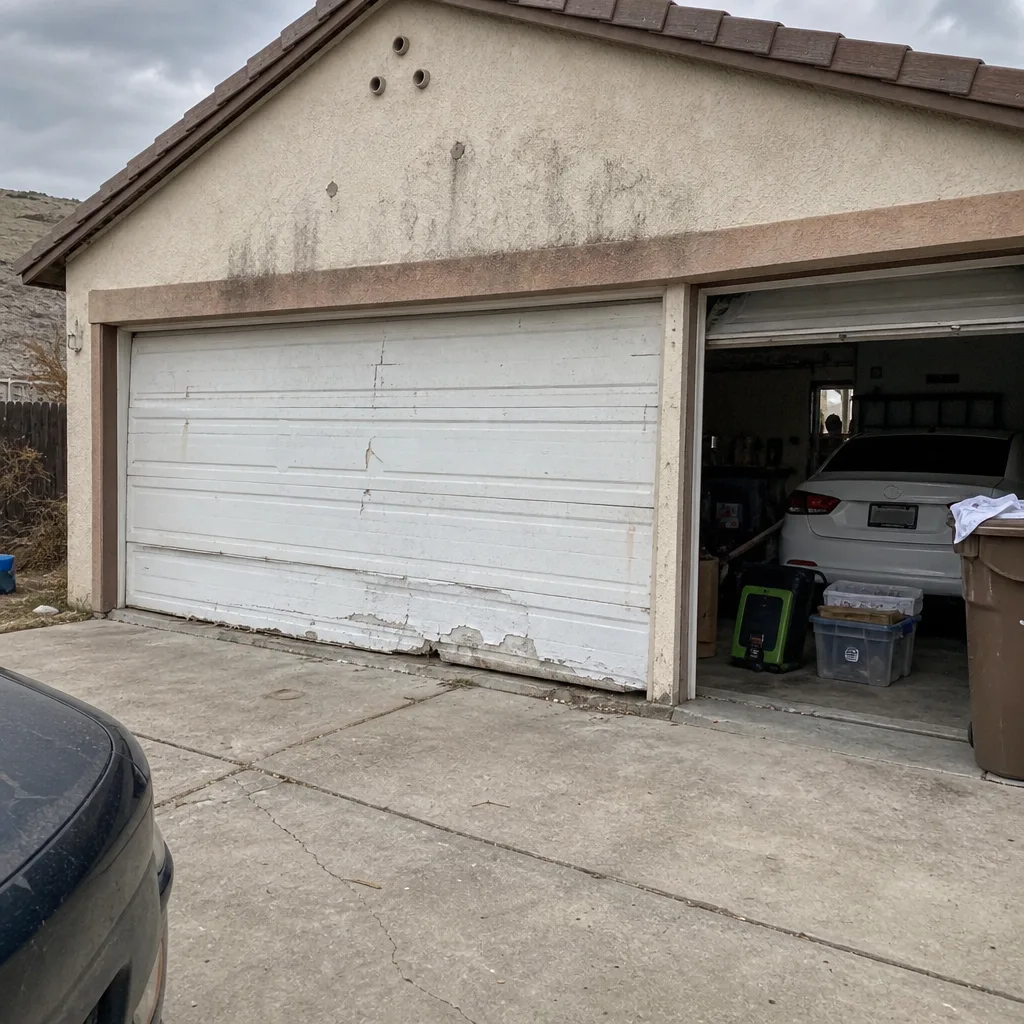 Before
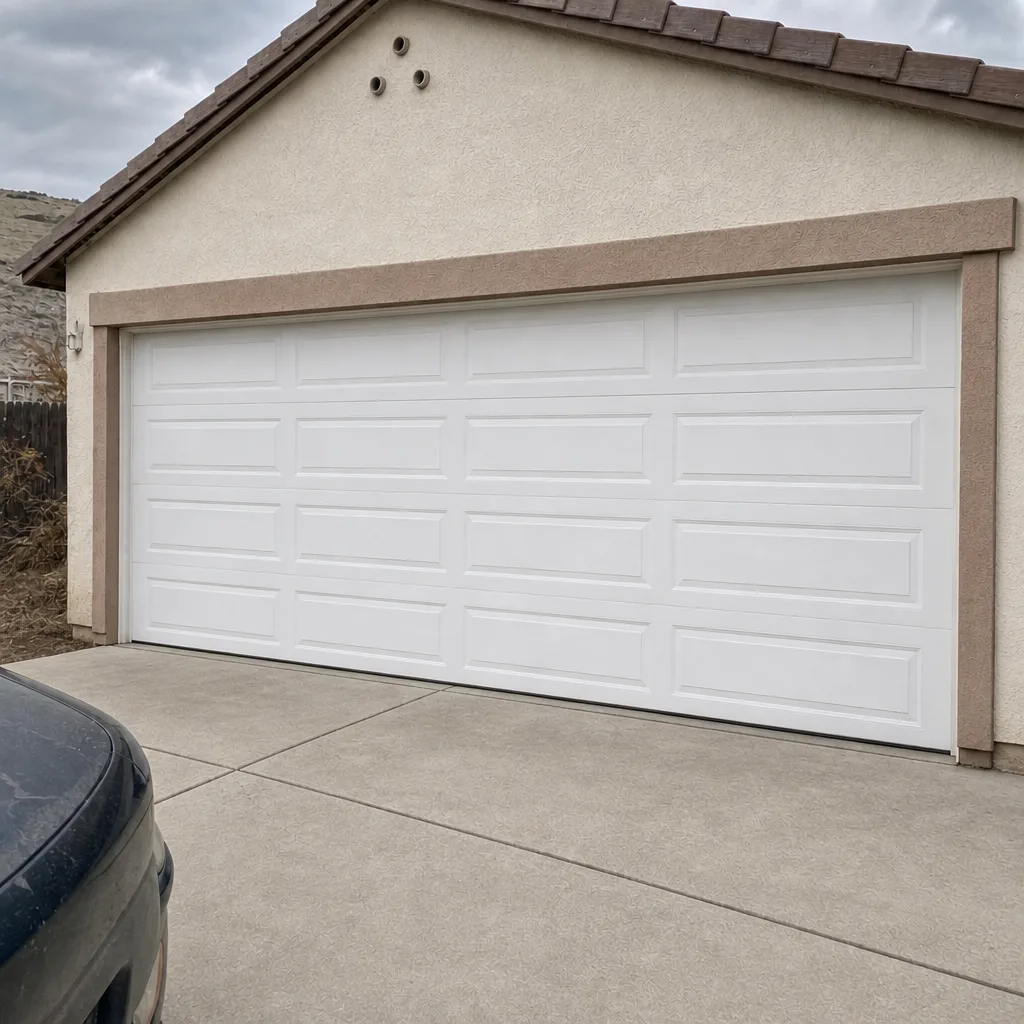 After
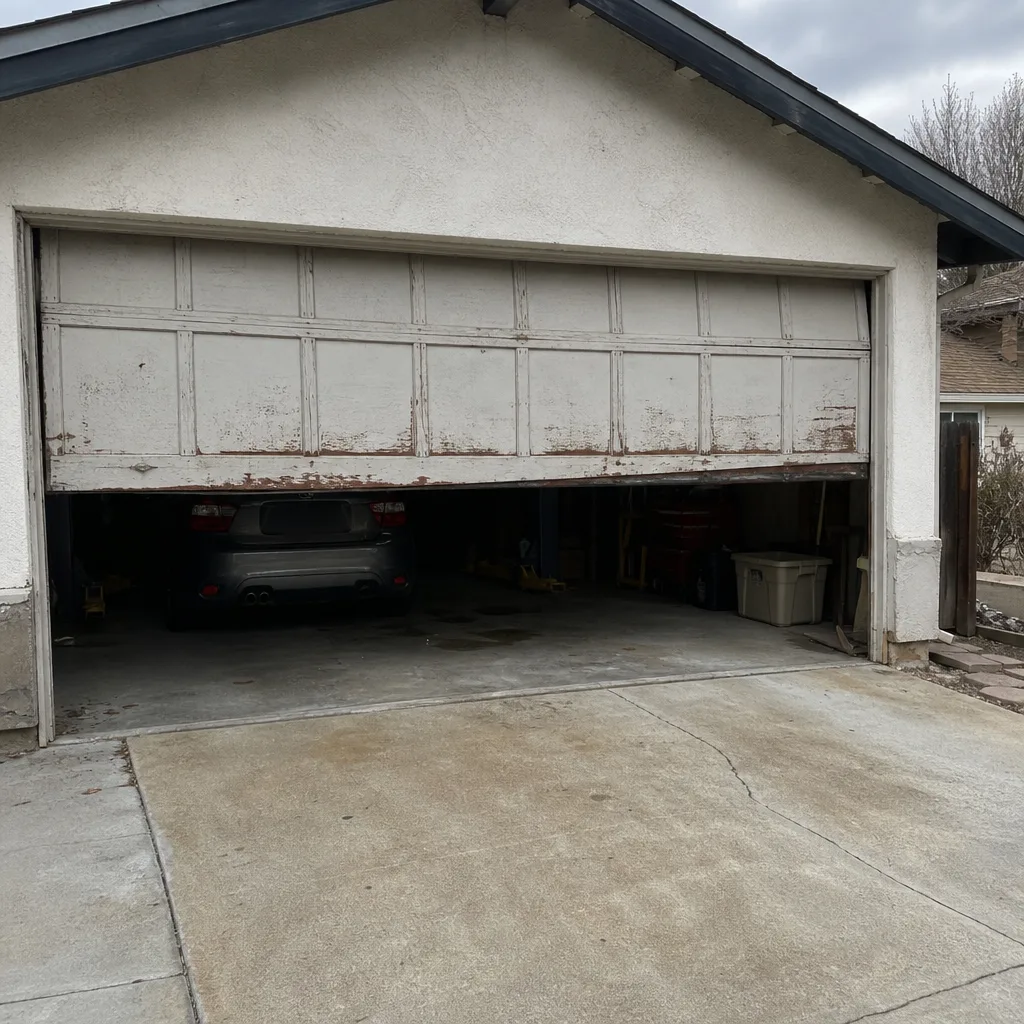 Before
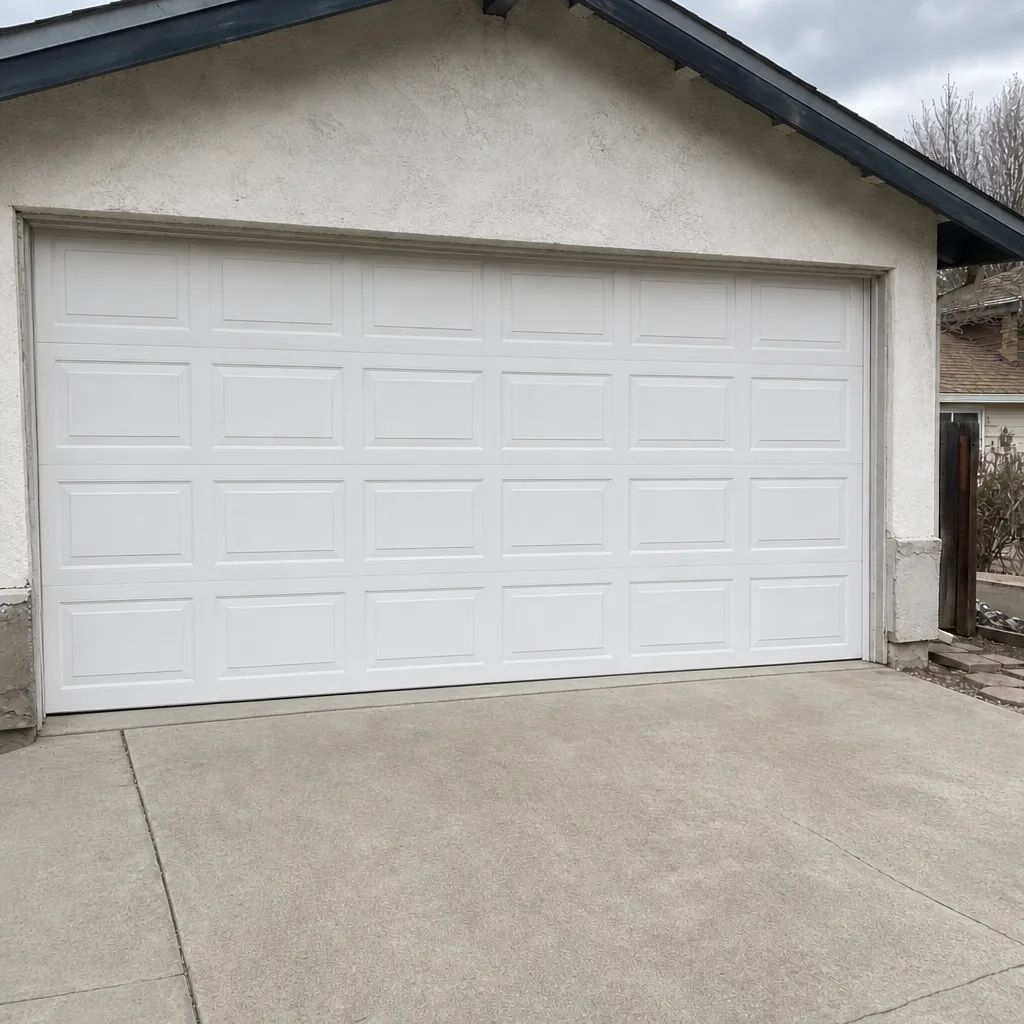 After
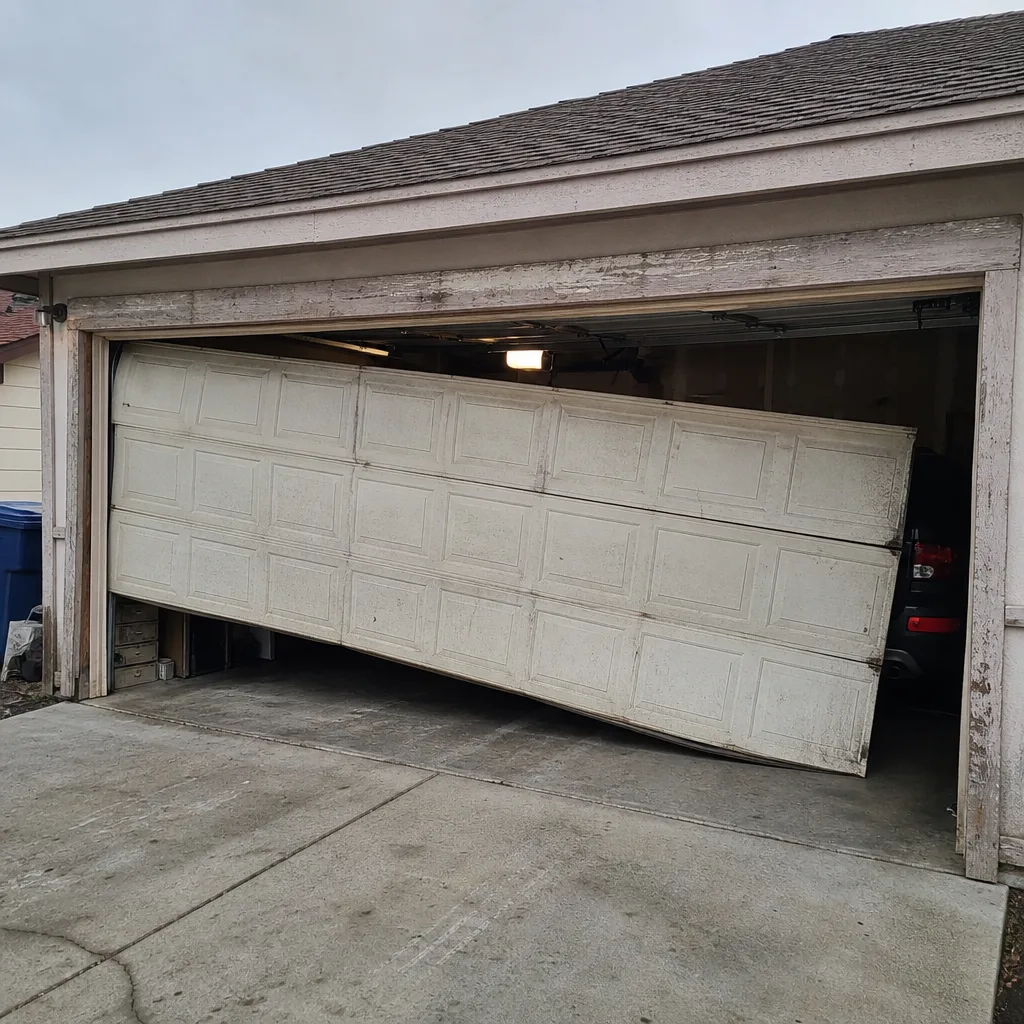 Before
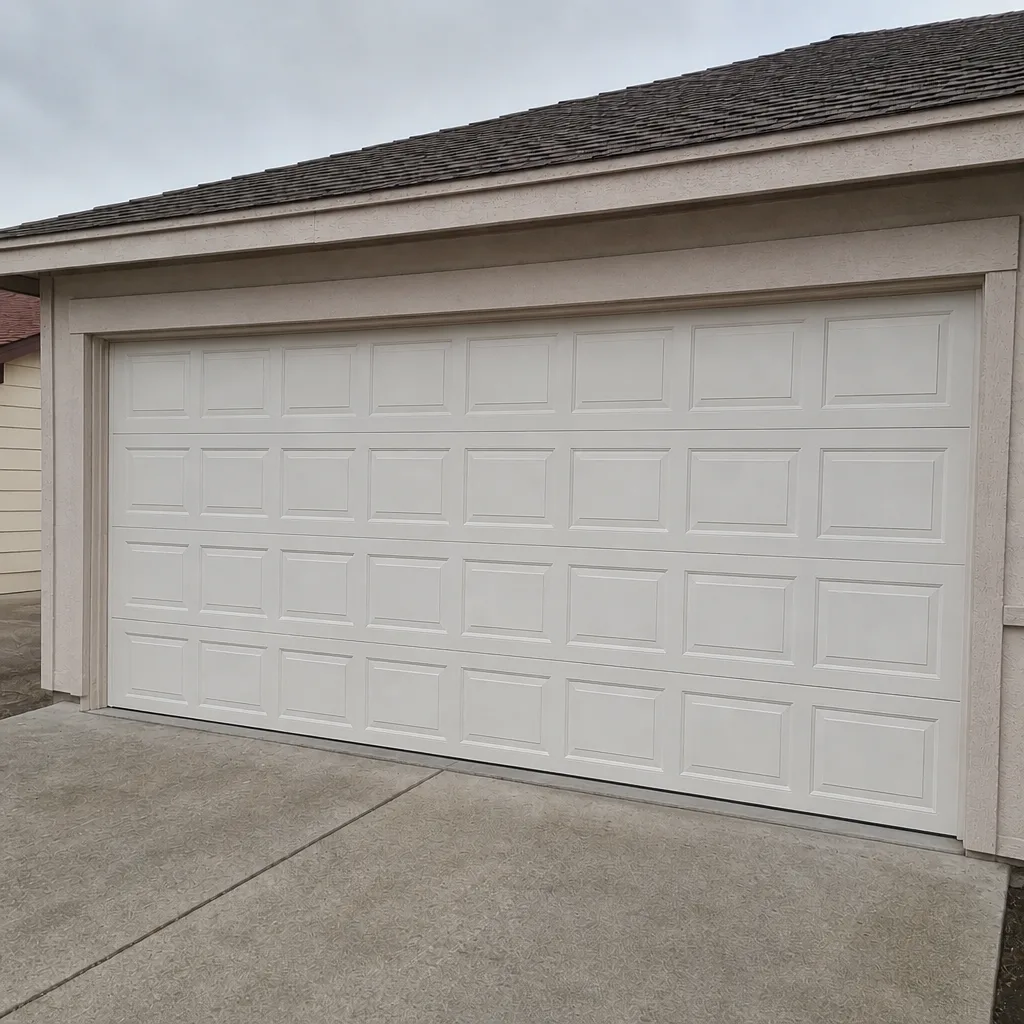 After
When to Call a Professional
A few situations deserve a call rather than a Saturday project. If the spring is broken or you hear a loud bang from the garage, if a cable is frayed or curled at the drum, or if the door drops when you try the balance test, that’s a trained-professional call. If the door is more than eight years old and you’ve never had it inspected in this heat, book a check before a failure. If the opener is straining, slow, or visibly struggling, get it looked at. And if you’re getting quotes for a repair you don’t fully understand, the second opinion should be free – any local shop worth hiring will confirm the call without a trip charge.
Otto’s Garage Door Mesquite offers free estimates in Mesquite – call (844) 320-6569. Prices are quoted and agreed before any work starts, and they don’t change between the phone and the driveway.
Frequently Asked Questions
Twice a year, at minimum – once in spring, once in fall. The heat and dust in Mesquite wear down grease far faster than a moderate climate, so a door that gets annual service elsewhere should get a lubrication and inspection twice a year here. Call (844) 320-6569 and we’ll schedule an inspection around your calendar.
Most spring replacements in this market run in the $200 to $350 range for a standard door, higher if a matching pair is needed or the wire gauge is unusual. You’ll get an exact quote on the call, and the number holds at the door. Call (844) 320-6569 for a free estimate.
UV exposure. A rubber weather seal rated for five years in a mild climate often cracks in two to three in full Mesquite sun. Silicone spray on the seal slows it down, but the sun wins eventually. Replacement is cheap and worth doing on schedule. Call (844) 320-6569 for a quote.
For emergency issues like a broken spring or a door stuck open, we take those calls around the clock and work to get out as soon as we can. For installation work, we schedule a measure and a written quote – that takes a day or two, not an hour. Call (844) 320-6569 to talk through what you need.
No. The quote on the phone is the price at the door, and if the job turns out to be bigger than we thought, you’ll hear about it before any work starts. That’s the whole point of no-hassle upfront pricing. Call (844) 320-6569 for a firm quote.
Yes. The shop publishes its physical address and license number, so you can verify it before the truck ever arrives, and the crew is background-checked. If you want to confirm, call (844) 320-6569 and ask – the answer is the same on the phone as it is on the invoice.
The Bottom Line
Mesquite is not a generic garage door market. The sun, heat, and dust here shorten the realistic lifespan of springs, seals, rollers, and paint. A twice-yearly lubrication with the right high-temp product, an eyeball on the cables and weather seal, and a professional check once the door passes eight years old will keep most doors healthy for a long time. When something needs fixing, get a straight quote from a shop whose address and license number you can verify, and confirm the price before work starts. For a free estimate in Mesquite, call (844) 320-6569, or start with the Otto’s Garage Door Mesquite home page for the rest of the picture.
Written by the team at Otto’s Garage Door Mesquite.