
Last updated November 17, 2026
 Raised-panel steel
 Carriage house
 Modern flush
 Full-view glass
 LiftMaster openers
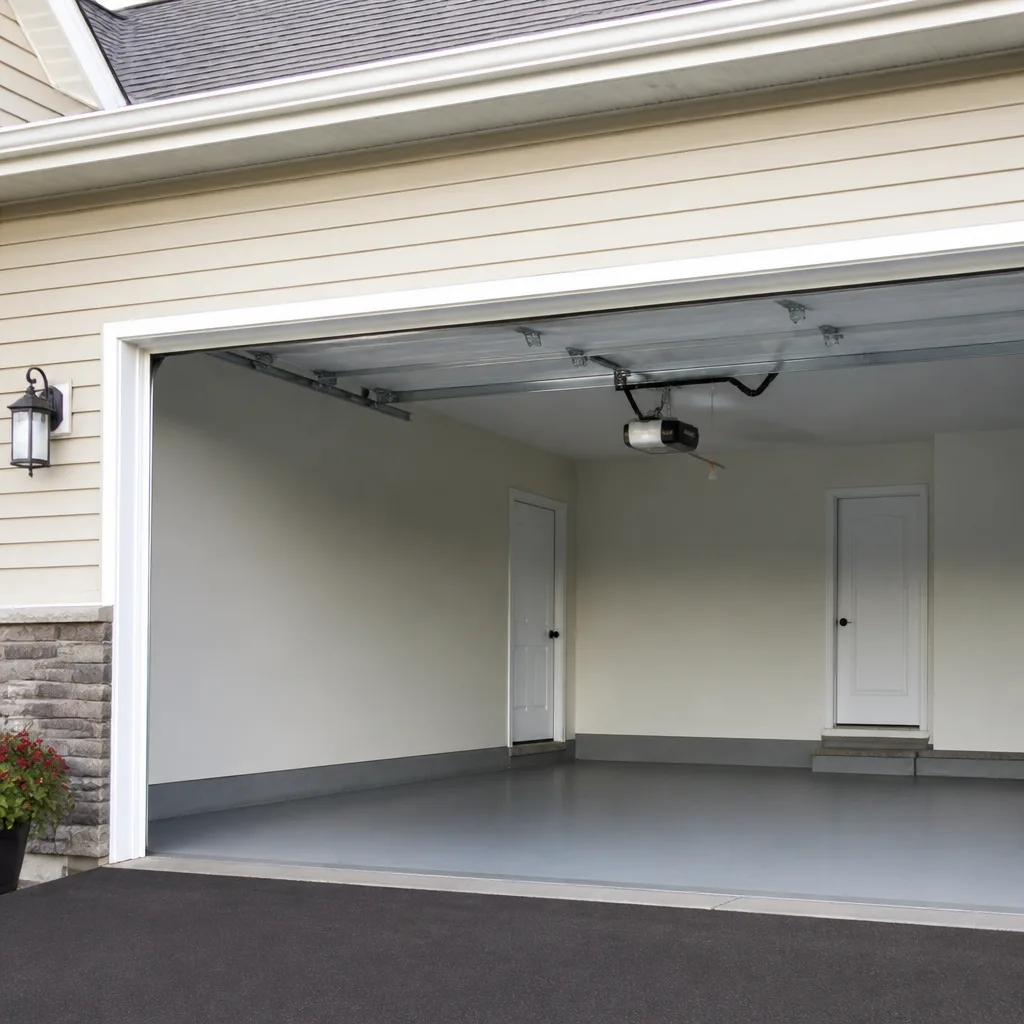 Chamberlain openers
Full 25-point door and opener safety check with every visit - springs, cables, rollers, tracks, and your LiftMaster or Chamberlain opener included
You get a price before we start. It does not change when the pro arrives.
Get your free estimateDIY vs Professional Emergency Garage Door: What’s Safe to Do Yourself
The number-one time people get hurt working on garage doors isn’t during routine maintenance. It’s at 7 AM when they’re already late, the door won’t open, and they decide to just take a quick look at the spring. Urgency changes how we think. A homeowner who would never touch a torsion spring on a Saturday afternoon will stare at one at 7 AM Tuesday and start weighing it. That’s the exact moment the most dangerous mistakes happen, and it’s why we wrote this guide. We’ll walk through what you can safely try in a Mesquite emergency, what you should never touch, and how to get your car out without making the eventual repair cost more.
Quick Answer
In an emergency, the only safe DIY moves are the manual release cord, photo-eye realignment, a tripped breaker or GFI reset, and fresh remote batteries. Spring, cable, and torsion work are never safe to attempt yourself, and the urgency of an emergency makes them more dangerous, not less. If the door is stuck, off its track, or you hear a bang from the springs, stop and call a trained professional.
Styles & brands we work with
- Raised-panel steel
- Carriage house
- Modern flush
- Full-view glass
- LiftMaster openers
- Chamberlain openers
Table of Contents
- Why Emergency Pressure Is When DIY Goes Wrong
- Emergencies: What You Can Safely Check and Reset
- The Hard Line: Springs and Cables During an Emergency
- Car Trapped in the Garage: How to Get It Out Safely
- Temporary Security While You Wait for a Pro
- Why Mesquite Heat Makes Emergency Failures Worse
- What Your Door and Opener Brand Tells You About the Fix
- Common Mistakes to Avoid
- When to Call a Professional
- Frequently Asked Questions
Why Emergency Pressure Is When DIY Goes Wrong
In our experience, the garage door calls that go sideways share a pattern. The homeowner was already running late, the car was sealed inside, and the “quick look” turned into a real injury or a much bigger repair. The pressure of an emergency is honest: you have somewhere to be, your vehicle is blocked, and your house has an open door facing the street. All of that is real.
What the pressure does to your judgment is the problem. You skip the safety glasses because they’re in the truck. You put your weight on a door that’s hanging by one cable. You grab the first tool that fits. None of that is stupid. It’s human. But a garage door is the largest moving object in a home, and the parts that fail are under tremendous tension. A door is roughly 200 pounds riding on two springs. Respect it, especially when you’re in a hurry.
The good news: there’s a real path through an emergency that doesn’t put you in danger. Most “emergencies” in Mesquite aren’t the door at all. They’re a tripped breaker, a misaligned safety sensor, a dead remote battery, or a manual release that got pulled by accident. Those you can handle yourself in minutes. The ones that involve springs and cables aren’t emergencies you can solve. They’re emergencies you manage until someone trained arrives.
Here’s the split we use when we get a call: does the door move, or is it stuck? If it moves on the track and the opener runs, the problem is usually electrical or sensor-level. If the door won’t move, or it’s hanging crooked, or you heard a bang, the problem is mechanical and load-bearing, and that’s a professional job.
Emergencies: What You Can Safely Check and Reset
Before you call anyone, work through these safe checkpoints in order. Each one has fixed thousands of “emergencies” without a wrench.
- Try the manual release. If the opener is unresponsive but the door is balanced, pull the red release cord hanging from the trolley. That disconnects the door from the opener, so you can lift it by hand. Only lift if the door feels reasonably light. If it’s heavy or won’t budge, stop.
- Check the power source. Walk to your electrical panel and look for a tripped breaker. If the garage has a GFI outlet (usually on the wall near the opener or by the door), press the reset button. The opener needs 120 volts; a tripped GFI looks exactly like a dead opener.
- Realign the safety sensors. Those two small eyes near the floor, one on each side, should be pointing at each other with a solid (not blinking) light. If one is bumped or dusty, wipe it and nudge it back so the light goes steady.
- Replace remote batteries. A remote that “worked yesterday” is often a dead coin cell. Swap it and re-test from inside the garage.
- Watch the opener’s logic board light. If the wall button works but the remote doesn’t, the remote is the problem. If neither works, it’s the opener or the power. That distinction saves you a service call.
- Try the wall control. Hard-wired buttons bypass remote signal issues entirely. If the door opens from the wall button but not the remote, you’ve isolated it in under a minute.
If any step makes the door move, you’ve likely solved the emergency. If none of them helps, the problem is inside the opener or down at the door’s mechanicals, and that’s where the professional path starts. If it’s your opener that’s failed, our page on Garage Door Opener Repair & Installation in Mesquite covers the brand-specific diagnostics we run.
The Hard Line: Springs and Cables During an Emergency
This is where we’re blunt. Do not touch a torsion spring, an extension spring, or any tension cable under any circumstance. That’s the line. It doesn’t move for an emergency, it doesn’t move for a deadline, and it doesn’t move because the YouTube video made it look easy.
Why the emergency makes it worse: tension springs store enormous energy, and when one fails, part of the mechanism is no longer where it was designed to be. A partially broken spring can still be under load. A frayed cable can snap with almost no warning. If you reach into that assembly in a hurry, without proper winding bars or a way to control the load, you can take a serious injury to the hand, arm, or face in under a second. Trained technicians use two winding bars, controlled increments, and eye protection for a reason.
Springs don’t fail randomly. They fail on a cycle count. A typical torsion spring is rated for a set number of cycles, and once you’re close to that number, a cold snap or a hot day can be the last straw. We count spring cycles the way you count tire miles. In our experience, a Mesquite door that’s ten or more years old and has never had a spring replaced is a candidate for a surprise failure, and the surprise usually lands on the worst morning of the week.
Cables are similar. A cable that’s off its drum, frayed, or slack means the door’s weight is no longer evenly supported. Lifting that door by hand is like lifting a crooked bookshelf: it may go up, but it can come down wrong and hurt someone. When you hear a cable pop or see it hanging slack, the door shouldn’t move at all until a professional resets it. That’s not a “wait until Monday” fix. But it’s also not a “grab the ladder” fix.
Car Trapped in the Garage: How to Get It Out Safely
This is the most common emergency call we get in Mesquite, and it usually has a safe answer: pull the manual release and lift the door by hand. Here’s the step-by-step we give on the phone.
- Clear the area under the door. Move anything that could catch the door’s bottom edge: bikes, boxes, kids’ toys. You need a clean path.
- Pull the manual release cord. Stand to the side of the door, not under it, and pull down and toward you. You’ll hear the trolley disengage.
- Test the door’s weight. Lift the door about a foot with one hand. If it feels manageable and stays put when you let go, it’s safe to lift by hand. If it drops back down or feels heavy, don’t force it.
- Lift the door fully and prop it. Open it all the way, then place a sturdy clamp or locking pliers on the track just below a roller on one side as a temporary prop. Never rely on just your shoulder to hold it.
- Pull the car out slowly. You have a clear path once; use it carefully, and don’t brush the door frame.
Would this make the eventual repair harder? Almost never, if you pulled the release cleanly and lifted the door without force. What does make repairs harder (and more expensive) is bending a track by dragging a door that’s off its rollers, or forcing a door up onto a broken spring. If the door won’t lift with light effort, leave the car and call us. The car isn’t going anywhere, and your hand shouldn’t either.
If you’re dealing with a car trapped right now, our Garage Door Repair in Mesquite page lists the emergency steps and lets you call a live person who quotes on the spot.
Temporary Security While You Wait for a Pro
A broken door with your car in the garage is a security problem. Here’s what actually works for the wait, and what only looks like it works.
What works:
- Close the door all the way to the ground by hand (if it’s safely liftable) and slide a sturdy bar or a length of wood through the track behind a roller to lock it from opening.
- Park a vehicle close to the inside of the door, nose or rear bumper against it, so an outside push can’t move it.
- Lock the walk-through door between the garage and the house, and use it as the day’s entry point.
- Turn on exterior motion lights pointed at the driveway. Illumination is a real deterrent.
What looks like it works but doesn’t:
- A zip-tied or bungeed door. It’s held by tension, not structure, and the first real push usually defeats it.
- Blocking the outside with a trash can or cones. That signals “empty house” to anyone paying attention.
- Pulling the manual release and leaving the door up “for the day.” A door left open is the opposite of security, and it’s also a wind hazard.
- Wedging a board between the door and the frame. It prevents opening from inside but not from outside, and it can bend the track as the door settles.
What makes things worse: trying to force the door down onto a broken spring or a bent track to “lock up for the night.” That’s how a $200 repair turns into a full panel and track replacement. If the door won’t close cleanly, secure the walk-through door instead and get a professional scheduled. Same-day emergency service is a real thing, and calling early morning beats calling at night.
Why Mesquite Heat Makes Emergency Failures Worse
We do most of our work in Mesquite, and summer changes the failure pattern. Triple-digit heat is hard on springs, opener gears, and plastic rollers. Metal expands, lubricant thins or cooks off, and the spring that was fine in April becomes the one that lets go on a July morning. If your door has a 5 to 8-year-old spring and hasn’t been serviced, summer is when you’re most likely to be on the phone with us.
The other Mesquite wrinkle is dust. Desert dust drifts into garages and settles on tracks and rollers. The gritty rollers drag, the opener works harder, and one day the opener’s logic board throws a fault because the motor was straining. If the opener is straining, the problem is almost never the opener. It’s the door’s balance or the track. That’s a fix you can’t solve with a new remote.
For a seasonal tune-up or to head off a summer failure, our Otto’s Garage Door Mesquite home page covers the service call options. And if you’re ready to replace a door that’s failed one too many times, Garage Door Installation in Mesquite walks through how we measure for our desert climate.
What Your Door and Opener Brand Tells You About the Fix
The brand doesn’t change whether a spring repair is safe for you to attempt (it isn’t, ever). What it does change is how fast a professional can get you back to normal. We work on the major brands daily, and here’s what we see most in Mesquite garages.
- LiftMaster and Chamberlain openers dominate our local installs. Their logic boards throw clear fault codes that save diagnostic time, so if you can tell us the code, we can often price the fix before we pull into the driveway.
- Genie openers from the 1990s and 2000s are still common in older Mesquite homes, and their older chain drives often need a full reset rather than a part swap.
- Clopay and Amarr steel doors are the most common replacements we see, and their panel profiles mean a damaged bottom section can often be replaced without a whole new door.
- Wayne Dalton doors show up in a lot of exurban Mesquite homes, and their older torsion systems sometimes need a specific drum and cable setup to reset correctly.
If you can tell us the brand and the model number on the opener label, you’ve just shortened your wait. If you can’t, we’ll figure it out at the door.
Common Mistakes to Avoid
- Pulling a spring “just to look.” A visual check on a loaded spring can turn into a hand injury in a fraction of a second. Leave the springs alone and let a trained tech use winding bars.
- Forcing a door off its track. In our experience, this is the most expensive emergency mistake we see in Mesquite. A bent track and a cracked panel turn a simple spring reset into a whole-door replacement.
- Skipping the manual release test first. Half the “failed opener” calls we take are solved by the homeowner pulling the release cord, lifting the door by hand, and confirming the door itself is fine.
- Assuming a tripped GFI is a dead opener. A $5 reset saves a $150 service call. Check the outlet before you call anyone.
- Leaving the door open overnight. In an emergency, security gets forgotten, and that’s when a Mesquite homeowner wakes up to an open garage. Secure the walk-through door even if the big door won’t close.
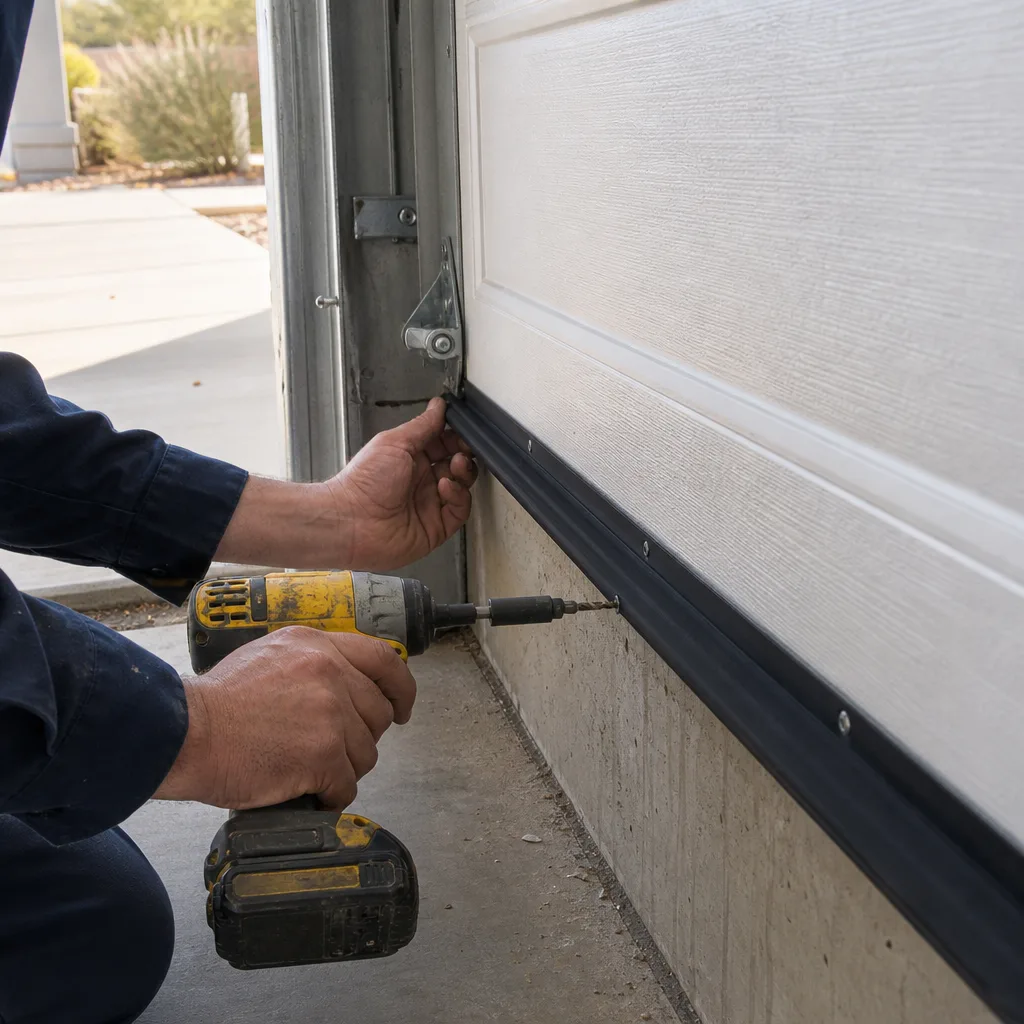
- Reaching for a cordless drill on a torsion bar. It looks faster than a winding bar and it’s exactly how people get hurt. There’s no shortcut for controlled spring tension.
- Paying a phone price that magically grows at the door. Ask for a written quote before anyone touches the door, and don’t let anyone tell you it “has to be adjusted” once they arrive.
When to Call a Professional
Call a professional the moment any of these is true: a spring is broken, a cable is slack or frayed, the door is crooked or off its track, you hear a bang from the torsion assembly, or the opener’s fault light won’t clear. Those are mechanical, load-bearing problems that no amount of urgency makes safe. We’d rather you called than found out.
For a Mesquite homeowner inside our county, we don’t charge a trip charge, and we quote the number on the phone and hold it at the door. Otto’s Garage Door Mesquite offers free estimates in Mesquite, and a live person answers around the clock, even at nine at night when a spring lets go. Call (844) 320-6569, and tell us what you heard and what you’ve already tried. We’ll tell you honestly whether it’s a today call or a tomorrow one.
Frequently Asked Questions
You can safely fix three things yourself: the manual release, the safety sensors, and a tripped breaker or GFI. You cannot safely fix springs, cables, or a door that’s off its track, and no emergency makes that safe. Call (844) 320-6569 for an exact quote; estimates are free.
Pull the manual release cord, stand to the side, lift the door about a foot to test its weight, and only lift it fully if it feels manageable. Prop it with a clamp on the track, then back the car out slowly. If the door feels heavy or won’t lift, leave the car and call us.
Most Mesquite spring repairs land in the $200 to $350 range, opener diagnostics and resets run roughly $100 to $200, and track or roller work is usually $150 to $300, depending on parts. Every price is quoted on the phone first and held at the door. Call (844) 320-6569 for a number that fits your door.
No. We quote on the phone and hold that number when we arrive. If the job turns out to need more than the quote covers, you hear it from us before any work starts, and you decide. Call (844) 320-6569 to get your quote.
Yes. Our technicians have up to 22 years of experience and are trained across all the major brands we work on. Every job is backed by our written 90-Day Done Right Promise, and a single call brings Otto back if anything isn’t right. Call (844) 320-6569 to schedule.
No, and we’ve seen too many Mesquite homes learn that the hard way. Lock the walk-through door between your house and garage, bar the big door from the inside with a length of wood through the track, and get someone scheduled for a repair the next morning. Call (844) 320-6569 and we’ll prioritize it.
The Bottom Line
An emergency is the worst time to teach yourself garage door repair, because that’s exactly when the dangerous shortcuts happen. The safe DIY list is short: manual release, sensors, breaker, remote batteries. The unsafe list is absolute: springs and cables, always. Get your car out through the manual release if the door lifts cleanly, secure the walk-through door if it doesn’t, and get a professional scheduled for anything load-bearing. Otto’s Garage Door Mesquite has been doing this work locally since 2004, and we’d rather solve your emergency in one call than hear about it after the fact. If you’re not sure which side of the line you’re on, call us and we’ll tell you honestly.
Written by the team at Otto’s Garage Door Mesquite.
See the difference
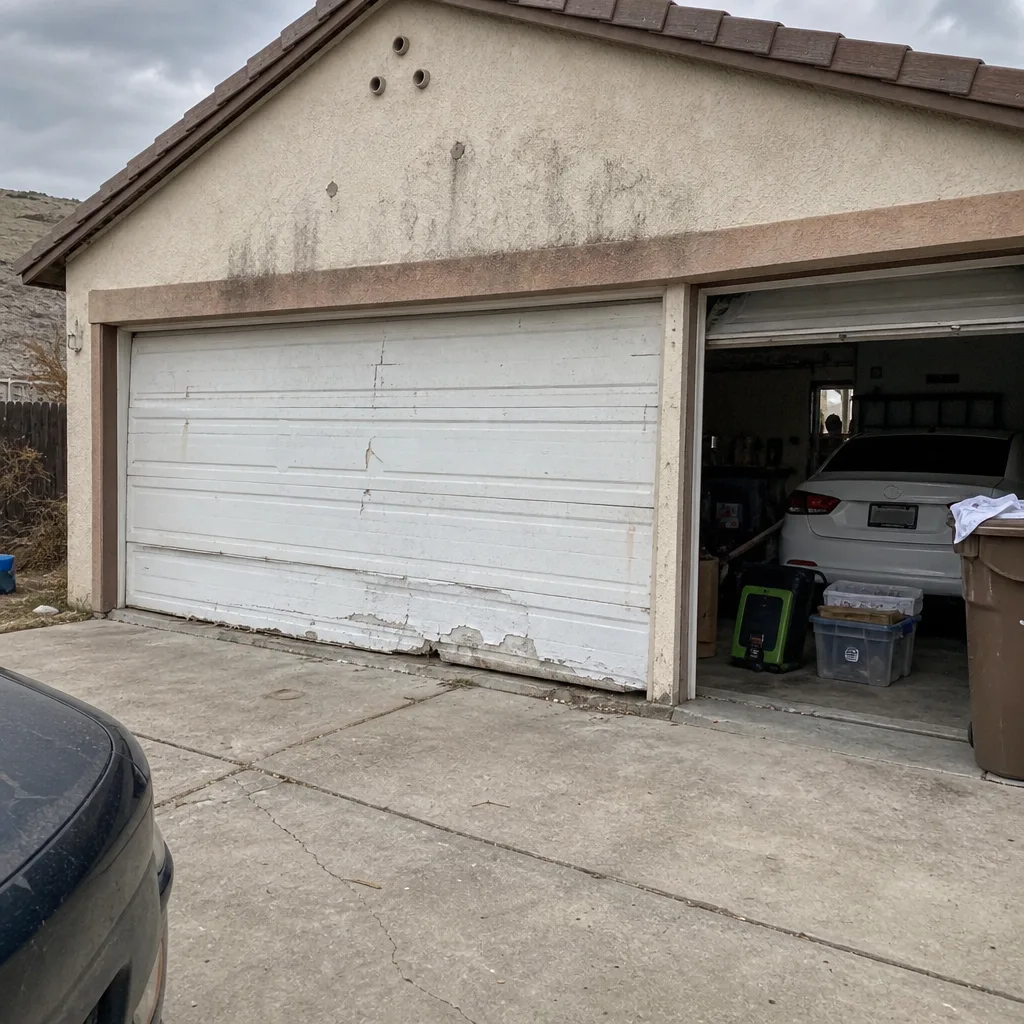 Before
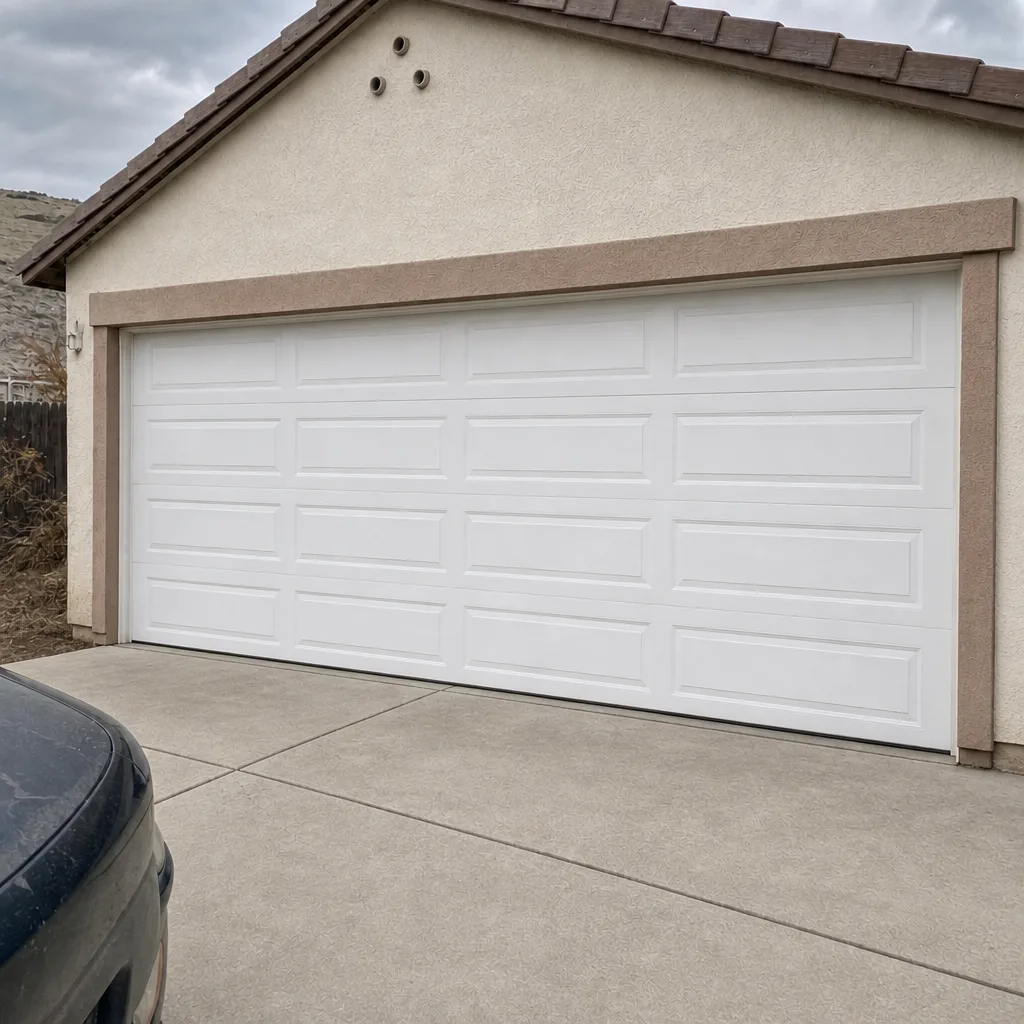 After
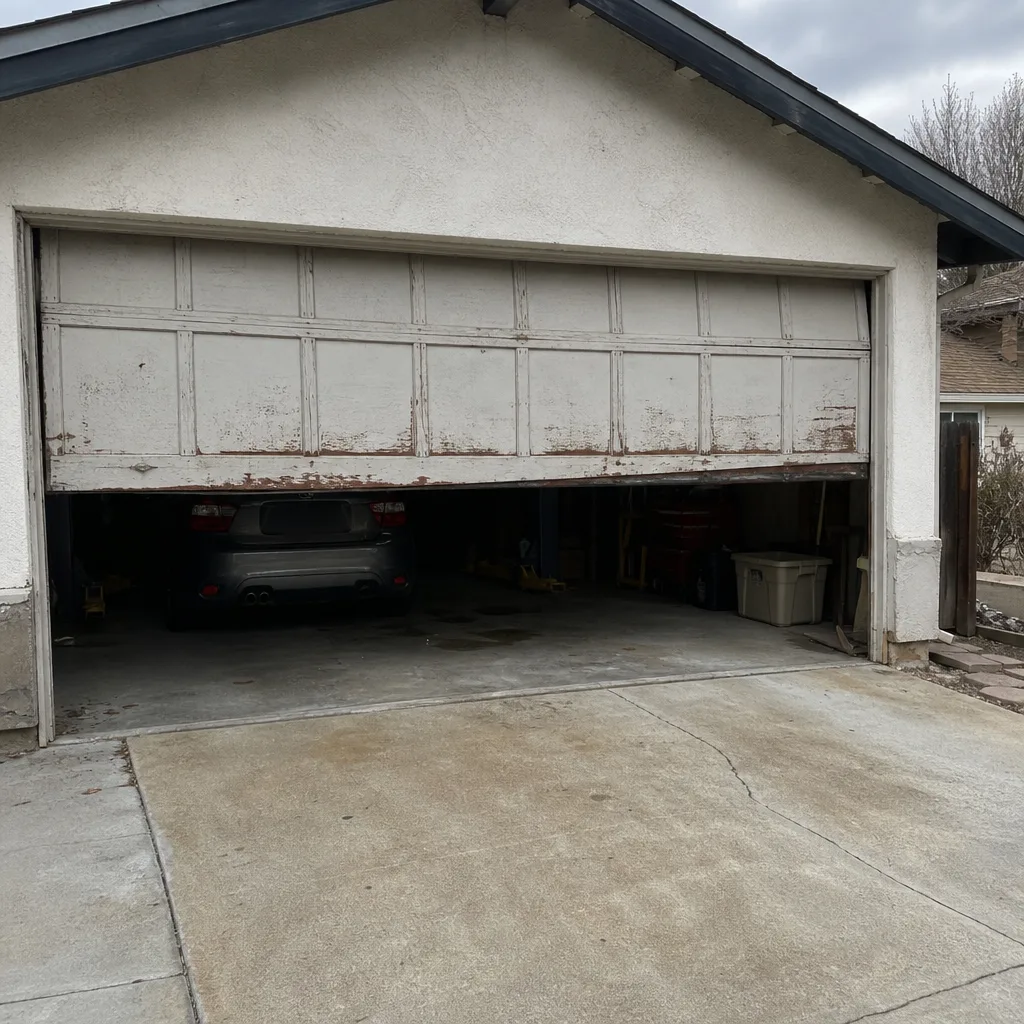 Before
 After
 Before
 After