
Last updated November 17, 2026
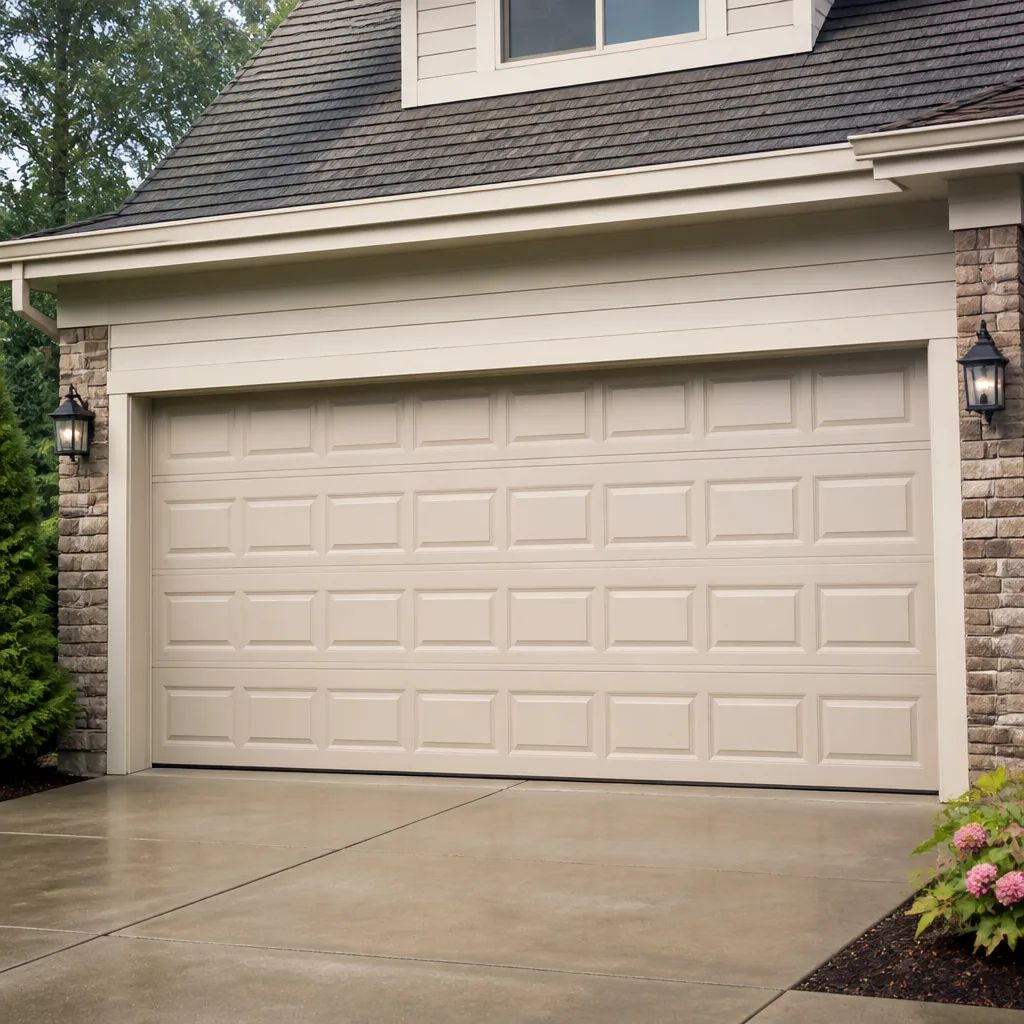 Raised-panel steel
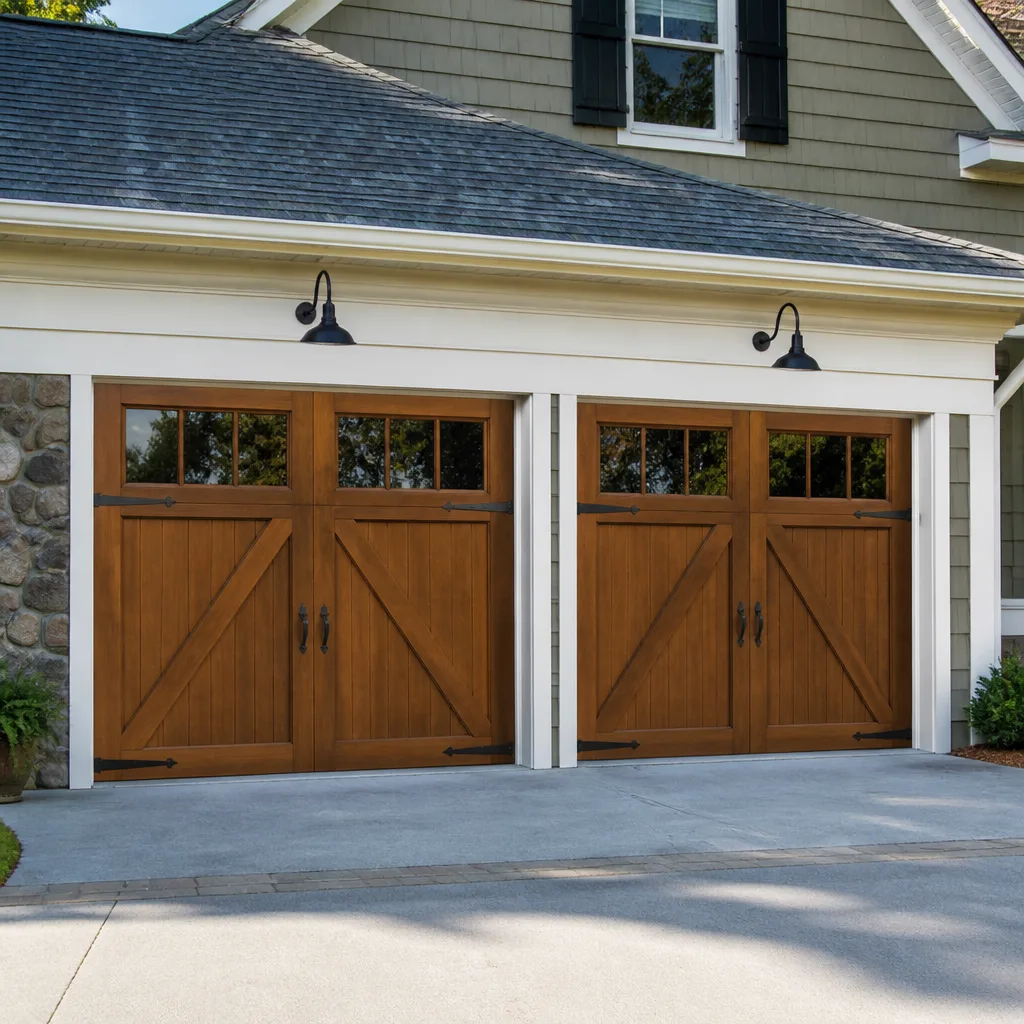 Carriage house
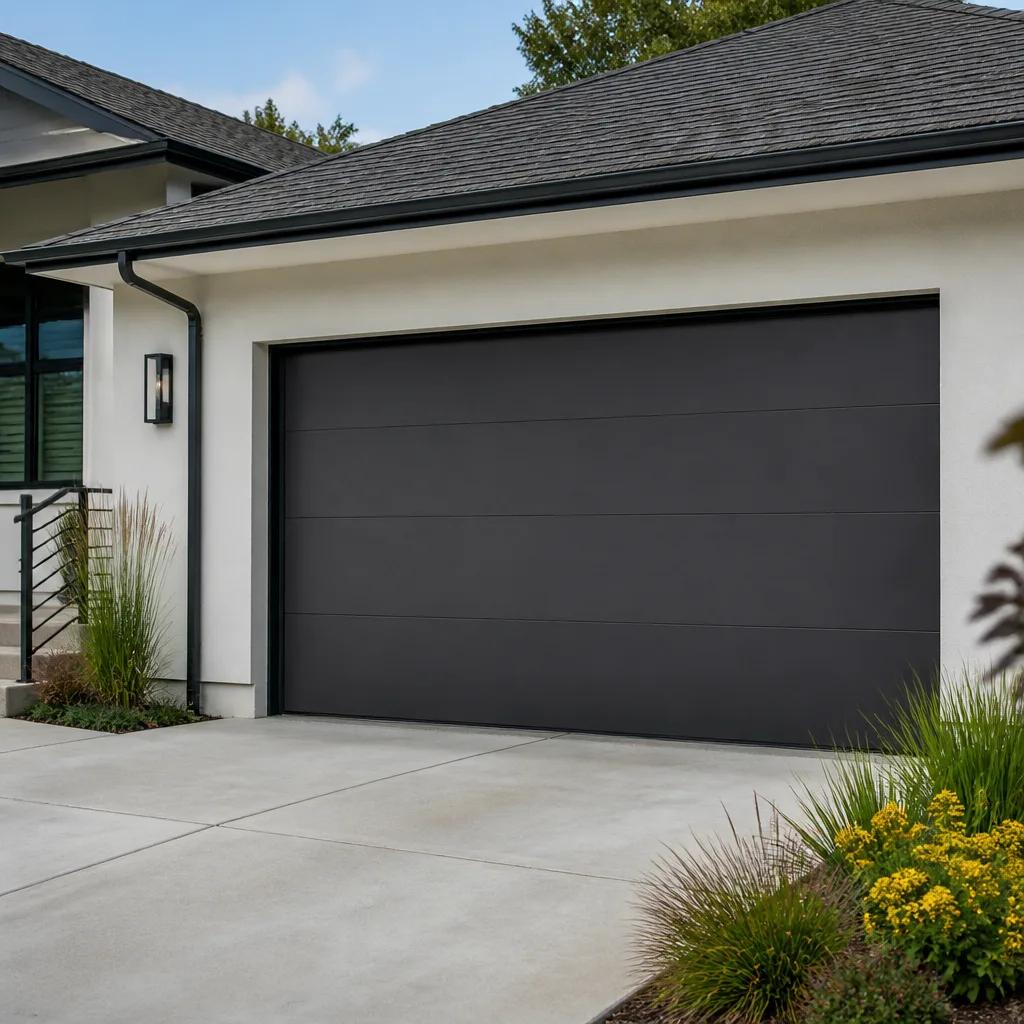 Modern flush
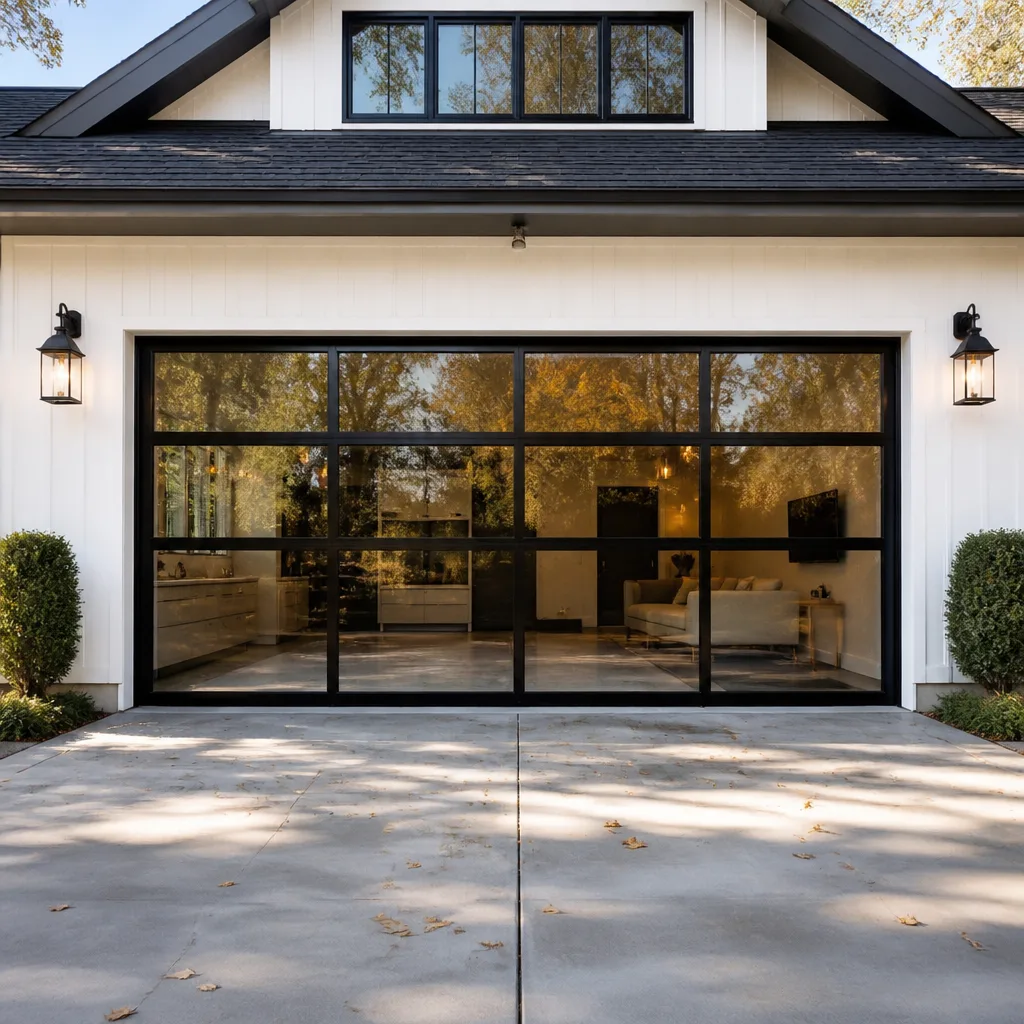 Full-view glass
 LiftMaster openers
 Chamberlain openers
Full 25-point door and opener safety check with every visit - springs, cables, rollers, tracks, and your LiftMaster or Chamberlain opener included
You get a price before we start. It does not change when the pro arrives.
Get your free estimateGarage Door Parts Troubleshooting: Common Problems and How to Fix Them
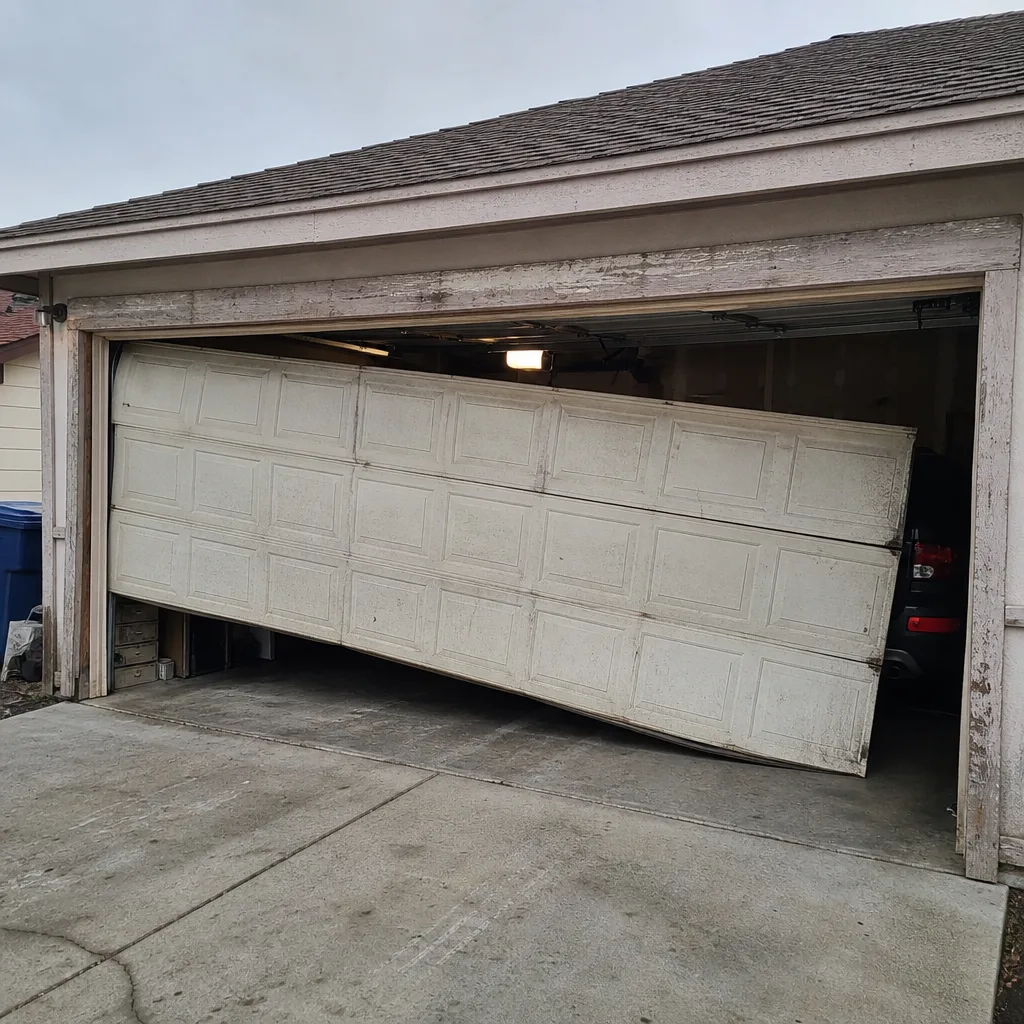
When a door goes crooked in its tracks, there are exactly four parts that cause it: a broken cable, a busted bottom bracket, a bent track, or a blown spring on one side. That’s it. Four. Everything else you see – the gap at the floor, the binding, the groan – is downstream of one of those four things giving out. Most homeowners call us and describe the symptom. “It’s crooked.” “It’s loud.” “It won’t stay up.” By the time they finish the sentence, we can usually name the part. This guide teaches you to do that backward math yourself: start with what the door is doing, work back to the component that made it do it. We’re writing it from Mesquite, and the desert heat out here reshapes a few of these failure patterns, so we’ll flag where.
Quick Answer
Most garage door problems trace to one failed part, and the behavior of the door tells you which one: a crooked door almost always means a snapped cable, a cracked bottom bracket, a bent track, or a blown spring on one side; a loud bang with a door that won’t open means a broken torsion spring; shaking and grinding point to worn rollers, dry hinges, or a worn opener gear. Identify the symptom first, then confirm the part before you touch anything – springs, cables, and bottom brackets carry lethal tension and are not homeowner work.
Styles & brands we work with
- Raised-panel steel
- Carriage house
- Modern flush
- Full-view glass
- LiftMaster openers
- Chamberlain openers
Table of Contents
- The Symptom-to-Part Diagnostic Matrix
- Broken Torsion Springs vs. Broken Extension Springs
- Cascade Failure: Finding the Cause, Not the Casualty
- Parts That Look Broken (But Aren’t) and Parts That Look Fine (But Aren’t)
- Rollers, Hinges, and Bearings: The Quiet Failures
- Opener Parts: Gears, Capacitors, and Safety Eyes
- How to Photograph a Parts Problem Before You Call
- Why Mesquite Heat Changes the Parts Failure Math
The Symptom-to-Part Diagnostic Matrix
Here’s the working map. Read down the left column until you find what your door is doing. The right column is the short list of parts that cause it – usually one, sometimes two, occasionally a cascade we’ll cover below. In our experience across Mesquite, this matrix catches the culprit on the first phone call about four times out of five.
- Door hangs crooked / one side low: broken cable, cracked bottom bracket, bent vertical track, or a blown spring on a two-spring setup.
- Loud bang from the garage, door won’t open: broken torsion spring. Classic. Once you hear it, you don’t forget it.
- Door won’t stay up when you lift it: spring tension is gone or badly weakened – torsion or extension.
- Door shakes and rattles on the way up: worn nylon or steel rollers, loose hinges, or a wall-mounted spring plate that’s worked loose.
- Grinding or scraping sound: dry or worn hinges and rollers, or a bent track pinching the roller.
- Door goes up partway and reverses: safety eye misalignment, a binding panel, or a failing opener logic board.
- Opener hums but the door doesn’t move: stripped opener gear (LiftMaster and Chamberlain units are notorious for the plastic gear wearing), or a snapped torsion spring the opener can’t lift against.
- Door slams down hard: broken spring or a worn torsion spring winding that’s lost tension – never let this ride.
Every one of those symptoms is a behavior. A behavior is a clue. The part is the answer. Work backward.
Broken Torsion Springs vs. Broken Extension Springs
These are the two spring systems, and confusing them is where a lot of bad DIY starts. A torsion spring sits horizontally on a bar above the door and twists to lift it. An extension spring runs along each side of the horizontal track, stretching to do the same work. When one breaks, the failure signature is different – and that difference is how you know which system you have and which part let go.
Torsion spring break: one sharp, single bang – like a rifle shot through the house. The door won’t open, or opens an inch and stops. Look at the torsion bar above the door: you’ll often see a clean gap in the coil. On a two-spring setup, the door can hang crooked if one side let go. Torsion springs are the standard on newer Clopay and Amarr doors.
Extension spring break: a stretched, elongated coil hanging loose along the side track, sometimes with a pulled hook at the end. The door may still open a little but sags on one side. Extension springs on older doors also have safety cables running through them – if those cables are missing or rusted, that’s a separate hazard worth flagging.
Here’s the part most homeowners don’t hear: both systems are under enough stored tension to take a hand off. A door is 200 pounds riding on two springs. Respect it. We repair and replace springs – we don’t teach anyone to wind them, and neither should any honest guide.
Cascade Failure: Finding the Cause, Not the Casualty
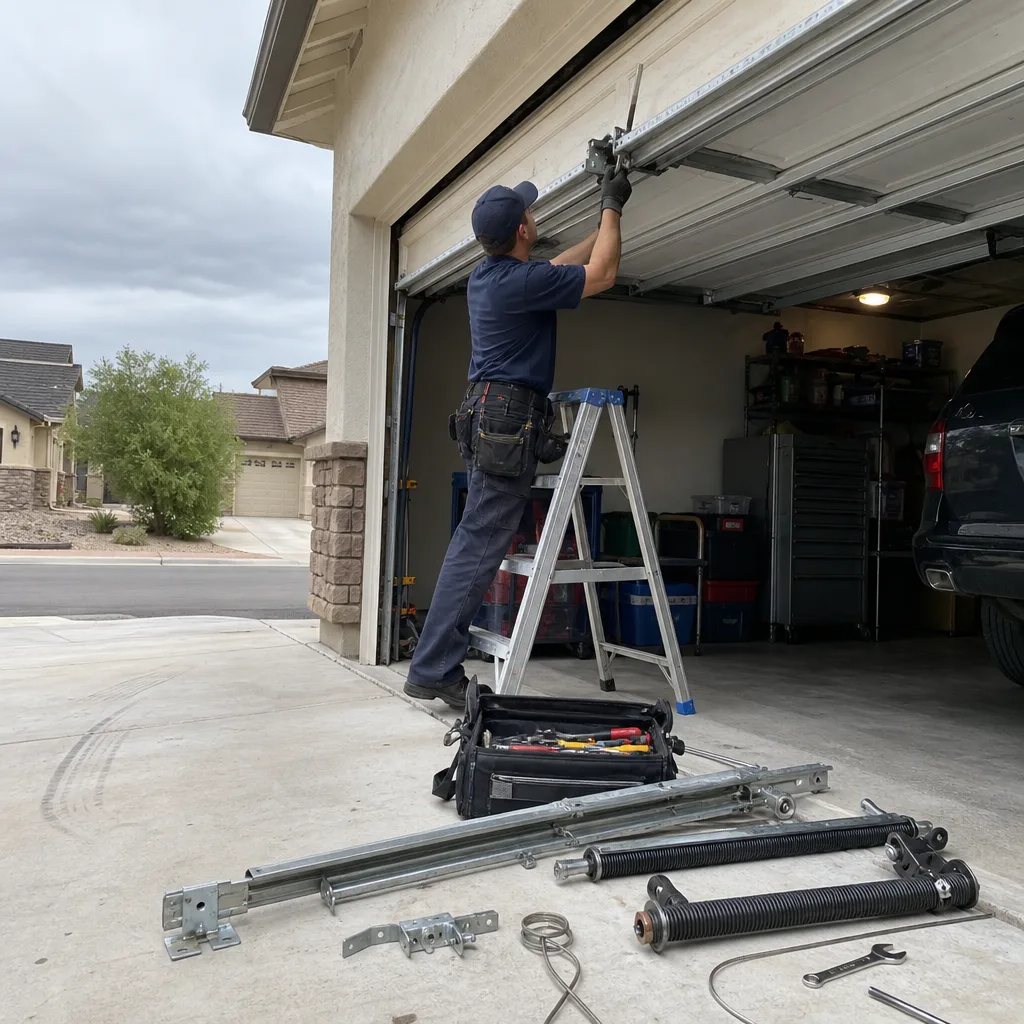
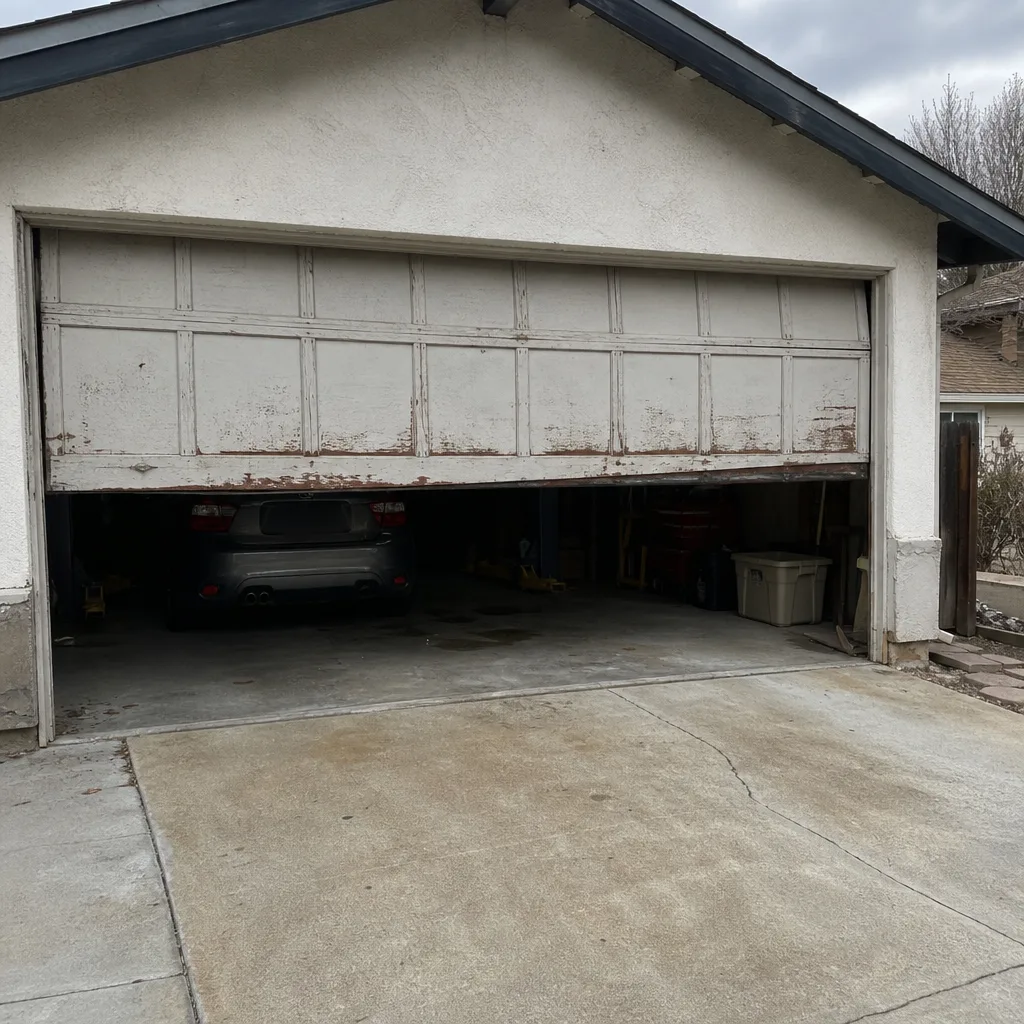
One failed part rarely fails alone. When a torsion spring snaps on one side of a two-spring door, the door drops a few inches before the other spring catches it – and in that split second the cable can jump the drum, the bottom bracket can crack, and a roller can pop out of a bent track. By the time you walk out and look, you see three broken things. Two of them are casualties. One is the cause.
Here’s how we sort it. Start with the part that carries the most load. That’s almost always the spring. A snapped spring is the origin; a cracked bottom bracket next to it is the wreckage. If you replace the bracket and skip the spring, you’ve fixed the casualty and left the cause. It’ll happen again, and the second time it’ll take more with it.
A few cascade patterns we see in Mesquite:
- Broken torsion spring → cable jumps the drum → door comes down crooked → bottom bracket cracks.
- Bent vertical track (often from a backed-into door) → roller wears unevenly → hinge loosens → panel shakes loose at the seam.
- Stripped opener gear → homeowner keeps running it → door stalls mid-travel → safety eye or logic board faults from the repeated reversing.
- Rusted extension spring safety cable (common on older doors in dry climates) → spring lets go without restraint → track damage from the loose coil.
When you document a problem before calling, note every damaged part you can see. We need to know the whole chain, not just the loud end of it. That’s the difference between replacing one part and replacing three.
Parts That Look Broken (But Aren’t) and Parts That Look Fine (But Aren’t)
This is the most common place homeowners land after they’ve started poking around. Two misdiagnoses show up over and over.
The part that looks broken but isn’t: a bottom bracket with a hairline crack or a scorched-looking patch. Nine times out of ten it’s surface rust or a factory weld seam, not a structural crack. Same with a slightly bowed torsion bar – a tiny sag is often within tolerance, not the culprit. Don’t replace a part because it looks tired. Confirm it’s failing.
The part that looks fine but is the actual problem: a tension spring that’s lost 20% of its lift but hasn’t snapped. It looks intact. It may even hold the door up. But it’s the reason the door feels heavy, the opener is straining, and the door reverses at the halfway point. This is where we count spring cycles the way you count tire miles – we’ll tell you what’s left on yours. A spring that’s given up most of its cycles is the answer even though it hasn’t broken yet.
Another sneaky one: a roller that spins freely but has a worn axle. The wheel looks new. The pin is shot. And a hinge that looks tight but has a wallowed-out screw hole behind it – the hinge is fine, the wood it’s screwed into isn’t.
If your opener is straining, the problem is almost never the opener. Check the spring tension first.
Rollers, Hinges, and Bearings: The Quiet Failures
Rollers, hinges, and center bearings don’t fail dramatically. They fail slowly – a rattle here, a grind there – and most homeowners tune it out until something bigger breaks. Rollers come in nylon and steel; nylon is quieter and lasts well but can flat-spot in extreme heat, while steel is durable but louder and can seize. In the Mesquite summer, we see nylon rollers flat-spot more often than you’d think, especially on doors with south-facing exposure.
What to check, gently:
- Run the door and listen at each hinge. A squeak points to a dry hinge; a grind points to a worn roller or bearing.
- Look at the rollers in the track. A flat spot or a cracked nylon wheel is a replace, not a lubricate.
- Check the center bearing plate at the top of the door. A worn bearing lets the torsion bar wobble, which eats the springs prematurely.
- Confirm nothing is loose at the hinge screws. A loose screw backed out from drywall won’t hold long – the hinge needs a proper anchor.
Most of this is maintenance, not repair. Rollers and hinges are homeowner-replaceable with the door down and the opener unplugged. Anything touching the torsion bar or cable is not. Do the maintenance, and let us handle the load-bearing parts.
Opener Parts: Gears, Capacitors, and Safety Eyes
When the opener is actually the problem, it’s almost always one of three parts: the drive gear, a start capacitor, or the safety eyes. The drive gear – often a plastic gear inside the unit – strips over time, especially on older LiftMaster and Chamberlain units. You’ll hear the motor hum, the door won’t move, and if you peek at the top, the rail gear is spinning with nothing to grab. A start capacitor fails quietly and the motor just won’t start; a hum without movement is the tell. Safety eyes misalign easily – a bumped wire, a cobweb, or a sun angle that blinds the receiver. If your door reverses at the floor, check the eyes first before you assume the motor is dead.
Genie and Chamberlain garage door openers follow the same logic. The opener is a lifting aid, not a lifting source – if the door is heavy, fix the spring and the opener stops straining. That’s also how you avoid replacing an opener you didn’t need to replace.
How to Photograph a Parts Problem Before You Call
A good photo set shortens the job. When you call us, the conversation goes faster, the part gets ordered faster (or pulled from the truck), and there’s less chance of a surprise on arrival. Document it in this order:
- Stand back and photograph the whole door, floor to header, so we can see if it’s hanging crooked or out of square.
- Close-ups of the springs above the door – both sides if it’s a two-spring torsion setup, or both extension springs on the sides.
- Close-ups of the cables where they meet the bottom corners. That’s where a jump or a kink shows up.
- Close-up of the bottom bracket on each side – we need to see cracks, bends, and rust at the bolt.
- Close-up of the track where the door has been binding. A dented or bowed track is visible.
- A short video of the door running, from the side. The behavior tells us more than a still.
Don’t stick a phone or a hand inside the track or near the springs while the door is moving or the opener is plugged in. Photograph stationary parts. Add a note about what the door is doing when you call – it’ll save a trip.
Why Mesquite Heat Changes the Parts Failure Math
We’re writing this from Mesquite, and the desert here reshapes a few of these failure patterns. Mesquite summers run hot enough that the garage interior routinely bakes, and the temperature swings through the day are hard on spring steel and on the plastic gears inside an opener. We see more premature torsion spring failures on doors with south-facing exposure, and more stripped drive gears on older openers than our technicians see in milder climates – some of our techs bring up to 22 years of experience across different regions, and the difference is noticeable.
The dust is the other factor. Our part of the county gets wind-blown dust that works its way into rollers, tracks, and hinge pins. That dust dries out lubricant faster than a humid climate would, which is why the grinding-and-shaking symptoms show up earlier here. Clean and lube the moving parts on a schedule, and check your spring tension before the summer heat peaks, not in the middle of it. If you’re outside the incorporated Mesquite limits and in the surrounding rural county, the same part failures show up – just with longer drive times to get to them. Inside our home county, there’s no trip charge. That local focus is the whole reason we keep the Otto’s Garage Door Mesquite home page pinned to the front of the site.
Common Mistakes to Avoid
- Assuming a crooked door means a bent track. It usually means a cable or a bottom bracket, and if you try to straighten a track that isn’t the problem, you can create a second issue.
- Replacing a part because it looks tired. Surface rust, a factory weld seam, a tiny sag – these aren’t failures. Confirm the part is the cause before you spend the money.
- Touching the springs. Both torsion and extension springs carry stored energy that can kill. Full stop. If a spring is the problem, that’s a call, not a DIY project.
- Skipping the safety cables on older extension-spring doors. Rusted or missing cables are common on older Mesquite-area homes, and a spring that lets go without them becomes a projectile.
- Blaming the opener for a heavy door. If the opener is straining, the problem is almost always the spring. Replacing a good opener because the spring was weak gets expensive fast.
- Documenting only the loud part. The snapped spring you hear isn’t always the whole story. Photograph the whole chain of damage so the first call saves you a second trip.
- Running the door after a hard bang. Repeated cycling after a spring break turns one casualty into three. Stop, photograph, and call.
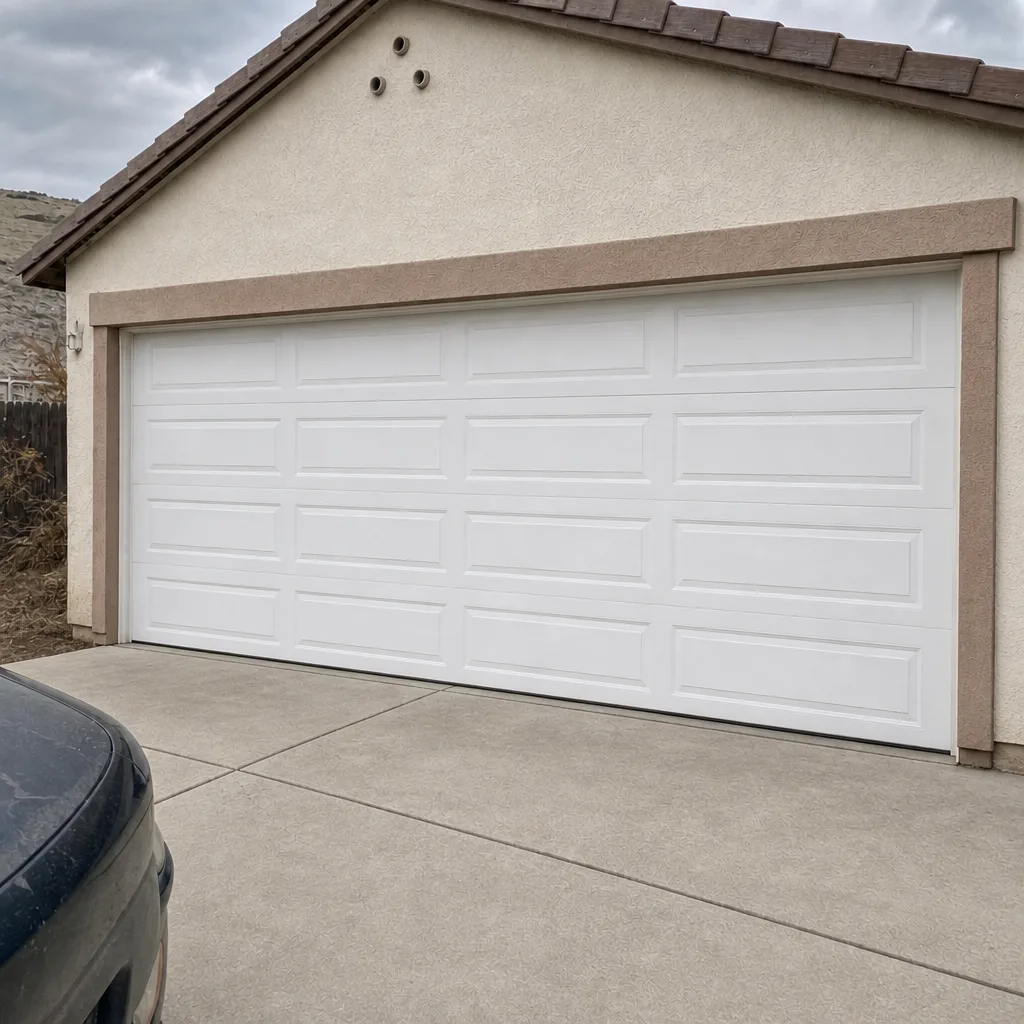
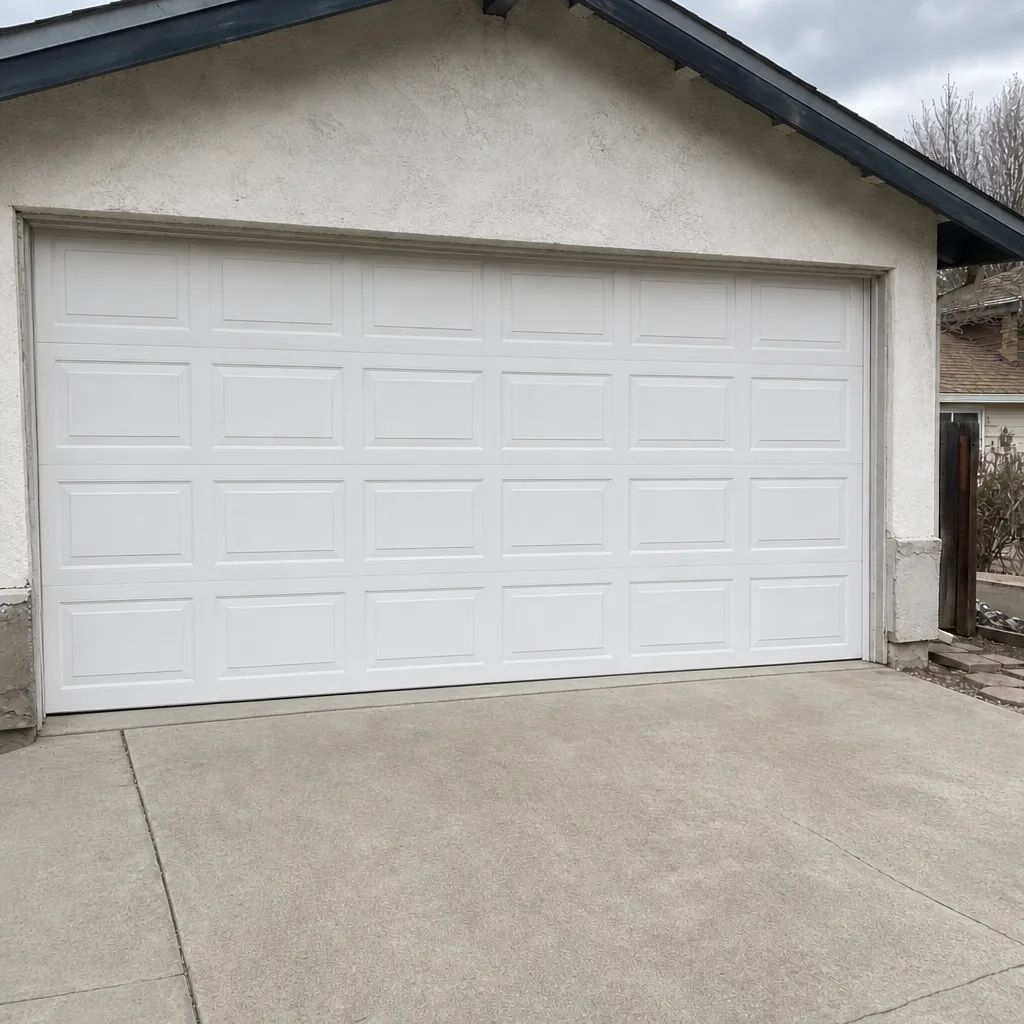
See the difference
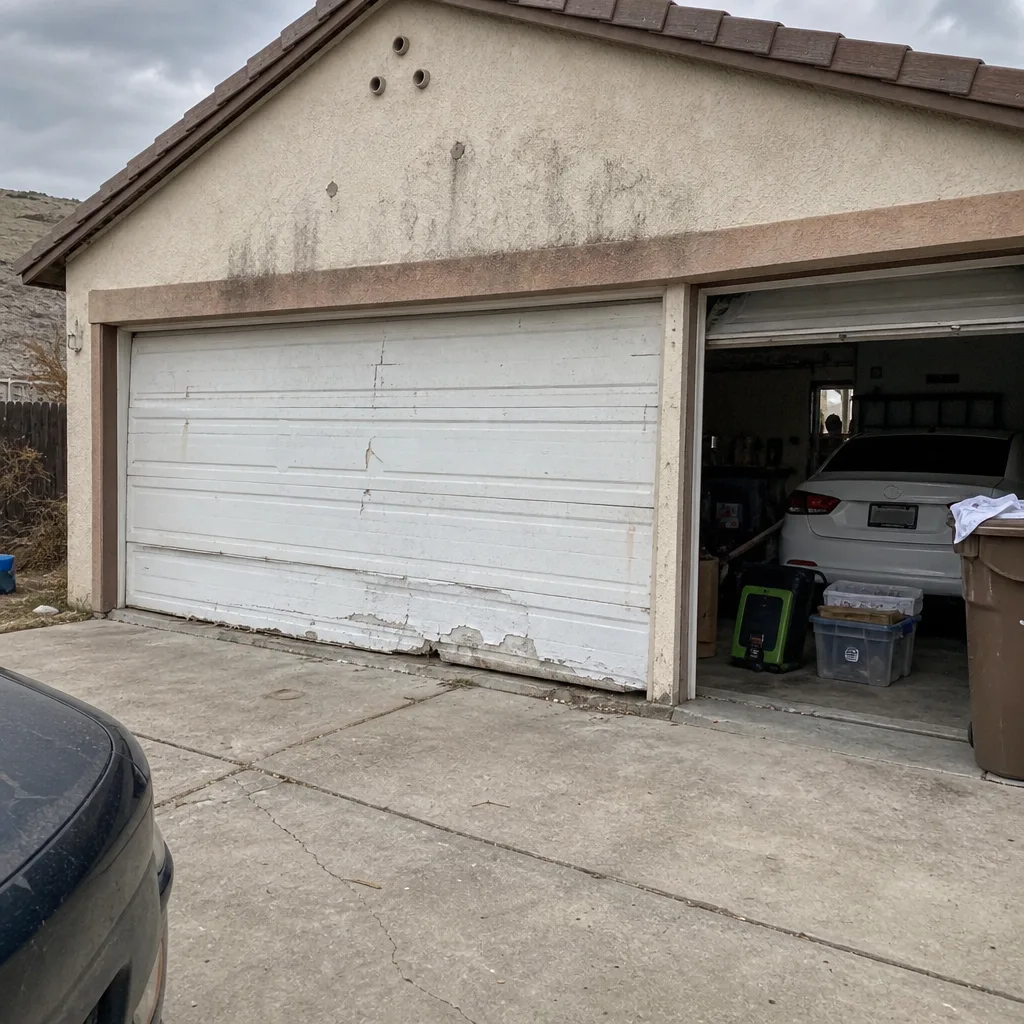 Before
 After
 Before
 After
 Before
 After
When to Call a Professional
Call when the symptom points to a spring, cable, or bottom bracket – those are load-bearing parts and no honest guide will talk you through them. Call when a door won’t stay up, slams down, or hangs crooked after a bang. Call when the opener hums and the door doesn’t move and you’ve confirmed the spring is intact. And call when you’ve started poking around and want a second set of eyes before it gets worse. Otto’s Garage Door Mesquite handles Garage Door Repair in Mesquite and Garage Door Opener Repair & Installation in Mesquite, and a live person answers the phone around the clock – including nine at night when a spring lets go and your vehicle is sealed inside. The price is quoted on that call and it doesn’t move between the phone and the driveway. If you’re already considering a new door rather than a repair, we can talk Garage Door Installation in Mesquite instead. Free estimates, and we’re happy to give a free second opinion on any written estimate you’ve already got.
Frequently Asked Questions
No. Torsion and extension springs are under stored tension that can cause serious injury or death, and there’s no safe homeowner shortcut. A door is 200 pounds riding on two springs – respect it. Call a professional, and if your door is down and your car is trapped, call us at (844) 320-6569; we answer around the clock and quote the job on the call.
Look at where the spring sits. Torsion springs run horizontally on a bar above the door and show a clean gap when they break; extension springs run along each side track and hang loose when they break. The sound differs too – torsion springs let go with one sharp bang. Either way, don’t touch it. Call for a quote.
All four are possible: broken cable, cracked bottom bracket, bent track, or a blown spring on one side of a two-spring setup. Photograph the bottom corners and the spring bar and call it in. We’ll narrow it on the phone and quote before we drive out.
Usually a stripped drive gear inside the opener, or a weak spring the opener is fighting. Check the spring tension first. If the spring is fine, the gear is likely the culprit – common on older LiftMaster and Chamberlain units and worth a diagnostic call before you replace the whole opener.
It depends on the part – a roller or hinge replacement is a small line item, while a spring, cable, or bottom bracket repair runs higher because of the labor and safety involved. We quote the exact number on the phone and hold it at the door. We’re also running $40 off any repair over $200, and there’s no trip charge inside our county. Call (844) 320-6569 for an exact quote – estimates are free.
Not inside our home county – there’s no trip charge. For homes further out, we’ll tell you before we schedule, not after. A quote is a quote, and we hold it.
The Bottom Line
Work backward. The door tells you what it’s doing; the part tells you why. Crooked door means cable, bracket, track, or a blown spring on one side. A sharp bang means a torsion spring. Shaking and grinding mean rollers, hinges, or a worn opener gear. Don’t fix the casualty and skip the cause, don’t trust a part because it looks tired, and don’t trust a spring because it looks fine. Springs, cables, and bottom brackets aren’t homeowner work. Everything else is maintenance you can schedule.
If you’ve got a parts problem in Mesquite and you’ve already got a photo and a symptom, the call is short. Call (844) 320-6569 for a free estimate – a live person answers, the price is quoted before the visit, and we hold it. Every job comes with the 90-Day Done Right Promise in writing, and if something isn’t right, one call brings us back.
Written by the team at Otto’s Garage Door Mesquite.