
Last updated November 17, 2026
 Raised-panel steel
 Carriage house
 Modern flush
 Full-view glass
 LiftMaster openers
 Chamberlain openers
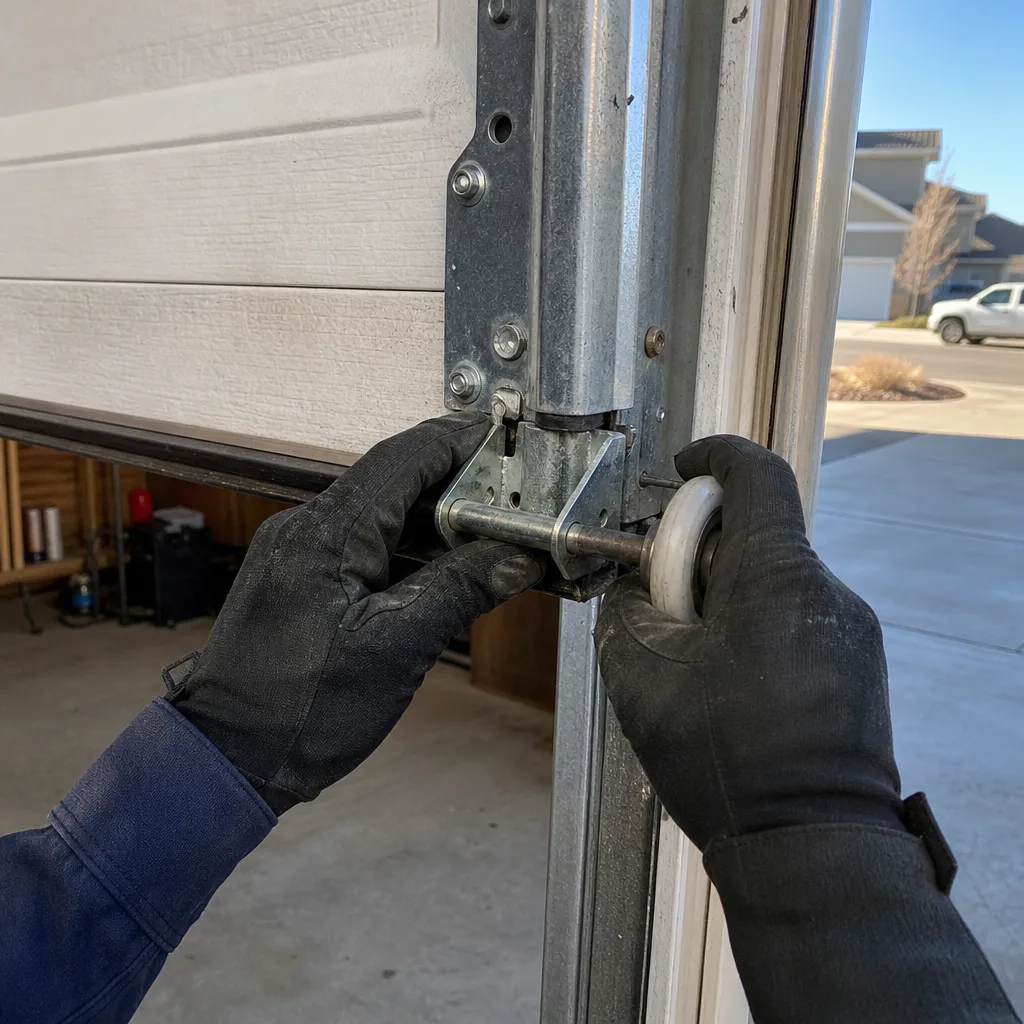
Full 25-point door and opener safety check with every visit - springs, cables, rollers, tracks, and your LiftMaster or Chamberlain opener included
You get a price before we start. It does not change when the pro arrives.
Get your free estimateGarage Door Parts Warning Signs Every Homeowner Should Know
A door that takes two seconds longer to open than it did last month isn’t “getting old” – it’s telling you a specific part is failing, and there’s a short list of which one. Most homeowners wait for a total failure before they call anyone. By then a $180 roller or balance problem has usually turned into a snapped spring, a chewed-up opener gear, or a door that won’t budge on a 108°F Tuesday afternoon. In Mesquite, where the summer heat cooks the grease right out of your moving parts, that timeline runs a lot faster than it does in cooler climates. This guide teaches you to read the early signs: which sound means which part, which visual clues homeowners routinely ignore, and the one condition that means stop using the door immediately.
Quick Answer
Your garage door gives fair warning before it fails through a small set of reliable signals: grinding sounds (worn rollers), popping on the way up (fraying cable on the drum), squealing through the whole cycle (dry torsion spring), and rattling (loose hardware). Visual clues include a cable that isn’t wrapping evenly on the drum, rust streaks below the spring mount, uneven bottom-seal wear, and a door that will no longer hold its balance when raised halfway. A gap or kink in the lift cable is the one sign that means stop using the door today and get a pro out – everything else is a schedule-the-repair problem, not a drop-everything problem.
Styles & brands we work with
- Raised-panel steel
- Carriage house
- Modern flush
- Full-view glass
- LiftMaster openers
- Chamberlain openers
Table of Contents
- What Do the Noises Mean? Sound-to-Part Map
- The Visual Signs Homeowners Ignore
- The Balance Test: How to Check a Door in Ten Minutes
- The Speed and Smoothness Test: What Healthy Looks Like
- The One Sign That Means Stop Using the Door
- How Mesquite Heat Ages Parts Faster
- Spring and Cable: Respect the Danger
- Common Mistakes to Avoid
- When to Call a Professional
- Frequently Asked Questions
What Do the Noises Mean? Sound-to-Part Map
Sound is the cheapest diagnostic tool you own. You don’t need to climb anything or unscrew a panel to listen. Stand in the driveway, cycle the door, and match what you hear to the list below. These are the four sounds we field calls about most in Mesquite, and each one points at a different set of parts.
- Grinding: almost always worn rollers or a dry, scored hinge pivot. The steel roller bearing has lost its grease and is dragging inside the track. A roller is a cheap part – a track that’s been ground oval by a seized roller is not.
- Popping on the way up: a cable that’s beginning to fray and is catching on the drum as it wraps. This one is urgent enough to look at today.
- Squealing through the whole cycle: the torsion spring has dried out, or a bearing plate has gone rough. In Mesquite, dry springs are far more common than worn ones because the heat bakes the lubricant off before the metal wears out.
- Rattling: loose hinge bolts, a loose bottom bracket, or a strut that’s come loose from the top section. Usually harmless to ride out a day or two, but harmless-sounding rattles on a 200-pound door aren’t harmless if they go unattended for months.
Compare the sound to how the door sounded a year ago. If you can’t remember, cycle it once now and once next month – the “getting old” noise usually started with a specific part, and matching the sound to that part is exactly what our technicians do before they quote the fix.
The Visual Signs Homeowners Ignore
The parts that fail first are usually not visible at eye level. You have to look up at the drum, at the spring mount, and down at the bottom seal. Here’s what to look for on a quick walk-around.
- A cable that isn’t wrapping evenly on the drum. Healthy cable winds in neat side-by-side wraps. A cable that’s crossed over itself, or shows a gap where the wrap should be tight, is one cycle from catching and snapping.
- Rust streaks below the spring mount or bearing plate. In Mesquite, moisture is scarce but the temperature swings are not. Rust streaks under the mount often mean a bearing plate has been slowly corroding from vibration and heat, or a spring has already shed a coil you didn’t notice.
- Uneven bottom seal wear. If one side of the rubber seal is worn flat and the other side still has its original thickness, the door is riding the track crooked. That imbalance is often a bent track or a failing roller – not a seal problem.
- Bent or bowed track. Stand at the door and sight down the vertical track like you’re checking a 2×4 at the lumber yard. Any kink that isn’t a straight line is going to fight a healthy roller.
- Hinges that have walked loose. Vibration works hinge bolts loose over years. A hinge that’s stayed loose long enough starts to oval the hole in the door panel – and then the panel itself is the part that needs replacing.
If you see any of these, take a photo and have them checked before the failure cascades into a bigger repair. Our Garage Door Repair in Mesquite page covers the repair side of each of these in detail.
The Balance Test: How to Check a Door in Ten Minutes
A balanced door should hold itself up when it’s mid-travel. If it doesn’t, your opener motor is doing work it wasn’t designed for, and you’re paying for it in a burned-out gear or a stripped sprocket a few months down the road. Here’s how to check balance without tools or climbing a ladder.
- Close the door fully. Watch the whole cycle one time – that’s your baseline for speed and smoothness (more on that below).
- Disengage the opener. Pull the emergency release cord, the one that hangs from the trolley. That takes the motor off the door and makes it manageable by hand.
- Raise the door by hand to about waist height, then halfway. Use both hands, one on each side, and let it go gently.
- Let it sit. A balanced door stays there – maybe drifts an inch or two, then holds. A door that wants to slide down on its own is under-sprung. A door that wants to keep going up is over-sprung. Both put strain on the opener and the track.
- Re-engage the opener. Push the release back in and check that the motor reconnects on the next cycle.
Do this once a year, and once any time you notice a new sound or a new hesitation. An imbalanced door will always show up in the balance test before it shows up in a broken part – that’s the whole point of doing the test. When a door is out of balance, we adjust the spring tension or replace the spring, and that’s the difference between a small repair and a motor replacement. Your Garage Door Opener Repair & Installation in Mesquite work depends on a balanced door – a strained opener is almost never a bad opener, it’s a bad balance.
The Speed and Smoothness Test: What Healthy Looks Like
Homeowners who’ve never watched a healthy door don’t know what they’re comparing to. Here’s the baseline: a properly adjusted door opens in about 15 seconds and closes in about the same, all at an even speed with no jerk, no pause, no “coffee break” at the top or bottom. Put a hand flat on the door’s stile while it moves – you should feel a steady hum, not a shudder or a stall.
Three things to test on every cycle:
- Start-to-close smoothness. If the door hesitates a half-second at the start of the cycle, the motor is straining against the spring balance.
- Speed steadiness. A door that slows down near the top has a spring that’s lost tension – which in Mesquite heat is common after 7 – 10 years on a standard spring.
- Auto-reverse. Lay a 2×4 flat in the door’s path and let it contact the board. The door should reverse on contact and go back up. If it hits the board and stops, the safety reverse is out of adjustment and it needs to be corrected before the door cycles again.
The value of this test is exactly what you’d think: it gives you a baseline. Next month, when the door starts taking two seconds longer, you’ll know whether it’s temp drift or the beginning of a real failure. That two seconds is what most people write off as “getting old.” It’s almost always a specific part.
The One Sign That Means Stop Using the Door
Most warning signs on this page mean “schedule a repair,” not “use the door again.” There’s exactly one exception: a gap, kink, or frayed section in the lift cable. That cable is under hundreds of pounds of tension. It lifts the full weight of a 200-pound door. A cable that’s frayed at the drum or shows an obvious gap where the strands have separated is a cable that’s going to snap – and when it does, the door drops.
If you see any of the following on either side’s cable, stop cycling the door today and call a professional:
- A visible gap where the cable is frayed or split at the drum.
- A kink in the cable that stays kinked when you tug on it lightly.
- A cable that’s come off the drum entirely and is draped across the bracket.
- Any sign the door has come down hard on its own – even once.
Do not try to move the door to get the car out. Do not try to remove the cable yourself. The cable and the spring are the two parts of a garage door system that genuinely injure people. A trained professional has the tools to release that tension safely, and we’ve seen the aftermath of the alternative enough times to tell you: it isn’t worth saving the service call. Our team is available around the clock for exactly this kind of call, and the number to use is (844) 320-6569.
How Mesquite Heat Ages Parts Faster
A garage door in Mesquite works in conditions that would shorten the life of the parts in cooler climates. Summer garage temperatures here routinely sit well above 100°F for weeks on end, and that heat does three specific things to your parts:
- It bakes the grease out of roller bearings and spring coils. A roller that would last 10 years in Ohio starts grinding at year 5 or 6 here.
- It makes torsion springs lose tension faster. A standard-cycle spring is rated for roughly 10,000 cycles. In our heat, that same spring gives you noticeably fewer cycles before the door starts to sag or hesitate near the top.
- It warps bottom seals and weatherstripping. Rubber that should flex at 80°F goes stiff and cracks around 115°F. When the seal hardens, it stops sealing – and that’s when you start seeing dust and summer heat on the garage floor.
What that means in practice: an annual checkup matters more here than it does elsewhere. The parts on a Mesquite door are aging faster than the parts on the same door in a cooler market, and the “sounds about normal” threshold for a homeowner should be lower. If you’re in Anthem, Sun City Mesquite, or out past the fairgrounds toward Bunkerville, you’re on the same accelerated clock. Our Otto’s Garage Door Mesquite home page is the place to start if you’d like a checkup scheduled.
Spring and Cable: Respect the Danger
We need to be direct about this section because it’s the one where homeowners get hurt. The torsion spring above your door is under hundreds of pounds of stored torque. The lift cable next to it holds the door’s weight. If either of those releases while you’re under it, you’re not getting a garage door repair – you’re going to the emergency room. This is the same reason we don’t publish DIY instructions for spring or cable work, and the same reason we tell people to stop cycling the door the moment they see a frayed cable.
What you can safely do without touching the spring or cable:
- Listen for squealing and note it – dry spring, needs lubrication by a pro.
- Watch the drum from the ground for uneven wraps and photo it.
- Do the balance test with the opener disengaged (both hands, no reaching overhead).
- Check the bottom-seal wear and the track straightness by sight.
- Check that the auto-reverse works with a 2×4 in the path.
What a professional does: measures existing spring cycles, releases tension safely, replaces the spring or cable, rebalances the door, and re-tests the balance and the auto-reverse before they pull out of the driveway. That’s the handoff – the homeowner watches and the pro does the work that can hurt someone.
Common Mistakes to Avoid
- Waiting for a total failure. A grinding roller is a $20 part. A seized roller that’s scored the track is a $300 repair. Every warning sign on this page is cheaper to fix today than in a month.
- Greasing the track. Garage door tracks should be clean and dry. Grease grabs Mesquite dust and turns into a paste that drags the rollers and eats the opener. Grease the spring and the hinges; leave the track alone.
- Disconnecting the opener and forgetting to reconnect it. The emergency release is meant to be re-engaged before the next cycle. A door left on the manual release for days is a door where a spring failure has nothing holding it back.
- Replacing the opener when the door is out of balance. A new opener on a door that’s under-sprung will burn out as fast as the old one. Fix the balance first. The opener is almost never the problem.
- Ignoring uneven bottom-seal wear. Most folks replace the seal itself and never look at the track that made it wear that way. Fix the track; the seal will follow.
- Assuming “sounds about normal” means normal. In Mesquite heat, the parts age faster than your ear is calibrated for. What sounds normal after seven summers on the same spring is often a spring beginning to fatigue.
- Trying spring or cable work yourself. The most expensive mistake on this list is also the most dangerous. Call a pro.
When to Call a Professional
Call us for any of the following: a gap, kink, or frayed section in the lift cable; a spring that’s visually broken (a clean gap between two coils); a door that won’t open at all; a door that’s come down on its own even once; or an opener that’s cycling but the door isn’t moving. Any of those is same-day urgent. For balance issues, grinding rollers, or a door that’s just lost its smoothness, that’s a scheduled repair – call and we’ll talk through the symptom, quote the likely fix on that call, and hold that number when we get to your house. Whether your door is a LiftMaster setup, an older Craftsman, a Raynor, or a Chamberlain, the diagnostics are the same and the answer starts with the same question: which part is doing the failing. Otto’s Garage Door Mesquite offers free estimates in Mesquite – call (844) 320-6569. A live person answers that line, day or night, and the price quoted on the phone is the price on the invoice.
Frequently Asked Questions
A popping sound during the up-cycle almost always means the lift cable is fraying and catching on the drum as it wraps. That’s a stop-using-the-door sign, not a wait-and-see sign, because a cable under tension that separates can drop the door. Call (844) 320-6569 for a same-day evaluation.
No. The lift cable and the torsion spring are the two parts of a garage door system that genuinely cause serious injury when they fail under a homeowner’s hands. A trained technician can release the tension safely, replace the cable, and rebalance the door – that’s not a job for someone watching a video. Call us and we’ll handle it.
Do a visual walk-around and a balance test once a year at minimum, and any time you notice a new sound or a hesitation. In Mesquite, we recommend an annual checkup because the summer heat ages springs, rollers, and seals faster here than in cooler climates. It’s a 20-minute visit that saves most homeowners a much bigger repair.
The common signs are a door that sags or hesitates near the top, a sudden squeal through the whole cycle, rust streaks below the spring mount, or a balance test where the door won’t hold its position halfway up. A spring that’s visibly broken – a clean gap between coils – is an immediate call. Our team can tell you what’s left on your spring in a few minutes.
Because heat bakes the grease out of roller bearings and spring coils, and it stiffens the rubber bottom seal. A door that runs fine in spring can start grinding by July. The fix is usually lubrication and a roller check – not a full replacement. Our Garage Door Installation in Mesquite page covers the cases where replacement makes more sense than repair.
No. We quote the likely fix on the phone based on what you describe, and we hold that number when we get to your driveway. If we find something different, we explain it before we touch the door and you decide whether to proceed. The price quoted is the price on the invoice – that’s the whole point of the way we run this.
The Bottom Line
Your garage door is a system of parts that fails in a predictable order, and it tells you which one is next through sound, sight, and the balance test. The four sounds (grinding, popping, squealing, rattling) map to four specific parts. The visual signs – cable wrap, rust streaks, uneven seal wear, bent track, loose hinges – are what homeowners miss because nobody climbs a ladder to look. The balance test and the speed test give you a baseline so you know what “getting old” actually looks like. And the one sign that means stop is a gap or kink in the lift cable. Respect that one. For everything else, schedule the repair before a $20 part turns into a $300 one. In Mesquite heat, that deadline is faster than you think.
If you’ve read this far and something on your door is matching the list, call Otto’s Garage Door Mesquite at (844) 320-6569 for a free estimate. A live person answers, we quote on the call, and we hold that number when we show up. If it isn’t done right, the 90-Day Done Right Promise on every invoice means one call brings us back. We’d rather keep you for twenty years than win one big ticket.
Written by the team at Otto’s Garage Door Mesquite.
See the difference
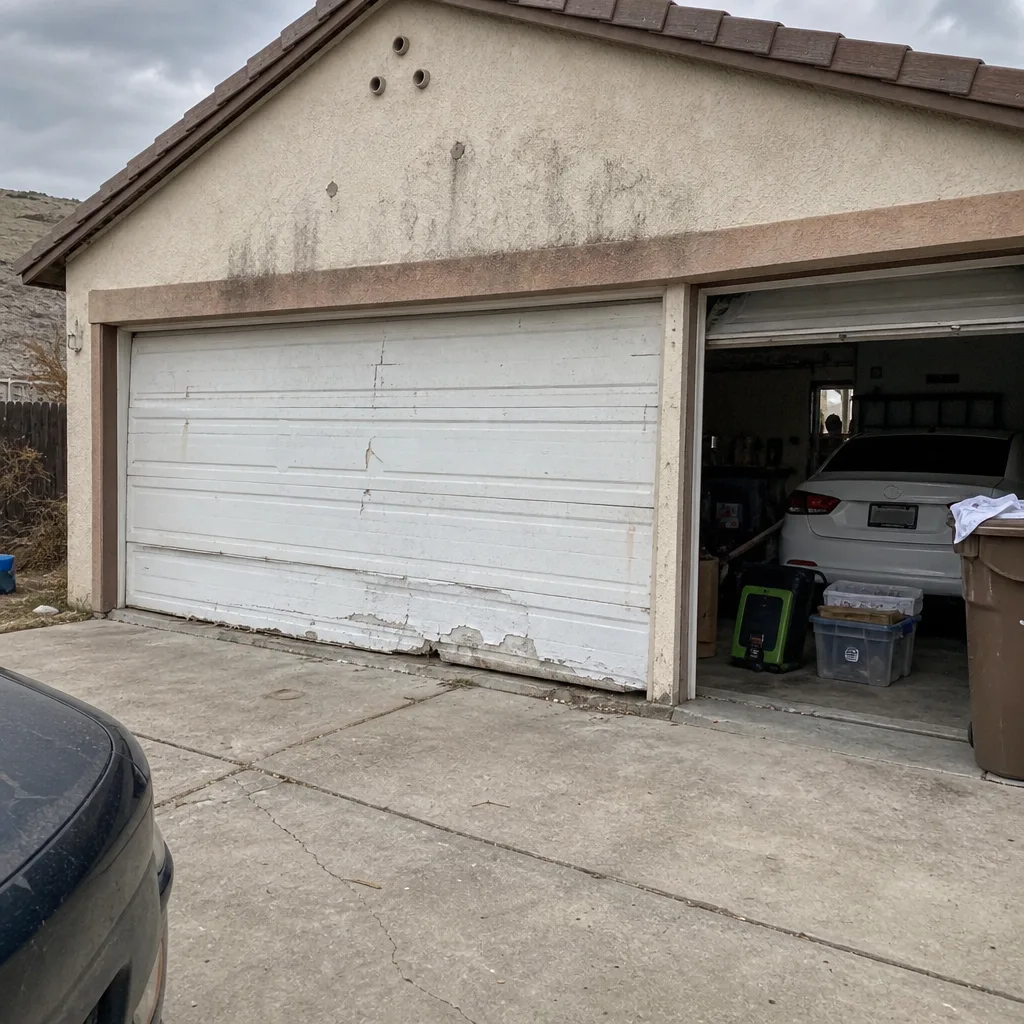 Before
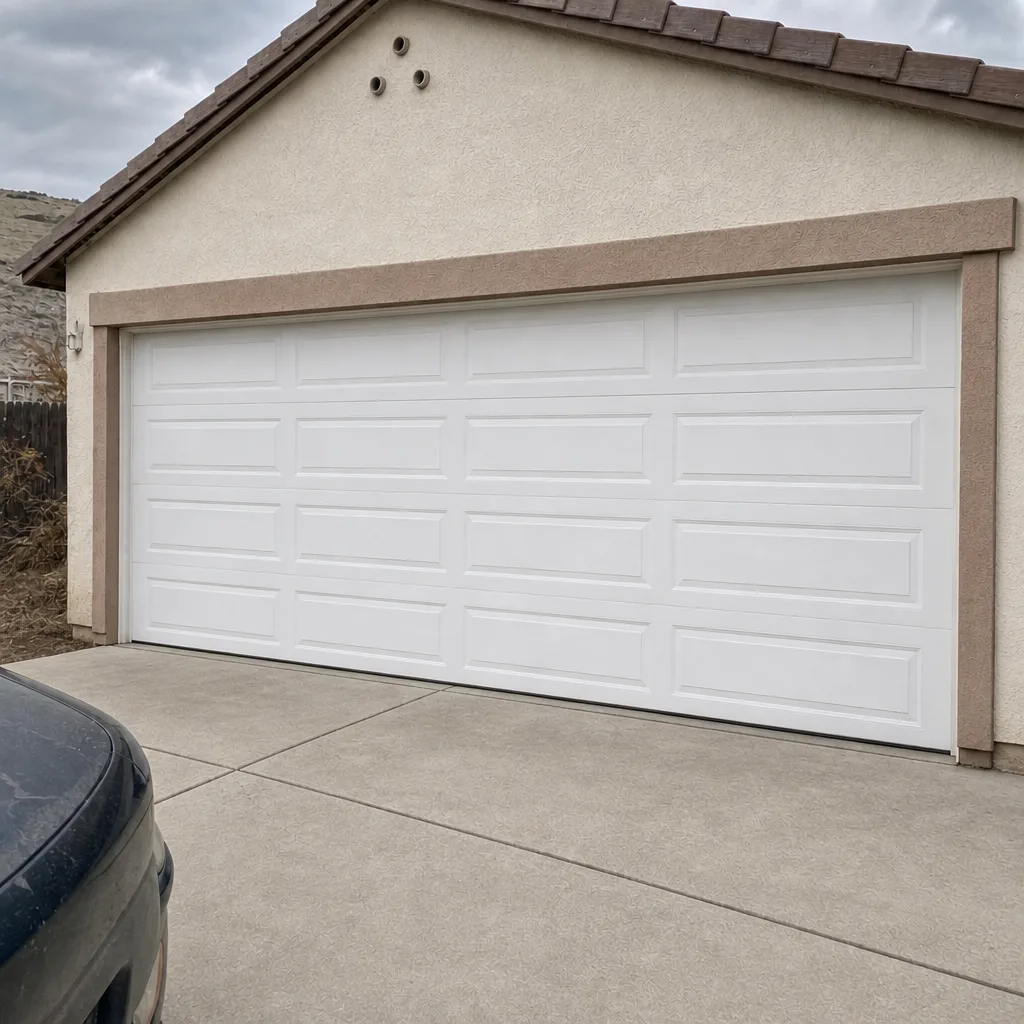 After
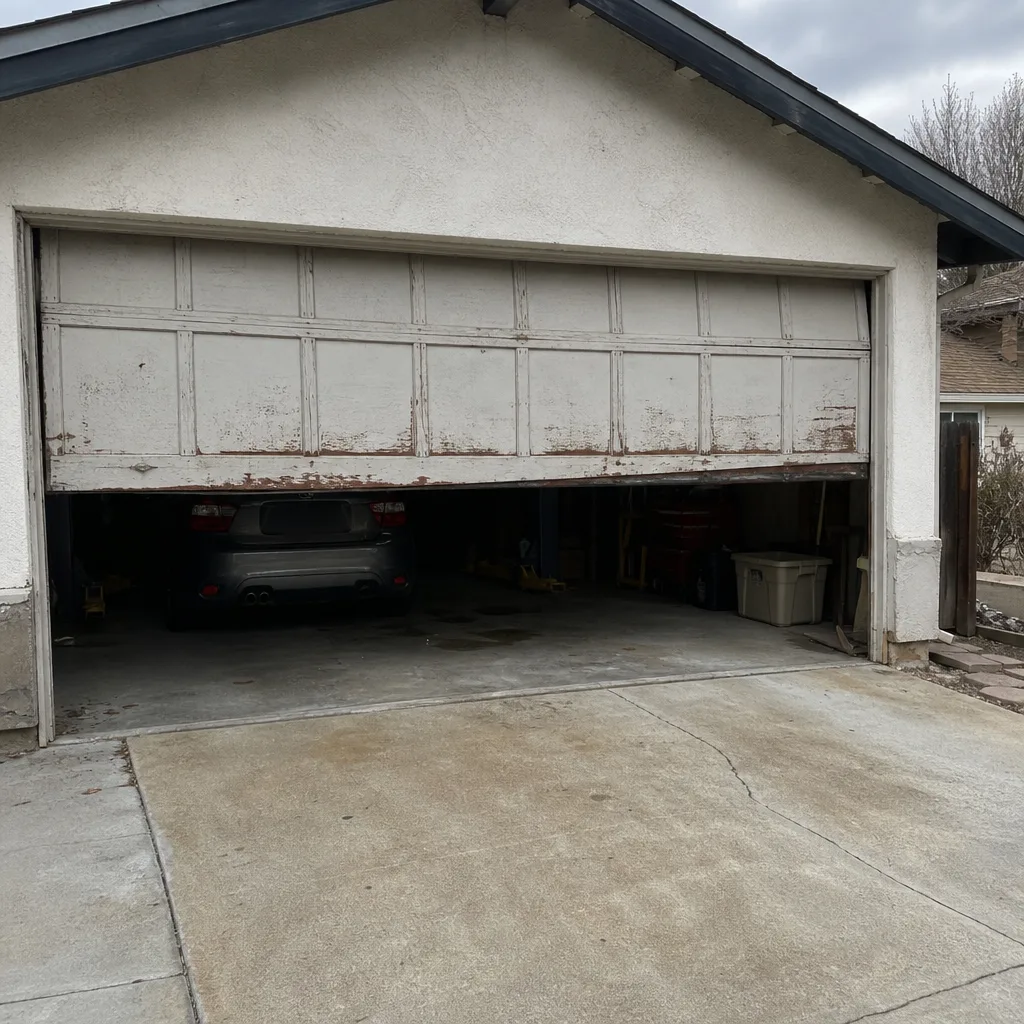 Before
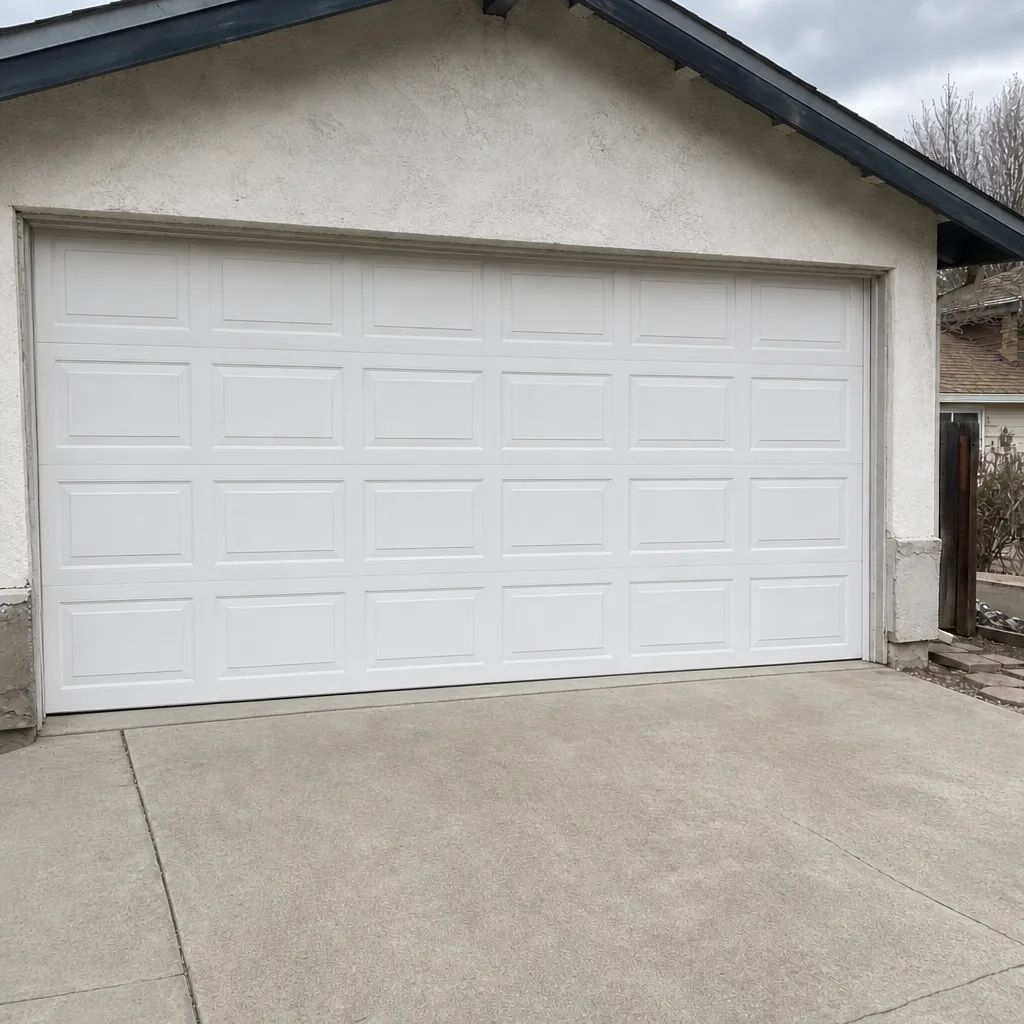 After
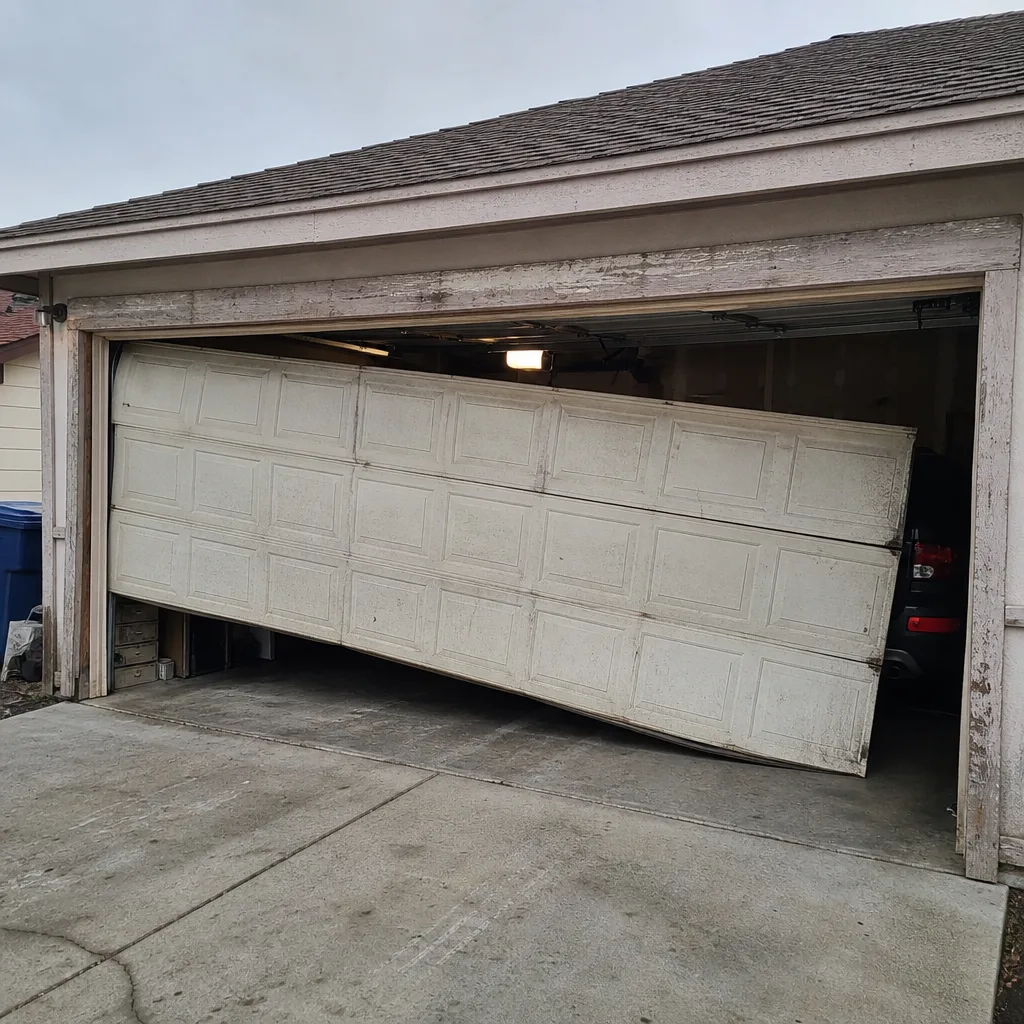 Before
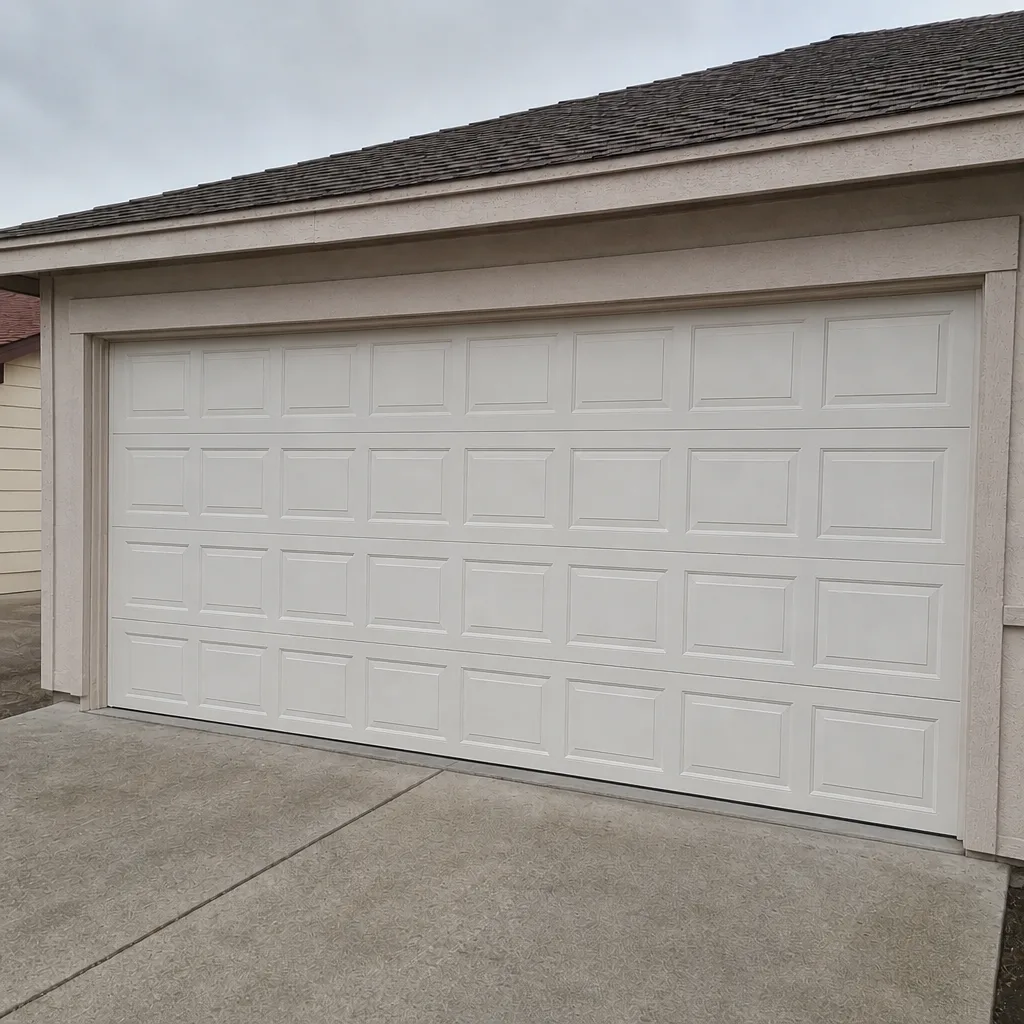 After