
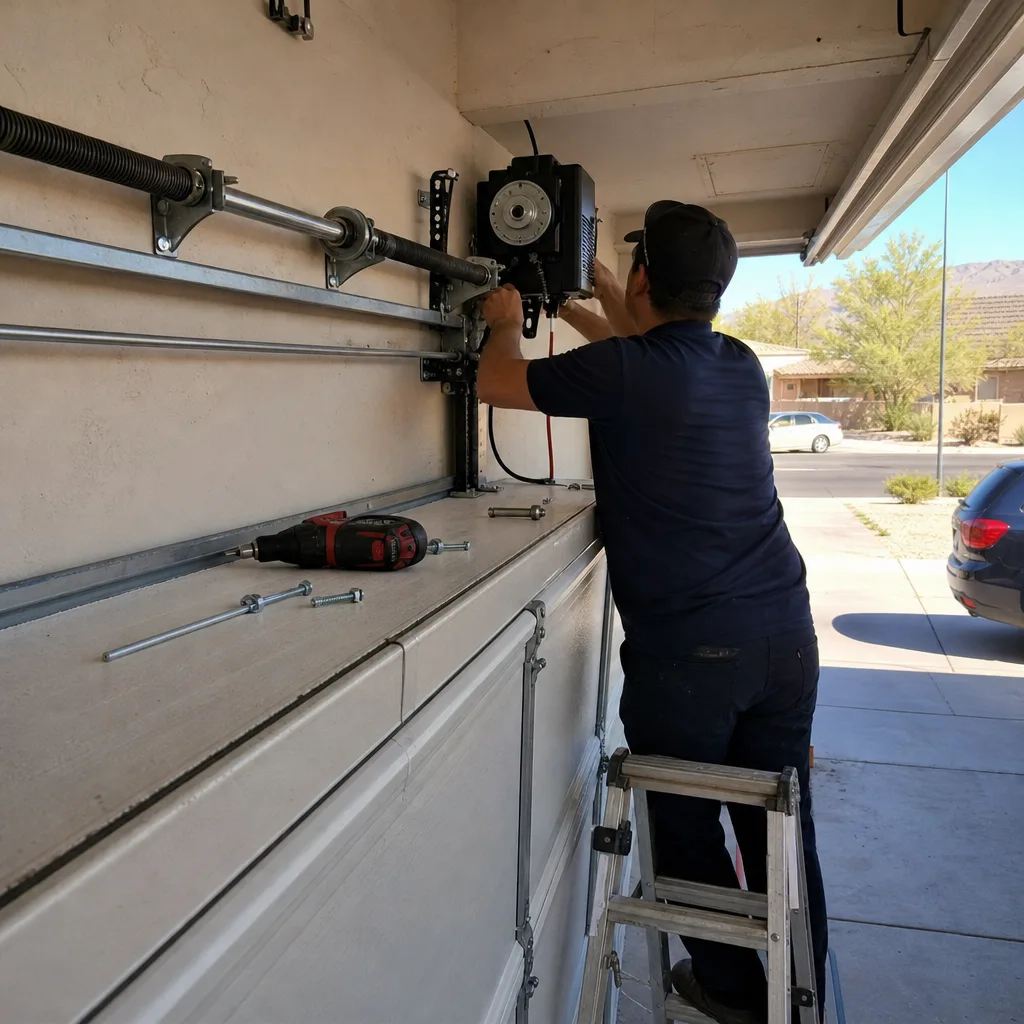
Last updated November 17, 2026
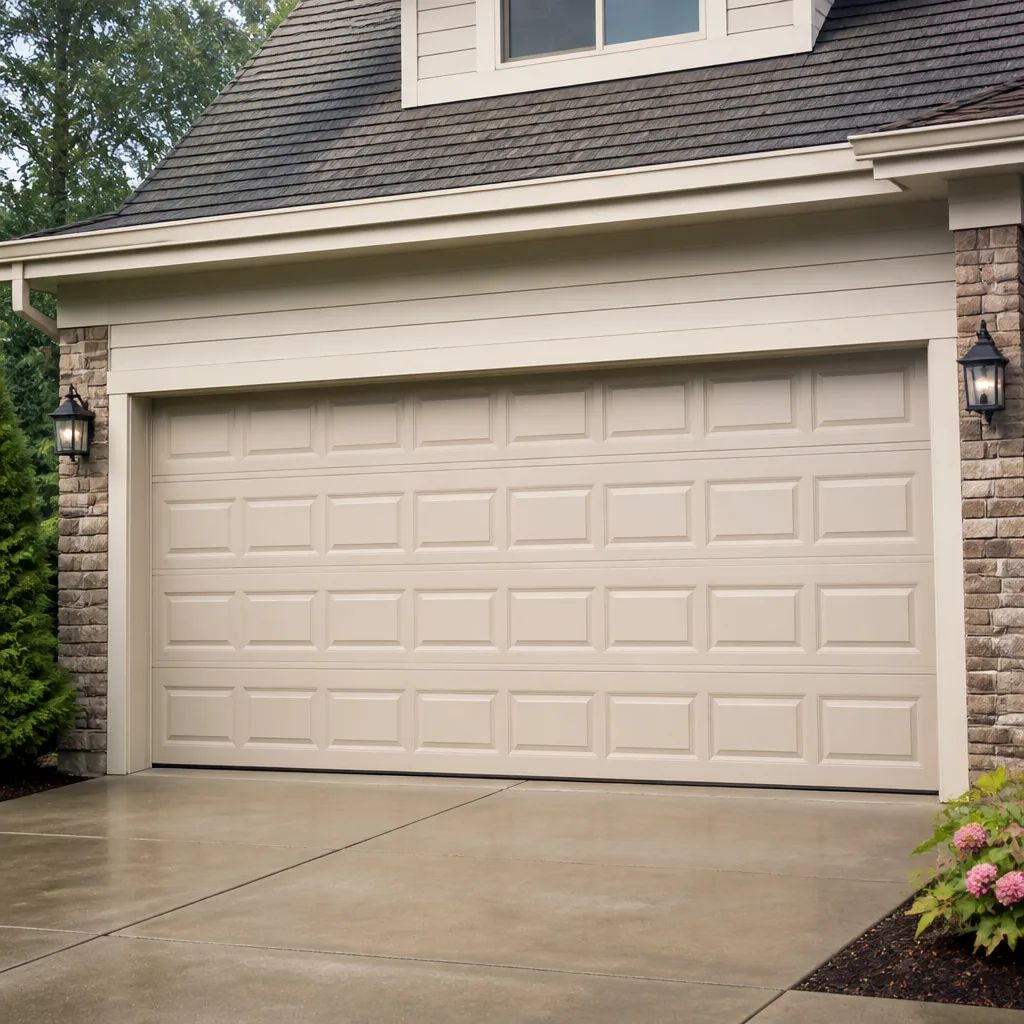 Raised-panel steel
 Carriage house
 Modern flush
 Full-view glass
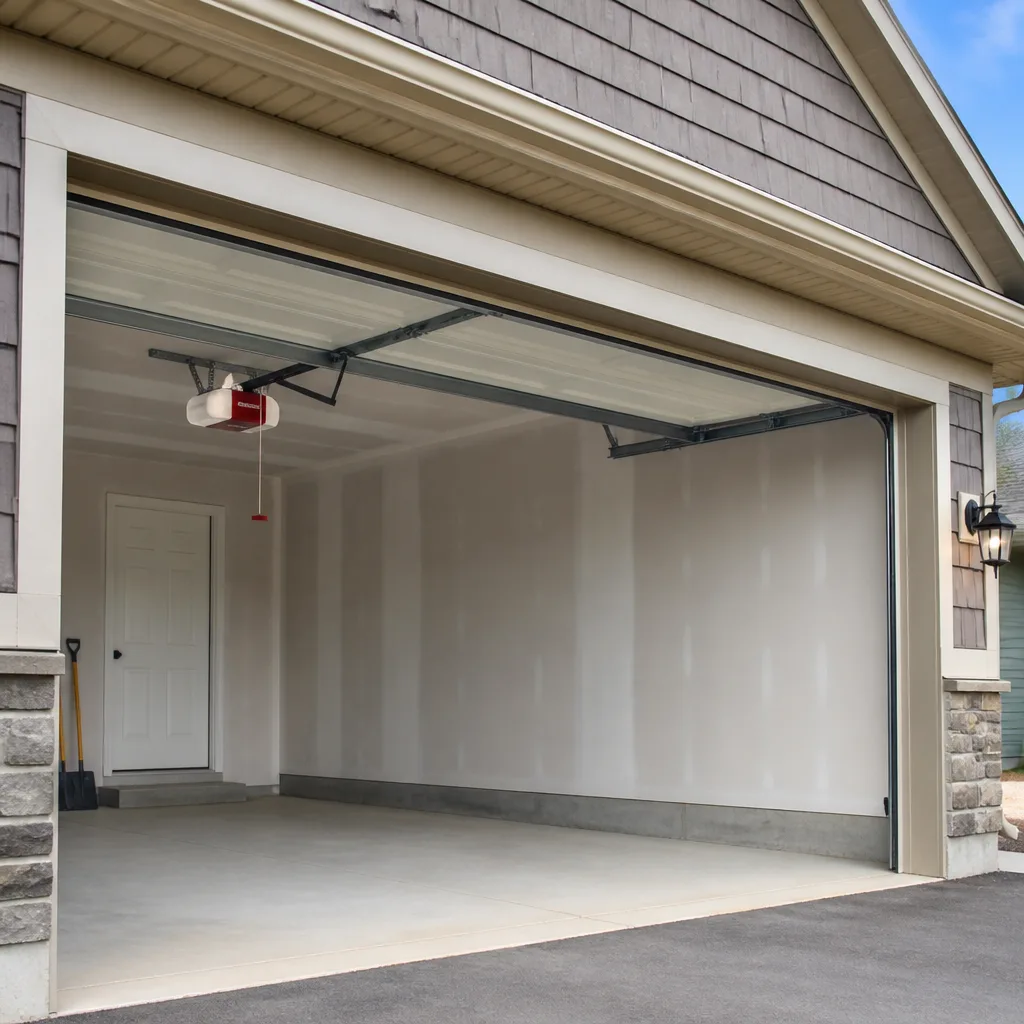 LiftMaster openers
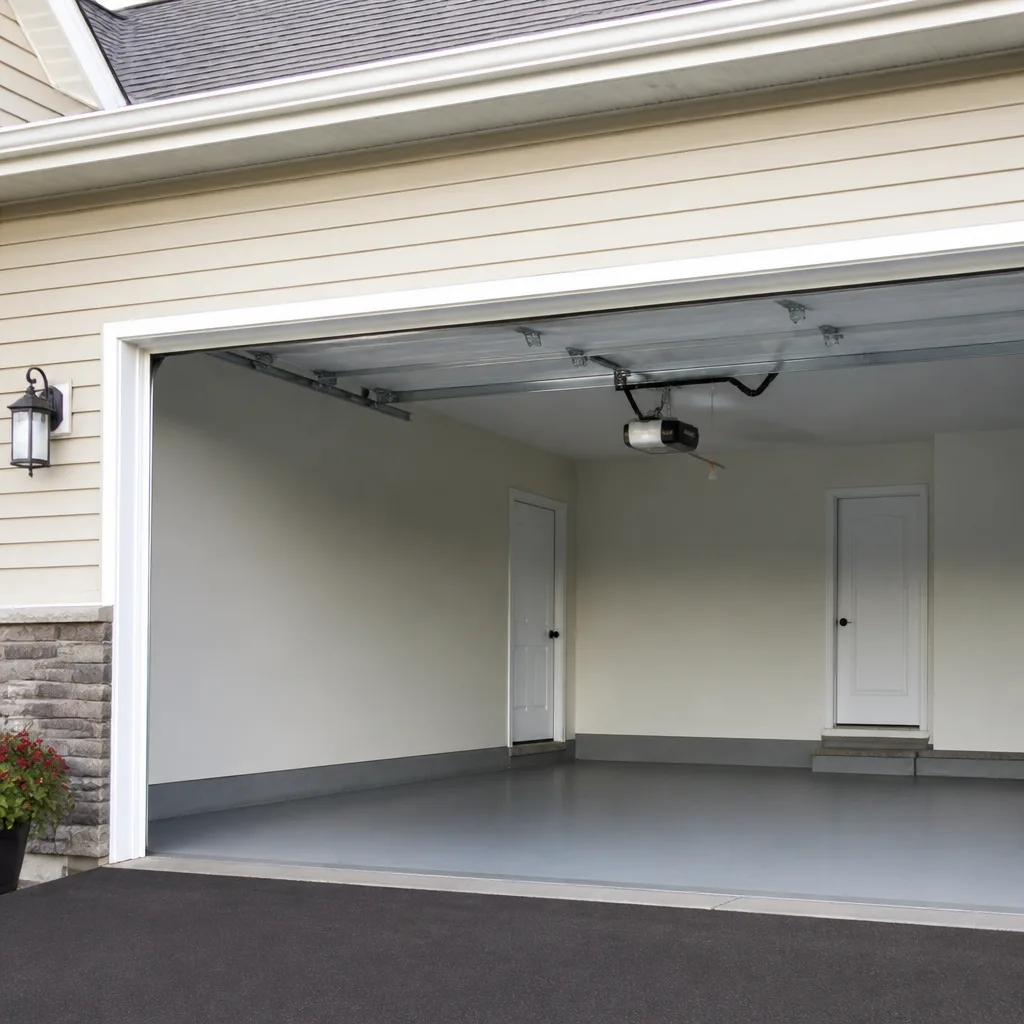 Chamberlain openers
Full 25-point door and opener safety check with every visit - springs, cables, rollers, tracks, and your LiftMaster or Chamberlain opener included
You get a price before we start. It does not change when the pro arrives.
Get your free estimateGarage Door Installation Maintenance Schedule: What to Do and When
Most homeowners assume a new garage door needs nothing but a wave and a walk away. Here’s the part nobody tells you: the first 90 days after installation matter more than the next five years combined. The hardware is settling, cables are seating into their drums, and spring tension is distributing across a door that weighs a couple hundred pounds. Skip that early sequence and you can shave years off a door built to last twenty. This guide gives you the exact schedule, from install day forward, written from what we actually see in Mesquite heat.
Quick Answer
A new garage door needs its first lubrication at 30 days, a hardware re-torque between 30 and 60 days, and a cable-seating check within the first month. After that, annual service and a one-year installer follow-up will keep the door running the way it did on day one.
Styles & brands we work with
- Raised-panel steel
- Carriage house
- Modern flush
- Full-view glass
- LiftMaster openers
- Chamberlain openers
Table of Contents
- Day One: What to Do the Day Your Door Goes In
- The 30-Day Lubrication Window (and Why It’s Not a Year)
- Checking Cable Seating on the Drum in Month One
- The First-Year Hardware Re-Torque
- Mesquite Sun and Your New Door’s Paint and Seals
- The 90-Day Walkthrough
- Annual Maintenance After Year One
- The One-Year Follow-Up Visit You Can Request
Day One: What to Do the Day Your Door Goes In
Install day isn’t just a handoff. It’s your one clean look at how the door sits before anything wears in. When the crew packs up, walk the door yourself with their lead tech beside you. Run it up and down twice. Listen for a steady motor and a door that travels without a shimmy. Watch the panels cross the header without rubbing the jamb. This two minutes catches anything that shipped wrong or hung out of square.
Then read the receipt before you file it. A quality install receipt should spell out the door model, the spring cycle rating, the opener model, and the date the first lubrication is due. We write the 30-day reminder right into ours, because in Mesquite heat that factory coating on rollers and hinges burns off faster than most people expect.
Here’s the day-one checklist:
- Run the door fully up and down at least twice while the installer is still there.
- Check that the safety reverse works – wave an object in the path and confirm the door backs off.
- Confirm the balance test: raise the door halfway by hand and it should hold without drifting.
- Look at both cables seated neatly in the drums, side to side, with no fraying at the loop.
- Note the lubrication due date on the receipt and put it in your phone calendar.
- Keep the install paperwork in the same folder as your opener manual.
The day-one window closes fast. If the door rubs a jamb or the opener strains on the first lift, it’s a five-minute adjustment while the tech is still standing there. Wait a month and it’s a service call. If you’re still deciding on a door, our Garage Door Installation in Mesquite page walks through the sizing and model choices first.
The 30-Day Lubrication Window (and Why It’s Not a Year)
New doors need their first lubrication at 30 days, not at the one-year mark most people assume. The rollers, hinges, and torsion tube come from the factory with a light protective coating that burns off as the door moves. Once it’s gone, bare metal starts meeting bare metal. In Mesquite’s summer heat, that coating goes faster than it does up in the higher elevations, so the 30-day window is really the outer edge.
The good news is that lubrication is the easiest thing on this list. Use a garage-door-specific lubricant, not WD-40 or motor oil. White lithium works, so does a silicone spray. Skip the tracks entirely – those want a clean dry rag, not grease, because grease in the tracks collects grit and grinds the rollers.
What to hit at the 30-day mark:
- Every roller at the hinge point where it pivots.
- Each hinge knuckle, top and bottom.
- The torsion spring coils (a light coat, not a soak).
- The opener’s chain or belt, following the manufacturer spec for your model.
- The bearing plates at each end of the torsion shaft.
Do this on a cool morning. The door’s easier to work and you’re not standing in 105-degree sun. Twenty minutes, once, resets the clock and noticeably quiets a new door that’s been a little noisy since day one.
Checking Cable Seating on the Drum in Month One
Cables seat into the drums during the first several hundred cycles. A properly seated cable runs in even wraps across the drum, no crossover, no slack on the down side. An improperly seated cable shows up as a loose wrap, a cable riding up over the drum lip, or a thin spot where it’s been pinched. That last one is the one that worries us.
What to look for in the first month:
- Properly worn-in: even coils, tight wrap, cable sitting flush in the drum groove.
- Improperly seated: a coil riding over another, cable hanging slack below the drum, or fraying at the crimp.
- Warning sign: a rhythmic clunk on each cycle, or the door feeling like it drops an inch before catching.
A word of real caution here. Garage door cables are under extreme tension, and a cable that snaps while you’re near it can injure you badly. Look with your eyes from a safe distance. Do not reach into the drum or try to reseat a cable by hand. If anything looks off, that’s the moment to call someone trained. Cables and springs are the two parts on a garage door that genuinely hurt people. Our Garage Door Repair in Mesquite page covers what a service visit for a cable or spring issue actually looks like, and we quote the job on the call before anyone comes out.
The First-Year Hardware Re-Torque
Every bolt on your new door gets a factory torque at install. Then the door cycles. Vibration loosens hardware, and the first 60 to 90 cycles do more of that than the next thousand. A monthly check for the first three months, then again at six months, catches a loose hinge before it becomes a bent panel.
The bolts that loosen most:
- Hinge-to-panel bolts – vibration loosens these first.
- Track bracket bolts where they meet the jamb.
- Opener mounting bolts where the rail meets the header bracket.
- Roller carrier brackets on the bottom section.
You’ll need a socket set, and you’ll want to snug, not crank. Over-tightening a hinge can crack the panel it’s bolted to, and that’s a repair you don’t want. If a bolt seems to be backing out repeatedly, that’s a sign the door is out of balance or the track is misaligned – a professional check is worth it. A door that’s out of balance also wears the opener faster, and an opener that’s straining usually isn’t the opener’s fault.
Mesquite Sun and Your New Door’s Paint and Seals
Mesquite sits in a high-desert climate, and new door finishes feel it in year one. UV exposure on a south- or west-facing door is intense, and factory paint that holds up fine elsewhere can start to chalk or dull within the first eighteen months here. Two things protect it: a coat of automotive-grade paste wax twice a year, and a spot touch-up of any scratches before they take on rust.
Seals are the other year-one issue. Bottom weather seals, side seals, and the top header seal all dry out faster in Mesquite than most install guides anticipate. Check them at the 90-day walkthrough and again at six months. A seal that’s hardening but hasn’t split yet can be treated with a silicone protectant. One that’s already cracking wants replacing – a bad bottom seal lets in dust, wind-blown sand, and in some neighborhoods the occasional scorpion.
What we tell every new-door customer here:
- Wax twice a year – spring and fall.
- Touch up scratches as soon as you see them, no waiting for the next service.
- Treat the bottom seal with silicone at the 90-day check.
- Look at the seal again each fall – if it’s hard and gray, it’s done.
Doors from Amarr, Wayne Dalton, and Raynor all take to this care the same way. The brand matters less than the routine.
The 90-Day Walkthrough
The 90-day mark is the real settlement check. Everything that was going to shift has shifted, and the door is now in its working geometry. This is the walkthrough that catches the small stuff before it becomes a repair call.
The sequence, in order:
- Balance test: disconnect the opener, lift the door to halfway, and let go. It should hold. If it drifts, the spring tension has settled and needs an adjustment.
- Safety reverse: put a two-by-four flat on the floor in the door’s path and close it. The door should reverse on contact.
- Cable inspection: both cables even and seated, no fraying at the loops.
- Hardware: snug-check the bolts from the retorque list.
- Seals: bottom seal pliable, side seals still meeting the door, top seal still in place.
- Paint: any new scratches since install, touch up now.
- Opener: run it twice, listen for anything new – grinding, a chirp, a slow start.
If any of these fail, they’re small fixes at 90 days and bigger ones at a year. We handle this as a routine visit for Mesquite homeowners, and it’s quick when the door is healthy. If your opener’s the weak link, our Garage Door Opener Repair & Installation in Mesquite page covers the common failure points and what repair versus replacement looks like.
Annual Maintenance After Year One
Once you’re past the first year, the door drops into a once-a-year rhythm. The annual visit is where you re-do the basics and check the wear parts: the spring cycle count, the roller condition, the opener’s drive system, the seal condition, the balance, and the safety reverse. Everything gets a fresh lubrication at that point.
The spring is the part that deserves its own line. Springs are rated in cycles, not years. A standard spring is rated for about ten thousand cycles. A high-cycle spring runs further. If your door runs four times a day, ten thousand cycles is several years of service. If you’re running it ten times a day, the spring is going to be due sooner. Knowing your cycle count is the single most useful piece of information on this whole schedule.
What the annual should cover:
- Full lubrication of rollers, hinges, springs, and bearing plates.
- Balance test and spring tension check.
- Cable inspection, both sides.
- Roller condition – plastic rollers that have gone flat or hard want replacing.
- Seal condition, interior and exterior.
- Opener inspection and safety reverse test.
Do the annual in spring or fall, never mid-summer. The heat makes it harder to work with and hides symptoms that show up on cooler days.
The One-Year Follow-Up Visit You Can Request
If your installer didn’t offer a one-year follow-up, ask for one. It’s reasonable, and a solid operation will show up. What it should include at no charge: a full balance and safety check, a cable and spring inspection, a re-torque of any loose hardware, a lubrication pass, and a look at the seals and finish. No upsell push, no surprise labor line. The door should be performing like it did the day it went in, or the installer should explain why it isn’t.
This is also the moment to ask about spring cycle count and when to expect a replacement. A one-year check is cheap insurance on a door built to last twenty years. If the installer is gone, that follow-up is worth having done by a shop you can reach and verify. That’s part of why our Otto’s Garage Door Mesquite home page posts a real address and license number – so any homeowner can check before the truck shows up.
Common Mistakes to Avoid
- Waiting a full year to lubricate. New doors need their first lubrication at 30 days, not at the one-year mark. Factory coating burns off fast, and in Mesquite heat it goes faster still.
- Using WD-40 on the moving parts. It’s a solvent, not a lubricant. It dries out the hinges and rollers. Use garage-door-specific lube or white lithium.
- Greasing the tracks. Grease collects desert grit and grinds the rollers. Tracks want a clean, dry rag. Save the lube for the pivots.
- Skipping the cable check. Cable issues are the number one cause of a door that suddenly drops. Look monthly, call at the first sign of slack or fray.
- Over-tightening hinge bolts. Snug is the goal. Cranking a hinge can crack the panel it holds.
- Ignoring the finish in year one. A scratch on a new door in Mesquite’s sun takes on rust faster than most owners expect. Touch it up the week you see it.
- Assuming the installer will call you. They won’t, usually. Put your 30-day reminder in your phone. The schedule only works if someone keeps it.
See the difference
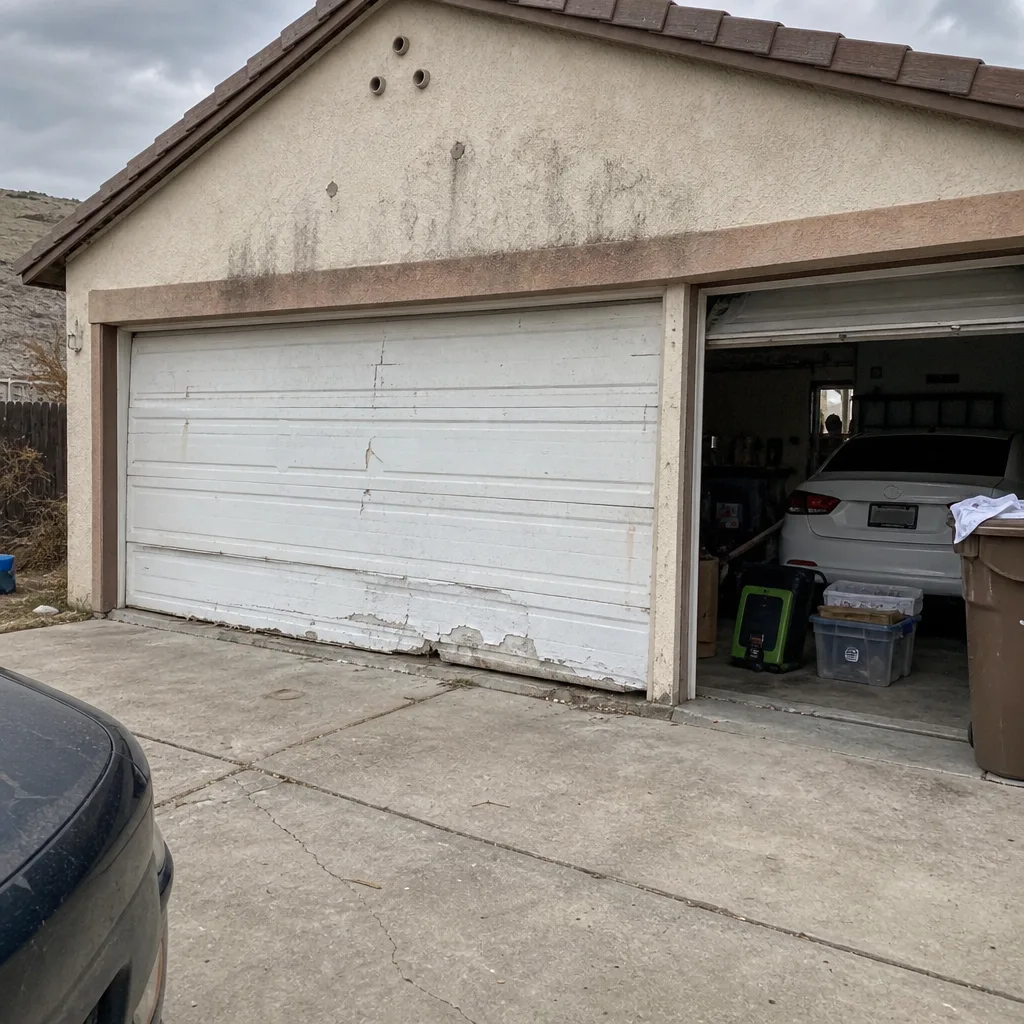 Before
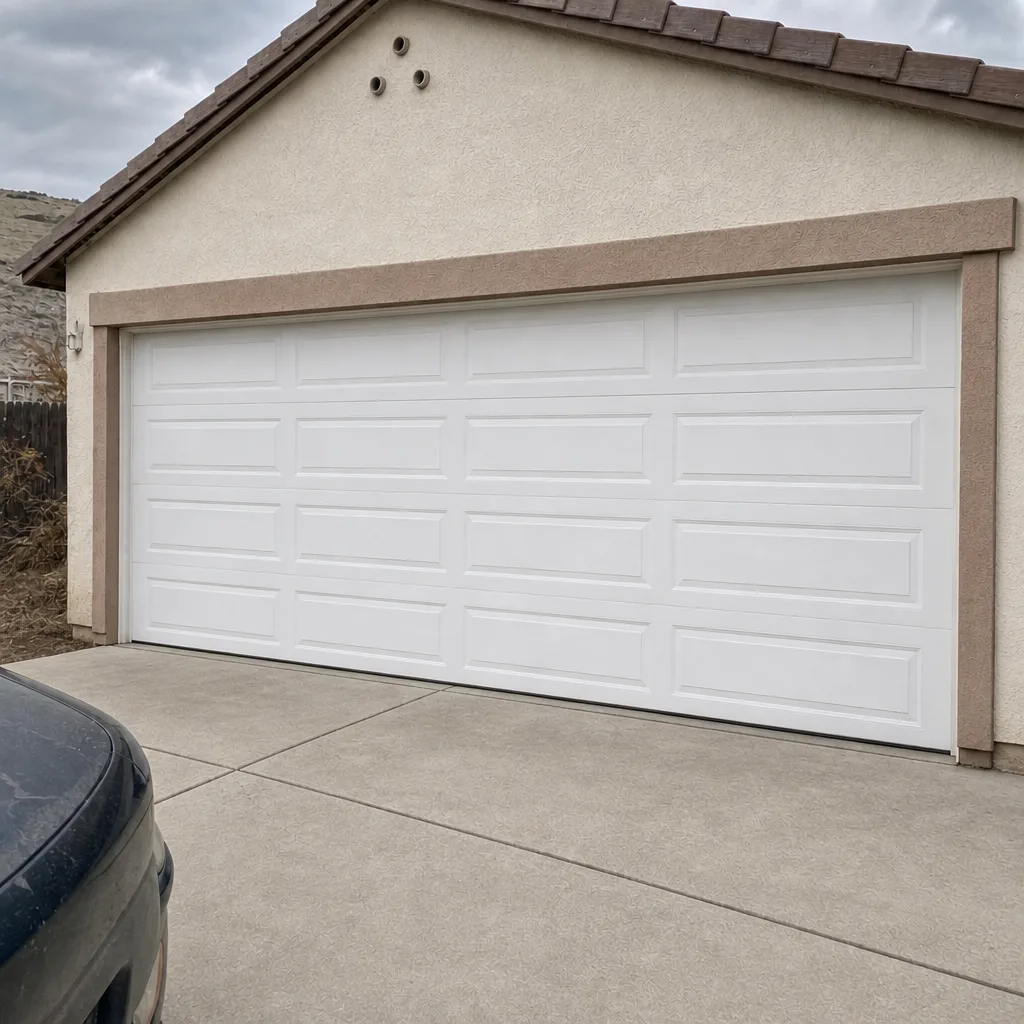 After
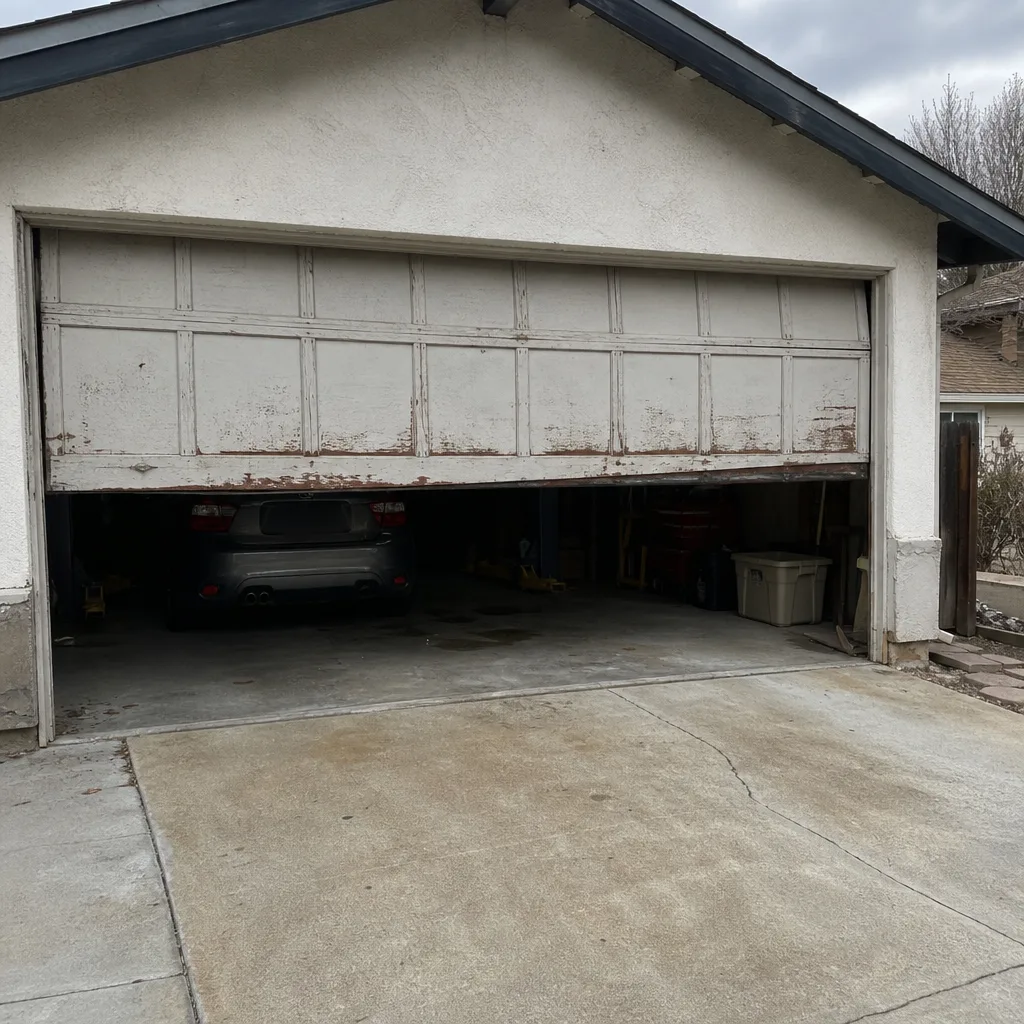 Before
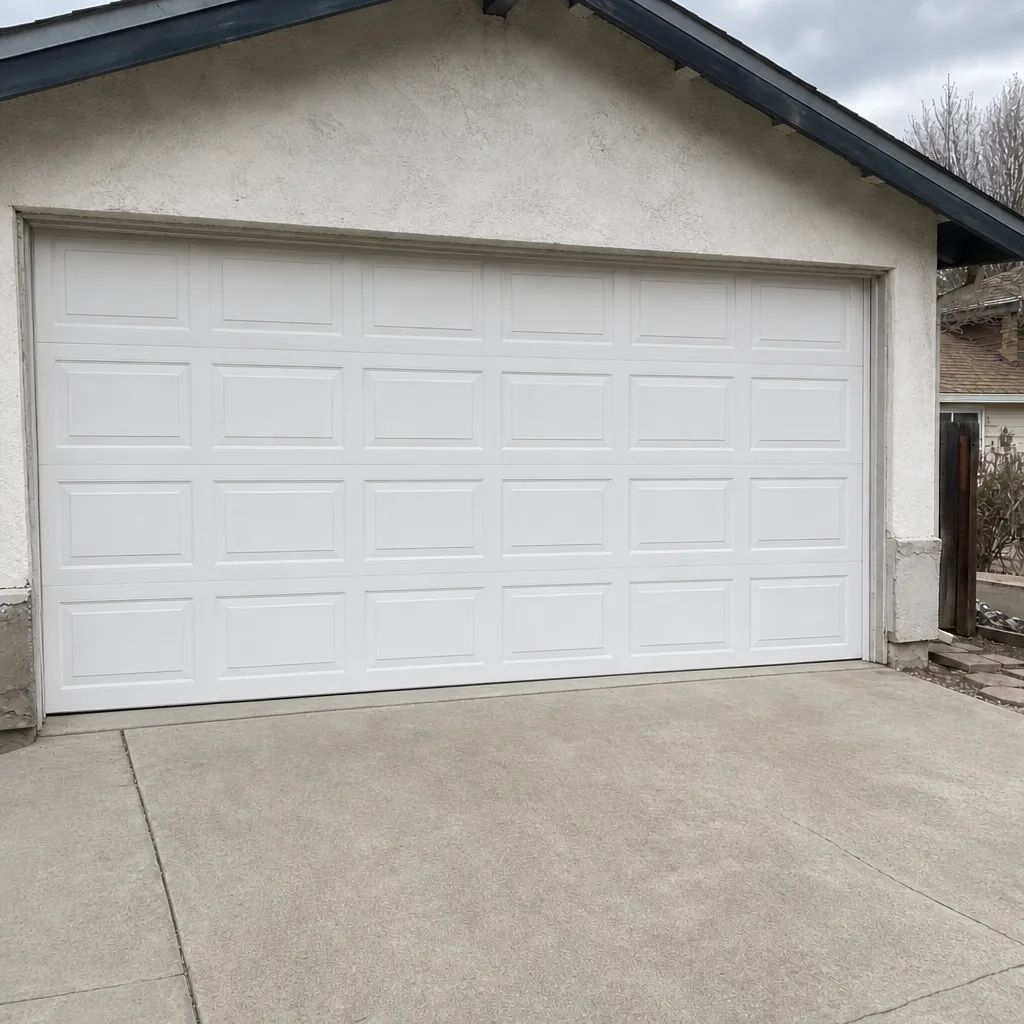 After
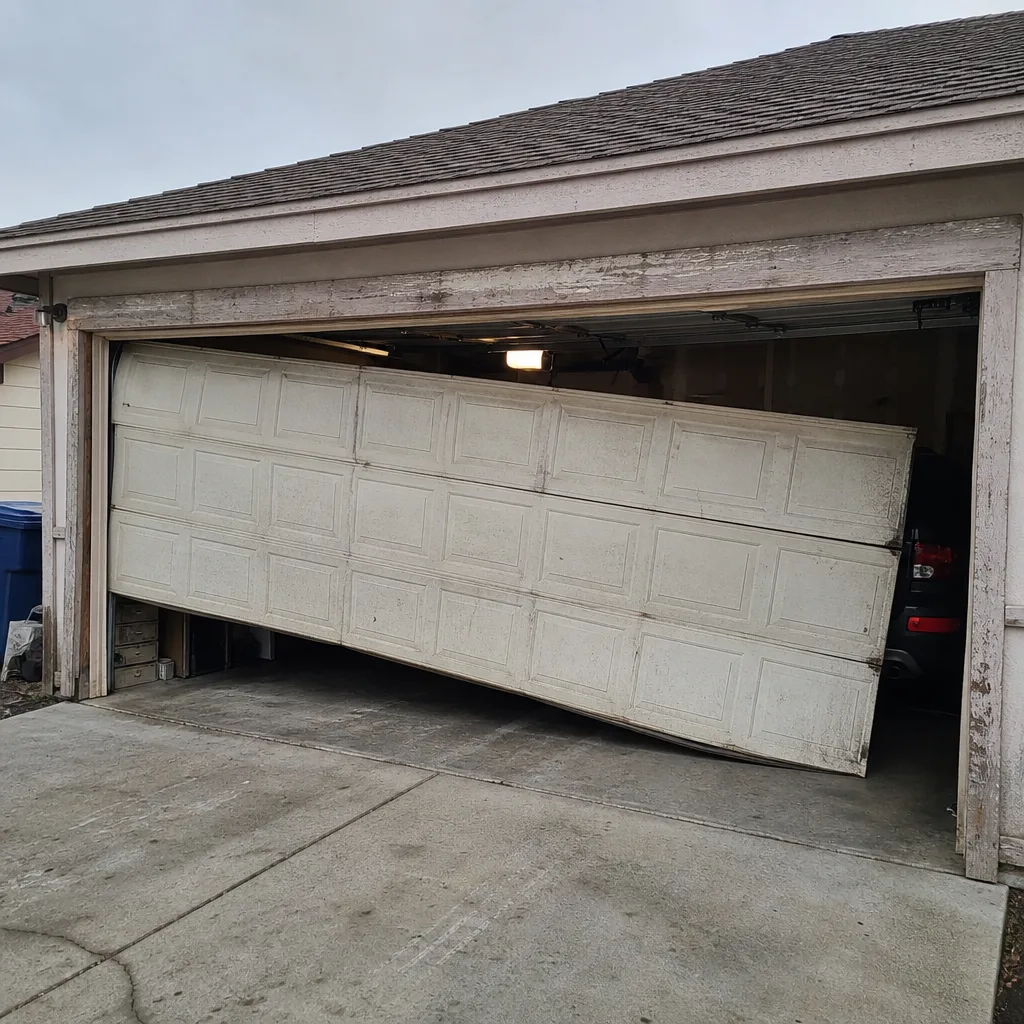 Before
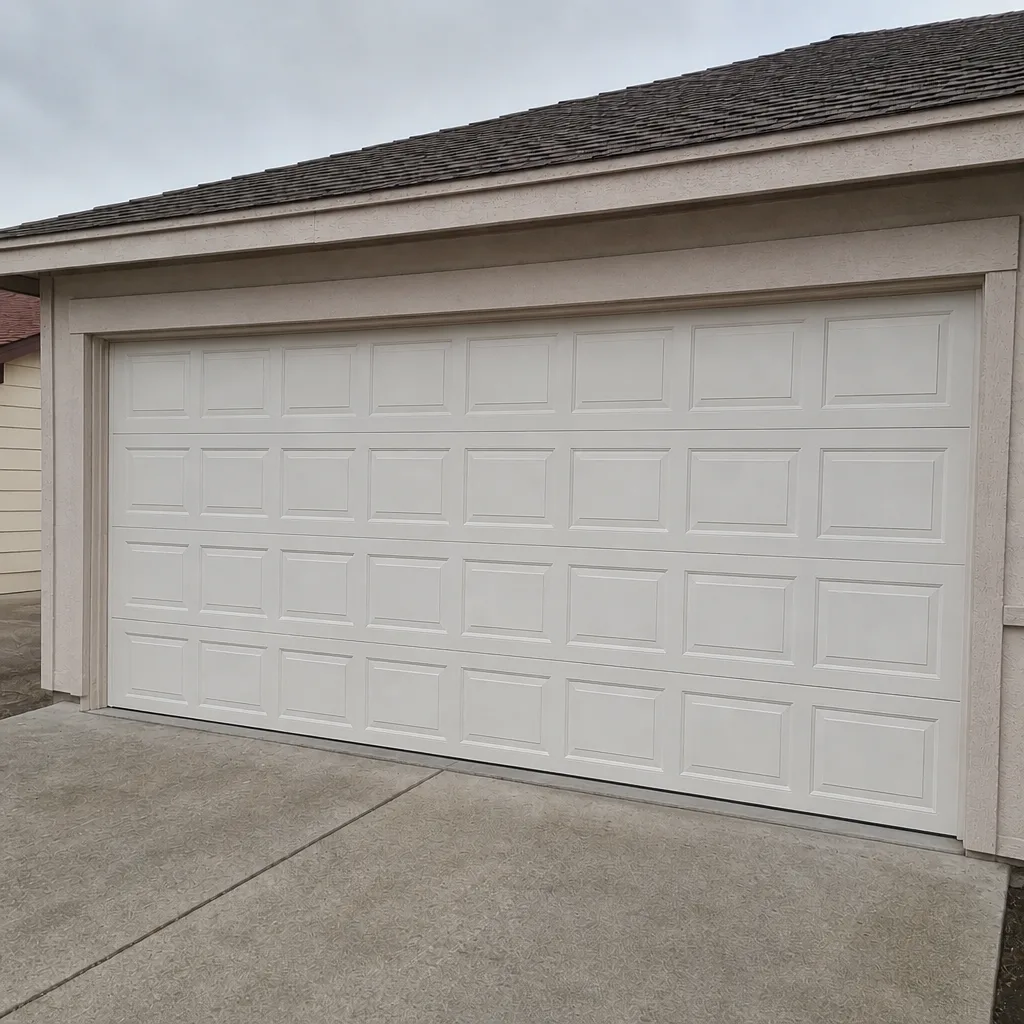 After
When to Call a Professional
Some of this schedule is a homeowner’s job. Lubrication, visual cable checks, waxing the finish, seal protectant, and a rag on the tracks are all fine to do yourself. Other parts are not. Never touch a torsion spring or try to reseat a cable by hand. A door is a couple hundred pounds riding on two springs, and a spring that lets go can break a bone. Call the moment you hear a snapping sound, notice slack in a cable, or see the door drop an inch before catching.
Call us for a balance that’s drifted, an opener that’s straining, a spring at the end of its cycle count, or a 90-day or one-year walkthrough you’d rather have done right. We quote on the call, hold that price at the door, and stand behind every job with the 90-Day Done Right Promise. Otto’s Garage Door Mesquite offers free estimates in Mesquite – call (844) 320-6569.
Frequently Asked Questions
At 30 days. New hinges and rollers ship with a light factory coating that burns off as the door moves, and in Mesquite heat that coating goes faster than it does in cooler climates. A 30-day lubrication pass resets the wear clock and quiets a new door noticeably.
A visual cable and hardware check on install day, then lubrication at 30 days. Between those, watch for anything that sounds off – a rhythmic clunk, a slow start, or a door that drifts when you raise it by hand. Small adjustments in the first month are cheap; the same issues at six months are a service call.
A properly seated cable wraps evenly around the drum with no crossover and sits flush in the groove. An improperly seated one shows a loose wrap, a cable riding up over the drum lip, or a frayed spot at the crimp. Look from a safe distance and never reach into the drum – that’s a trained professional’s job.
Yes. Bottom and side seals dry out and harden faster here than most install guides expect, especially on a door facing west or south. Check them at the 90-day mark, treat with silicone protectant, and plan on replacement within a few years if the door takes direct afternoon sun.
Yes. A one-year visit is reasonable, and a solid installer will show up at no charge for a balance check, a cable and spring inspection, a re-torque, and a lubrication pass. If your installer is unreachable, have a local shop do it – it’s a fast visit when the door is healthy.
That’s normal perimeter settlement, and it means the spring tension has shifted slightly. Spring work is not a homeowner job, though – the tension on those coils can hurt you. Call (844) 320-6569 for a balance check and quote before any work starts.
The Bottom Line
The first 90 days after a new installation are the most important maintenance window you’ll have. Lubricate at 30 days, check cable seating within the first month, re-torque hardware by 60 to 90 days, and do a full walkthrough at 90. Then spring and fall wax, an annual service, and a one-year follow-up from the installer. In Mesquite, pay extra attention to the finish and seals in year one – the sun is hard on both. A door treated right in that first year runs smooth for twenty. Skip it, and the wear shows up early.
If you want the schedule handled by someone who’ll actually show up, call (844) 320-6569 for a free estimate and a written price before any work starts.
Written by the team at Otto’s Garage Door Mesquite.