
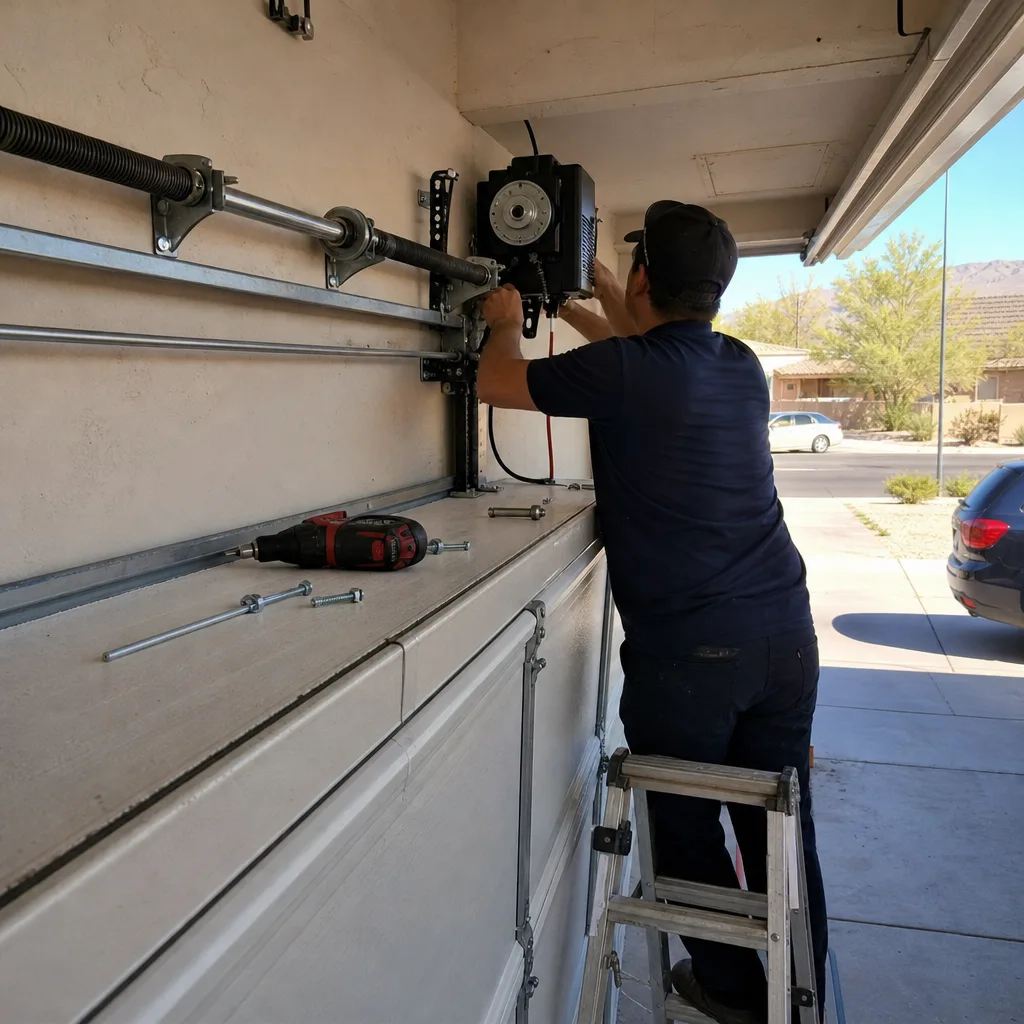
Last updated November 17, 2026
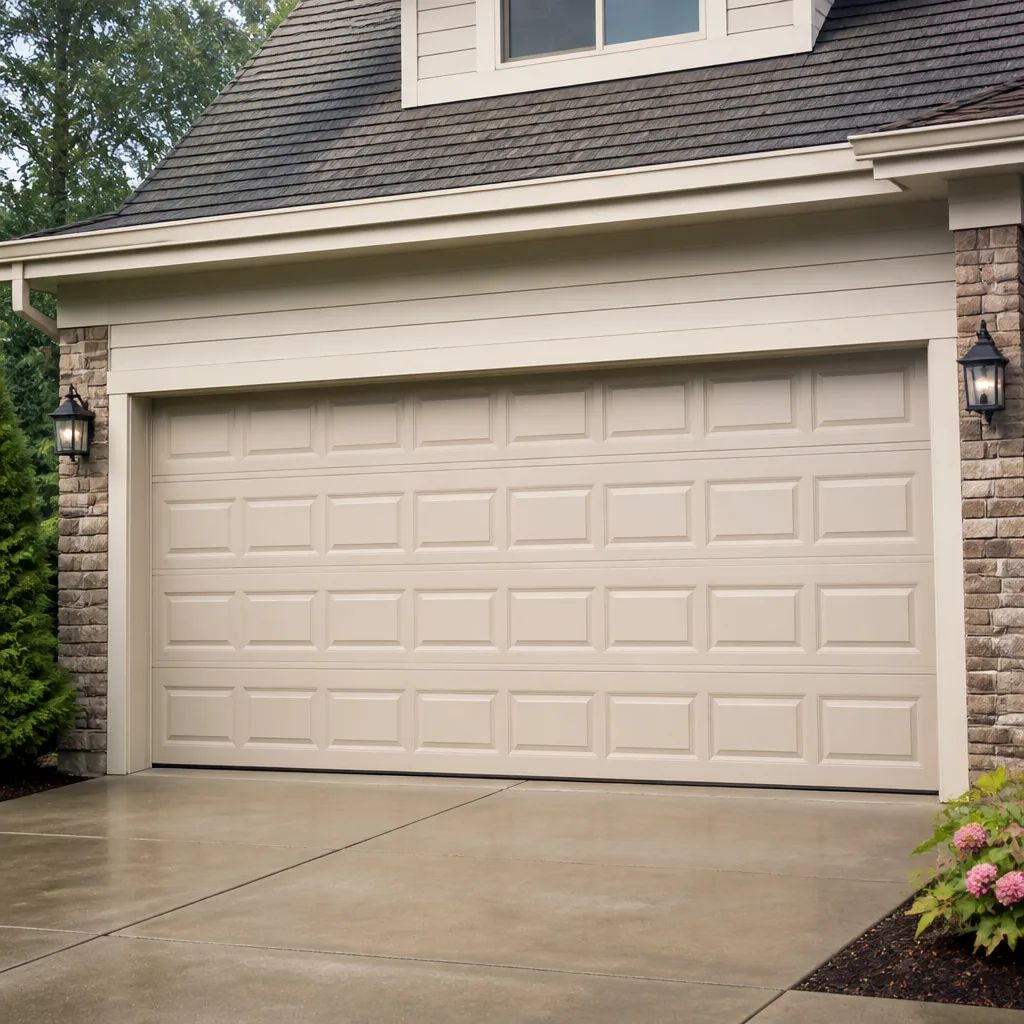 Raised-panel steel
 Carriage house
 Modern flush
 Full-view glass
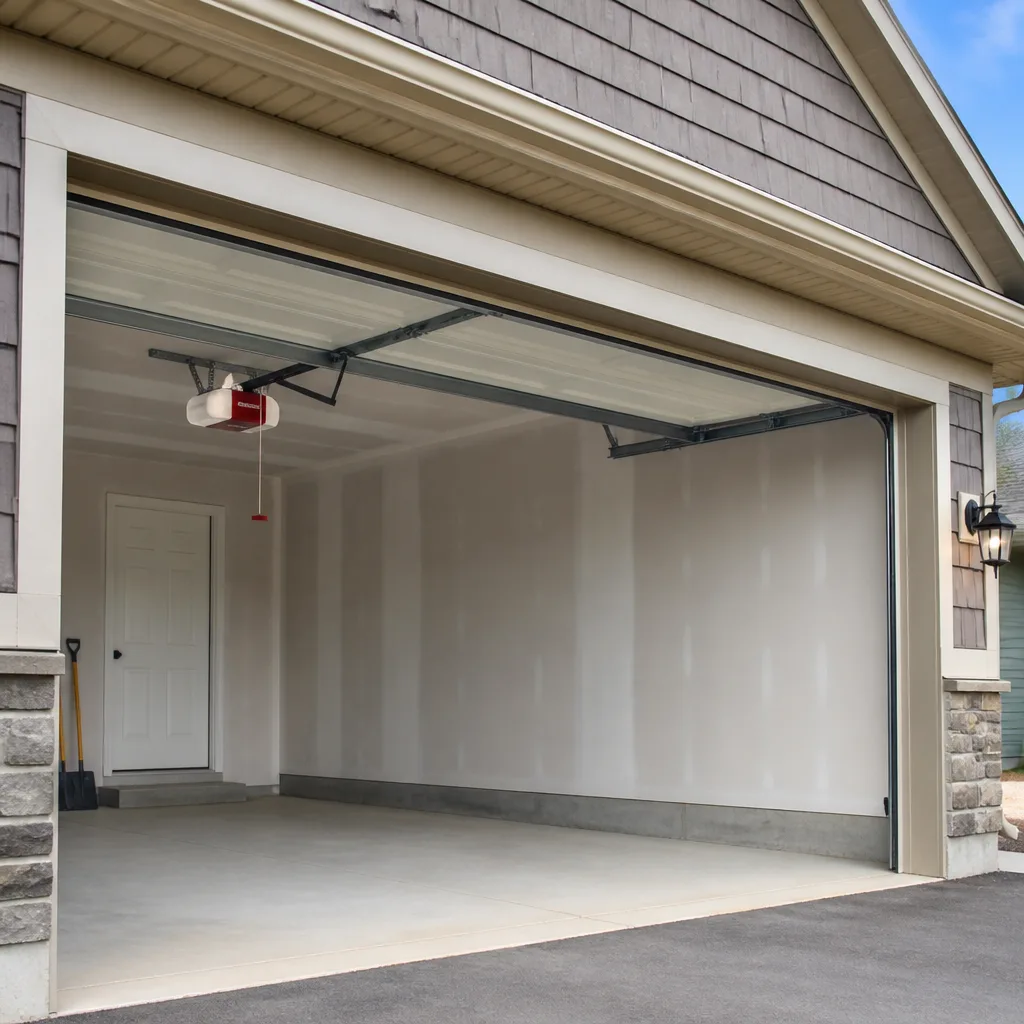 LiftMaster openers
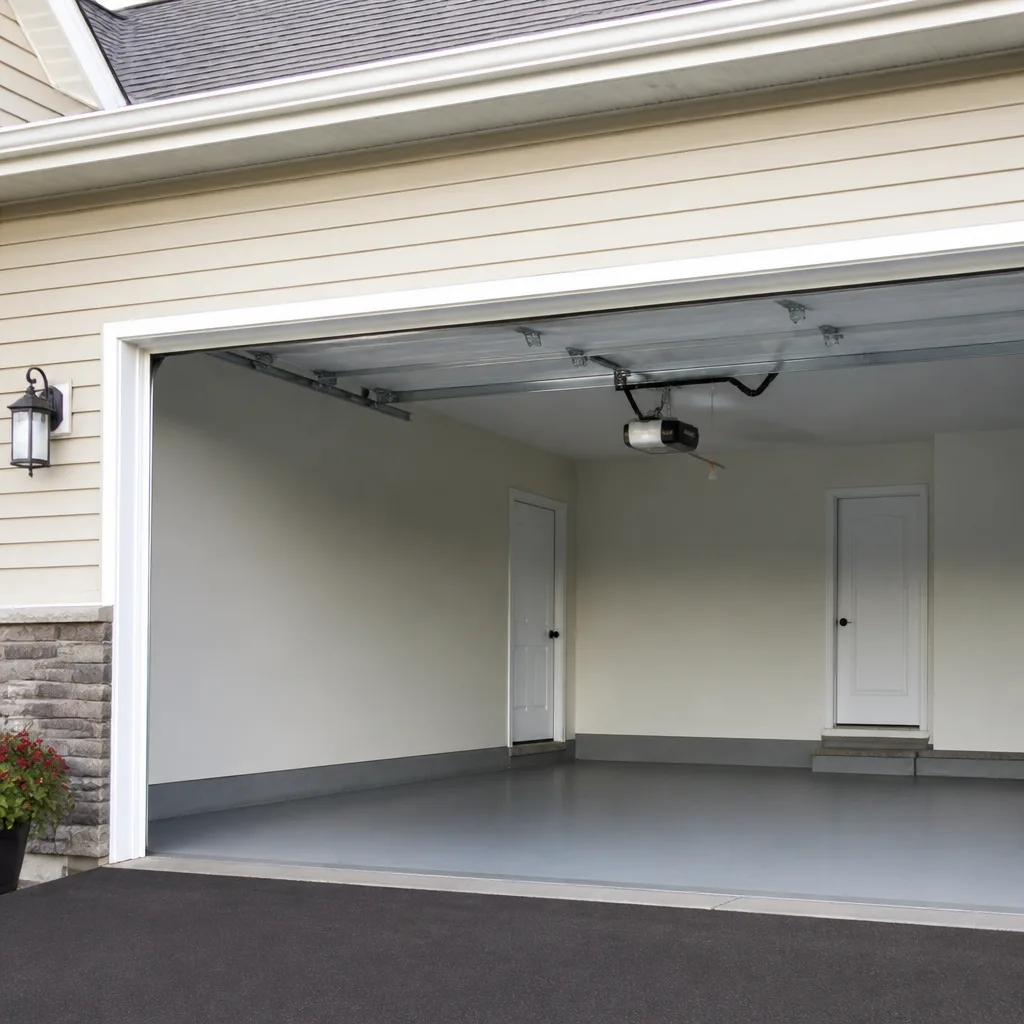 Chamberlain openers
Full 25-point door and opener safety check with every visit - springs, cables, rollers, tracks, and your LiftMaster or Chamberlain opener included
You get a price before we start. It does not change when the pro arrives.
Get your free estimateDIY vs Professional Garage Door Parts: What’s Safe to Do Yourself
A torsion spring stores roughly the same energy as a loaded crossbow, except it sits coiled six inches above your head and you can’t see when it’s about to let go. That single fact explains why some garage door jobs are a Saturday afternoon with a beer and others are a trip to the emergency room. We’ve walked up to plenty of doors in Mesquite where a homeowner started something they shouldn’t have, and the door is now wedged, the car is trapped, and the bill is climbing. This guide draws the line for you: which parts are safe to handle, which ones store enough energy to hurt you before you can pull your hand back, and where the middle ground sits. You’ll learn what to touch, what to leave alone, and exactly what it costs when a do-it-yourself attempt goes sideways.
Quick Answer
You can safely handle the low-tension parts yourself: weatherstripping, remote batteries, visual inspections, and minor panel dents. You should never touch anything that stores energy or holds a load – torsion springs, extension springs, cables under tension, and bottom brackets – because the stored force can release in a fraction of a second with enough power to break a bone. Roller replacement and track alignment sit in between: fine for many homeowners on a relaxed weekend, but they tip toward a professional call the moment the door is heavy, crooked, or fighting you.
Styles & brands we work with
- Raised-panel steel
- Carriage house
- Modern flush
- Full-view glass
- LiftMaster openers
- Chamberlain openers
Table of Contents
- The One Rule That Decides Everything: Stored Energy
- The Physics of Why Springs and Cables Bite
- Safe DIY Parts and Tasks
- Never-DIY Parts: The Hard Line
- The Middle Ground: Rollers and Track Alignment
- The “I Watched a YouTube Video” Trap
- What a Botched DIY Repair Actually Costs
- Common Mistakes to Avoid
The One Rule That Decides Everything: Stored Energy
Forget skill level for a minute. The real dividing line between a safe DIY job and a dangerous one isn’t how handy you are – it’s whether the part holds stored energy. A garage door is a balancing act. The door itself can weigh a couple hundred pounds, and a pair of springs under tension counterbalance that weight so a small opener motor, or your arm, can lift it. That’s the whole trick. The springs and cables are doing the heavy lifting, and when you interfere with them, you’re interfering with a loaded system.
Here’s how to sort any garage door part in your head:
- Does it store tension or compression? Springs store it, cables transmit it, and brackets hold it. All off-limits.
- Does it carry electrical current? Opener wiring, capacitors, and circuit boards. Off-limits unless you know how to kill the power at the breaker and confirm it’s dead.
- Does it carry the door’s weight? Hinges, rollers, and the bottom bracket all bear load. Some you can swap, the bottom bracket you can’t.
- Is it just trim, seal, or surface? Weatherstripping, remotes, dents, and light cleaning. Safe.
In our experience around Mesquite, the parts that fool people most are the ones that look small and harmless. A bottom bracket is a two-inch piece of metal, but it’s the anchor for a cable under hundreds of pounds of tension. The size of the part tells you nothing about the energy behind it. That’s the trap, and it’s why a quick visual inspection of what’s on your door – before you grab a wrench – is the smartest five minutes you’ll spend.
The Physics of Why Springs and Cables Bite
Picture a mousetrap scaled up until it can lift a car door. That’s roughly what a torsion spring is. To do its job, the spring gets wound up – dozens of turns for a standard door – so it’s constantly trying to unwind back to its resting shape. When it’s properly secured with winding bars and the door’s weight balancing it, that stored energy is controlled. The instant you loosen a set screw, cut a cable, or pull a bracket without releasing the tension first, all that coiled force goes looking for the fastest way out. Usually that’s through whatever is in the way, and often that’s a hand, an arm, or a face.
Our technicians have up to 22 years of experience, and every one of them treats a wound torsion spring like a loaded tool. Cables are just as serious in a different way. They run under constant tension to keep the door level, and when one snaps or is cut under load, it whips. A snapping cable doesn’t fall – it lashes out sideways at speed, and it doesn’t care what’s standing next to it. The bottom bracket is the other sleeper danger: it holds the cable’s tension and the door’s weight at the same time, so loosening it can launch it.
The reason we hammer this so hard isn’t to scare you. It’s that these parts don’t give a warning. A worn bearing squeaks. A loose hinge rattles. A spring under tension sits there silently until it releases. If you want the full picture on what a proper spring or cable repair involves, our Garage Door Repair in Mesquite page walks through it – but the short version is that this is work for trained hands with the right tools.
Safe DIY Parts and Tasks
Plenty of garage door upkeep is genuinely within reach, and doing it yourself saves money and keeps the door smoother between service visits. These jobs involve no stored tension and no live current. They’re a good weekend list for any homeowner in Mesquite, especially with the desert dust and heat working on seals and hardware all year.
- Weatherstripping and bottom seals. The rubber seal along the bottom and the strips around the frame crack and harden in the summer heat. Pull the old one, clean the channel, slide in a new one. This is one of the highest-value DIY jobs because it keeps out dust, wind, and the occasional scorpion.
- Remote and keypad batteries. If the opener suddenly ignores the remote, swap the battery before you assume the motor’s dead. Nine times out of ten it’s a two-dollar battery.
- Visual inspections. Look and listen. Check for frayed cables, gaps in the seal, loose bolts, and springs with visible gaps or rust. You’re just observing – no tools required.
- Minor panel dents. Small dings on a steel door can sometimes be worked out gently or filled and painted. Cosmetic, low-risk, and won’t affect the door’s balance.
- Cleaning and lubrication of accessible hardware. A little lubricant on hinges, rollers, and the track (not the springs) keeps things quiet.
- Testing the safety reverse. Put a roll of paper towels under the door and hit the close button. It should reverse on contact. If it doesn’t, that’s your cue to call.
One note on brands: if you’re buying replacement seals or a remote for a LiftMaster or a Craftsman opener, make sure the part matches the model. A remote that won’t pair and a seal that won’t seat are both easy to get wrong at the hardware store and easy to get right with the model number written down.
Never-DIY Parts: The Hard Line
Some parts we won’t even talk you through over the phone, and that’s on purpose. These carry enough stored energy to injure you badly, and no YouTube tutorial changes that physics. If any of these are the problem, stop and put the tools down.
- Torsion springs. The horizontal spring above the door. Winding and unwinding requires specific bars and a feel for the tension. A slip can break fingers or worse. Our crew counts spring cycles the way you count tire miles and can tell you what’s left on yours.
- Extension springs. The springs that run along the sides. Even with safety cables, a failing extension spring recoils hard and fast.
- Cables under tension. Never cut, loosen, or remove a cable while the door is under spring tension. A whipping cable is genuinely dangerous.
- Bottom brackets. They anchor the cable and the door’s weight together. Loosening one under load can send it flying.
- Opener electrical components and capacitors. Capacitors hold a charge even after power is off. If your opener has a burned board or a bad capacitor, that’s a job for someone who works on them daily – which is exactly what our Garage Door Opener Repair & Installation in Mesquite page is built for.
If your door has one broken spring on a two-spring system, don’t run it. The other spring is now carrying double the load and can fail next. That’s a call, not a project.
The Middle Ground: Rollers and Track Alignment
Rollers and tracks are where skill level actually matters, because they don’t store much energy – but they do carry the door’s weight, and getting them wrong can drop a door or bend a track. Here’s where we split the line.
Roller replacement is often DIY-friendly if the door is in good shape and you follow the sequence:
- Close the door fully and disconnect the opener so it can’t move.
- Clamp a pair of locking pliers on the track above the roller you’re removing, as a safety block, so the door can’t slide down.
- Bend the track tab or remove the hinge bracket holding the roller – gently, without prying the track out of alignment.
- Slide the old roller out and the new one in, then reseat the track and hinge exactly as they were.
- Repeat one roller at a time. Never remove more than one per side at a time.
Track alignment tips toward a pro call the moment the door binds, the gap between the door and the track looks uneven, or the door looks crooked when it’s partly open. A track knocked out of line by a bumped car is common in Mesquite driveways, and trying to bend it back by hand usually makes it worse. If the door feels heavy, jumps, or won’t sit level, that’s your signal to stop.
If a spring or cable is also involved anywhere in the picture, put the roller project aside and call first. It’s not worth risking your hands to save a service call. If you’re ever unsure whether a track or a panel is beyond a simple fix, a new-door conversation might be the better move – our Garage Door Installation in Mesquite page covers what replacement looks like when a door is past saving.
The “I Watched a YouTube Video” Trap
We’re not going to roll our eyes at you for looking up a video. Some of them are genuinely good, and watching one is how a lot of homeowners figure out whether a job is in their wheelhouse. The problem is a specific kind of video: the one where someone with fast hands and a practiced grip makes a tension job look easy in eight minutes. What the camera doesn’t show is the years of muscle memory, the right winding bars, and the fact that a single slip that day wouldn’t have made the edit.
The false confidence problem isn’t about intelligence – it’s about the gap between watching and doing. You can watch someone change a tire and still not feel the moment a lug is cross-threaded. Springs and cables are the same, except the consequence is a hospital visit instead of a wobble. If a video tells you to “just” loosen a set screw or “carefully” cut a cable, close the tab. A real expert always flags the danger, and if the person in the video doesn’t, they’re not being straight with you.
The honest test: if the job involves stored energy, someone standing under a loaded part, or wiring that carries current, the video is a starting point for understanding – not permission to try it. We’ll happily tell you what a job involves and what it costs, and we’ll tell you straight when it’s not a DIY job. That’s the difference between a neighbor’s advice and a tutorial with a hidden risk. You can start with a look at our Otto’s Garage Door Mesquite home page to see the range of what we handle.
What a Botched DIY Repair Actually Costs
The one number homeowners never see coming is the surcharge for cleaning up a project that got started and abandoned. A cable that comes free from its drum, or a bottom bracket a homeowner loosened and couldn’t re-tension, usually means the door is now hanging on one side, the track is bent, and the repair includes parts that weren’t broken before. That turns a straightforward cable-and-bracket fix into a track straightening, a hinge replacement, and sometimes a new set of cables on both sides.
Here’s the honest comparison for a common job – a cable that’s come loose from the drum:
| Scenario | What it typically involves |
|---|---|
| Straight professional repair | Cable, drum inspection, re-tension, and a balance check, quoted upfront before work begins |
| After a DIY attempt | Same repair plus bent track, stripped or damaged bracket, and sometimes replacement hinges and rollers – more parts, more labor |
We’d rather give you a real number on a free estimate than let you discover the cleanup cost the hard way. The good news is that when a repair is over $200, our current $40-off offer takes some of the sting out of it, and that price is quoted before we start and never revised upward at the door. If you’ve already got a written estimate from someone else, our free second opinion costs you nothing and might save you a few hundred. And a senior or veteran in the house takes a permanent 10% off, always. For most Mesquite homeowners, the safest plan is a quick call first – the flat truth is usually cheaper than the cleanup.
Common Mistakes to Avoid
- Cutting a cable to “release” the door. That cable is holding the door’s weight. A homeowner in Mesquite did exactly this and took a whipping cable to the arm – never cut a cable that’s under tension.
- Loosening a bottom bracket to swap a roller. The bracket anchors the cable and the door’s weight together. Swap the roller from above with a safety clamp instead.
- Running the door on one spring. On a two-spring door, one broken spring means the other is now working twice as hard. Running it invites the second failure.
- Forcing a bent track back by hand. Track that’s out of alignment needs straightening or replacement with proper tools; hand-bending usually kinks a good section and worsens the bind.
- Ignoring the safety reverse test. A door that won’t reverse on contact is a serious hazard, especially with kids or pets around. Test it monthly.
- Skipping the model number. Buying a LiftMaster or Craftsman remote or seal that doesn’t match the model is a wasted trip to the hardware store. Write the number down first.
- Not getting the price in writing. If a quote isn’t confirmed before the wrench comes out, you have no protection against a bigger bill at the end. Get it on paper.
See the difference
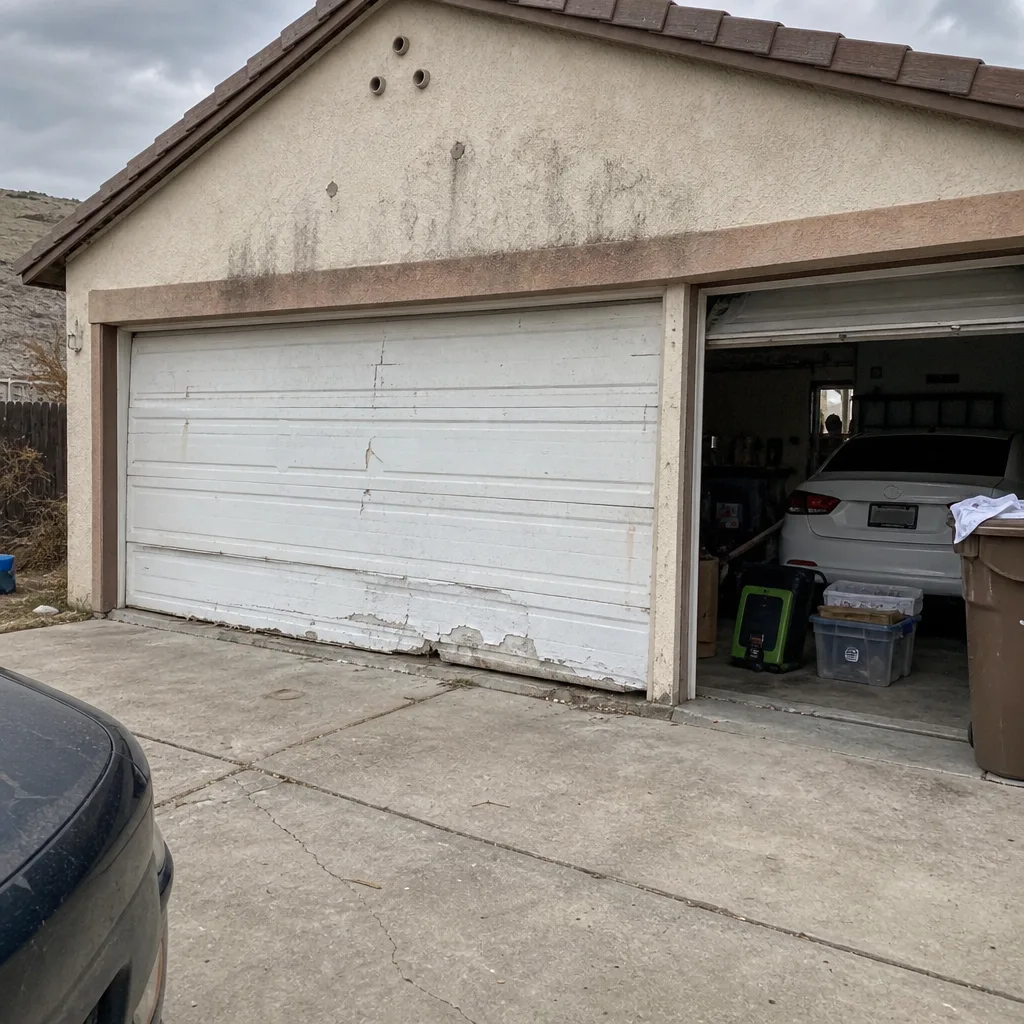 Before
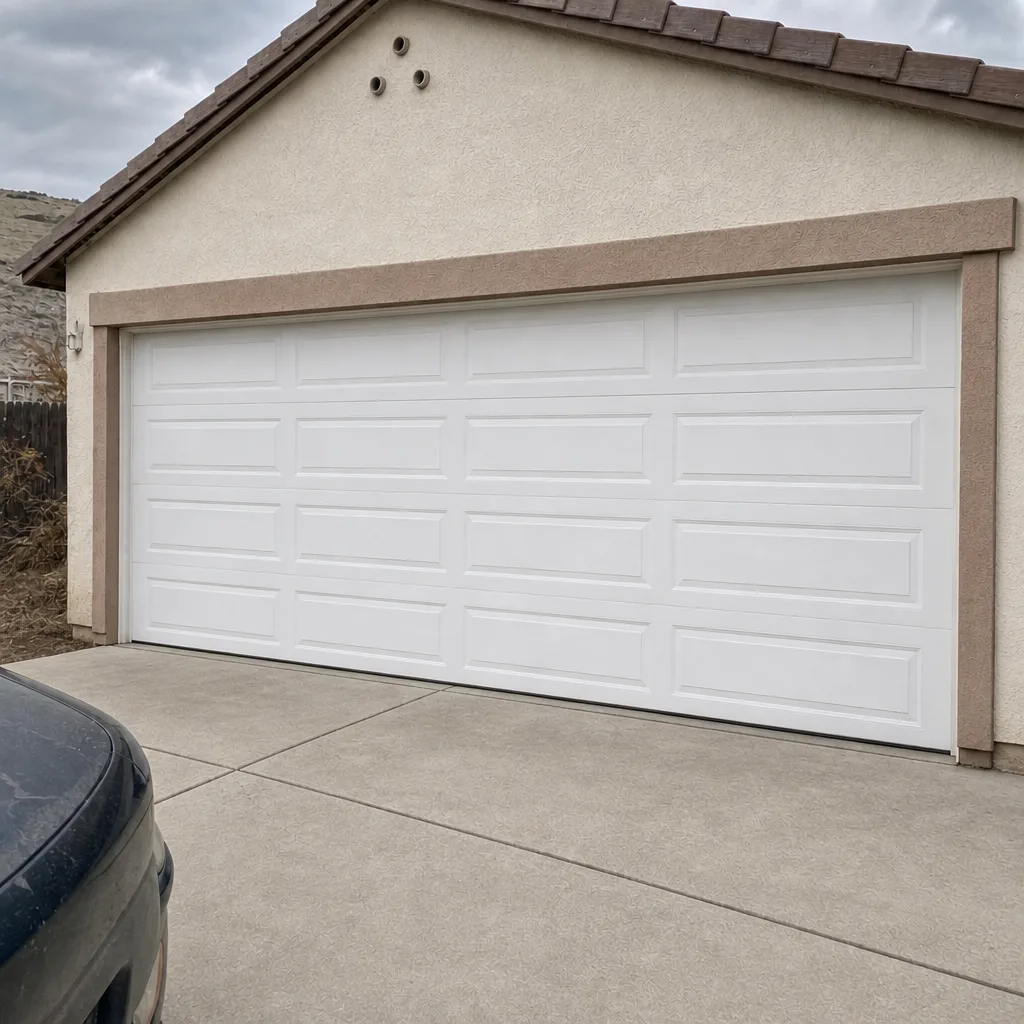 After
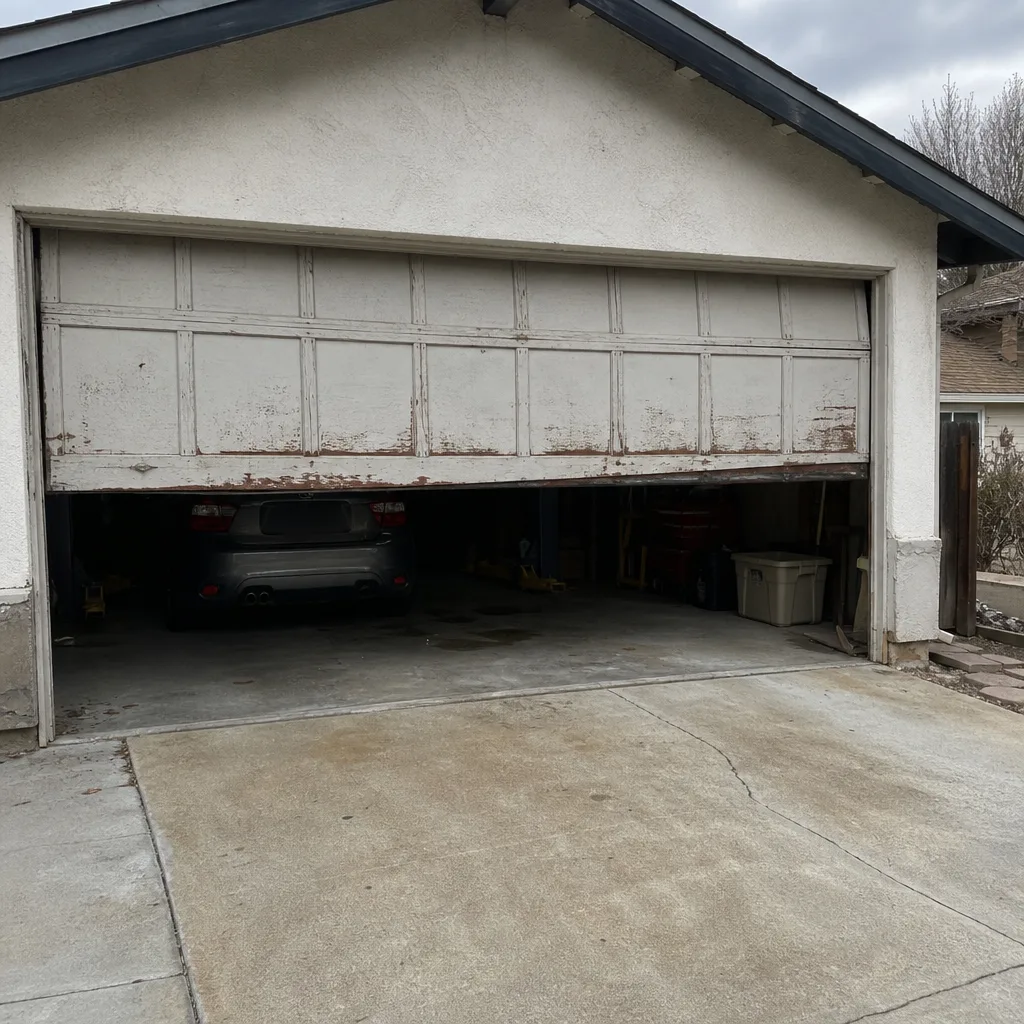 Before
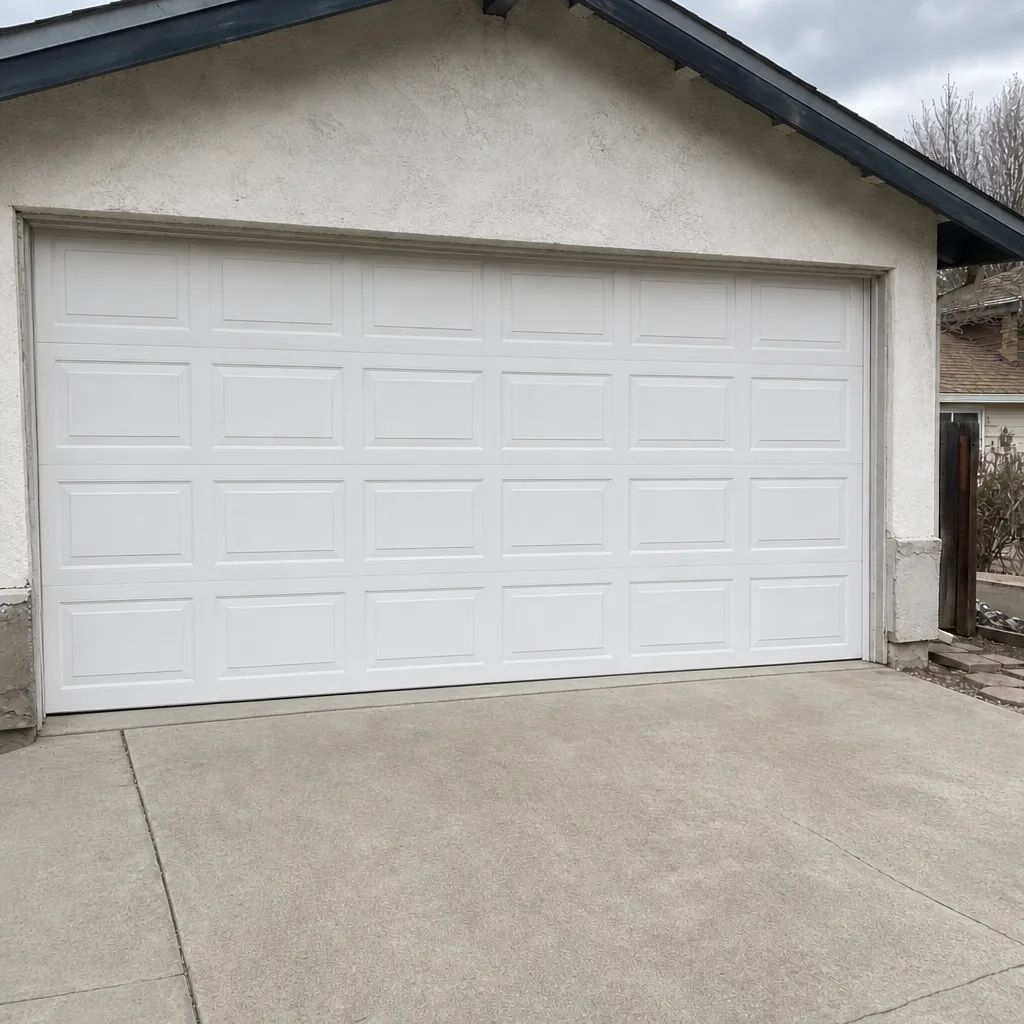 After
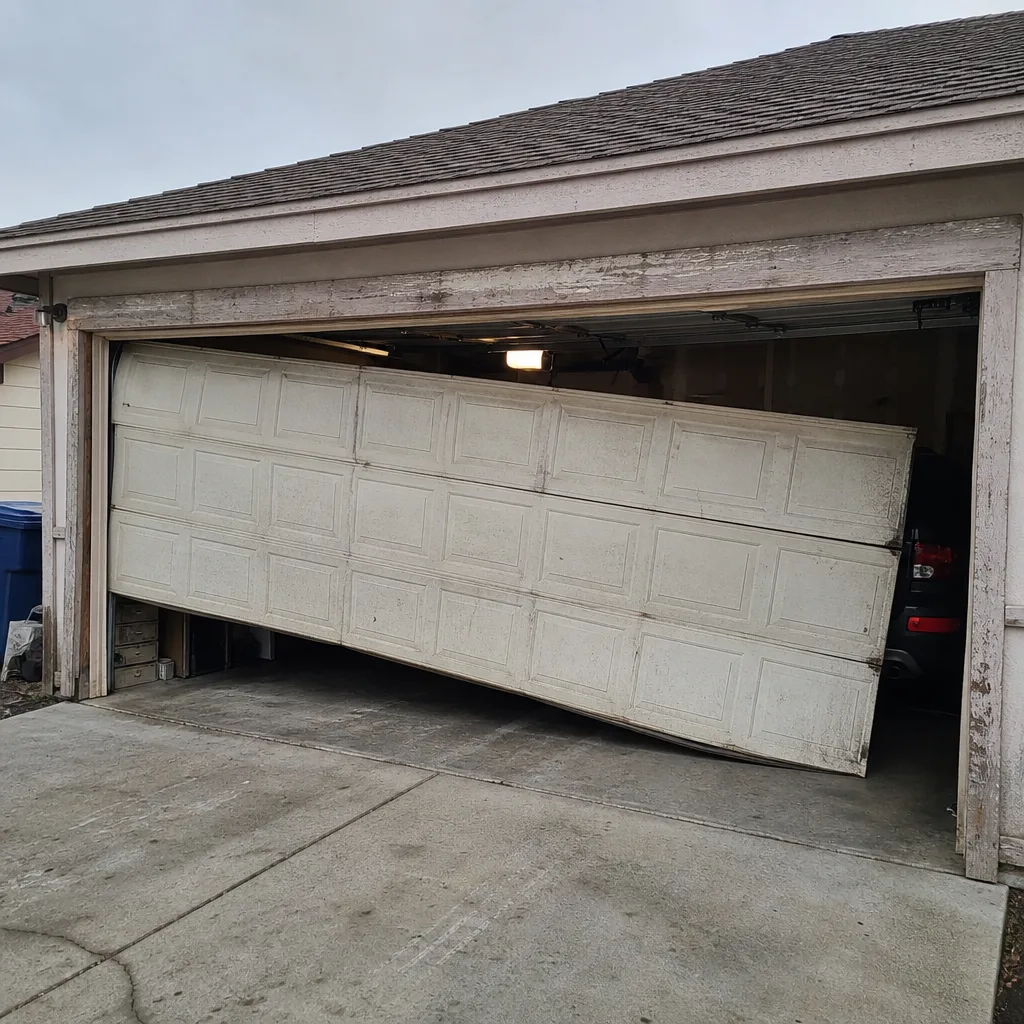 Before
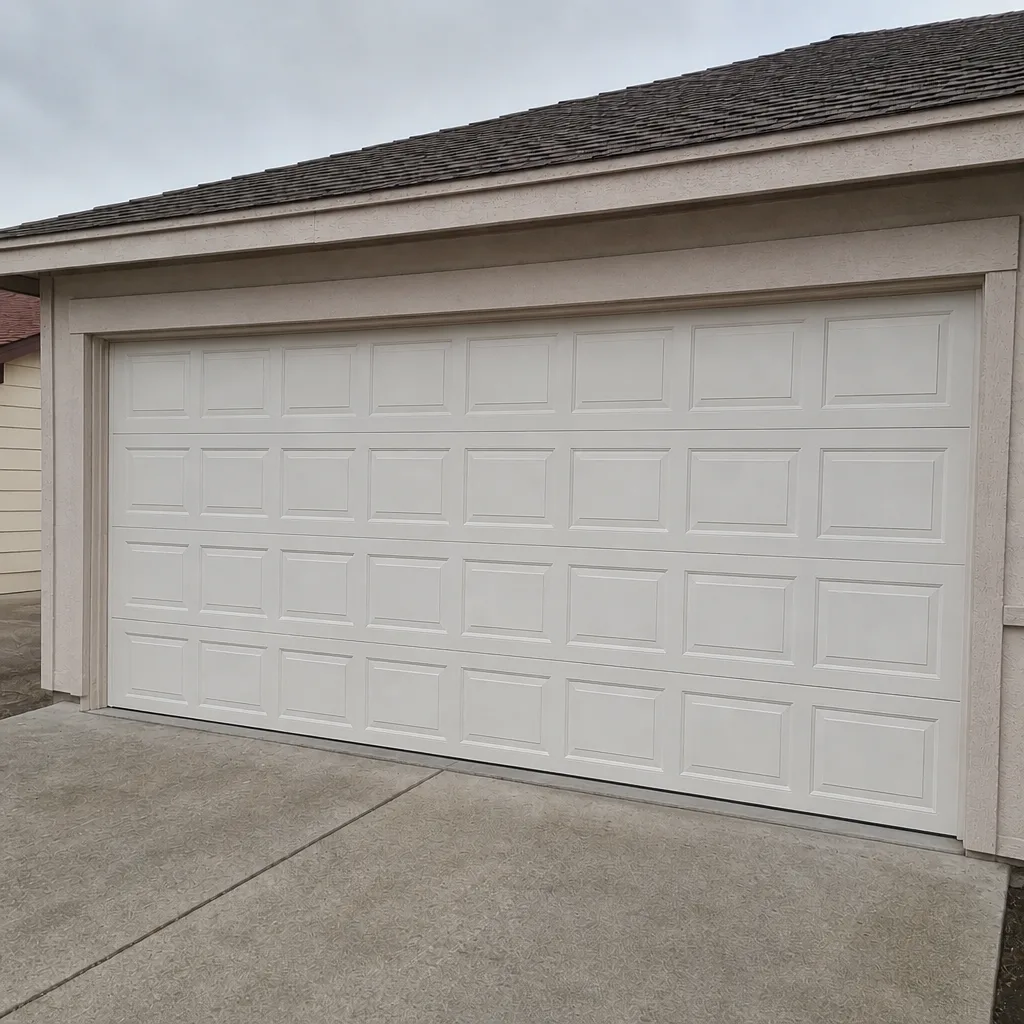 After
When to Call a Professional
Call a professional the moment springs, cables, or the bottom bracket are involved – full stop. Call us too if the door feels unusually heavy, won’t stay level, jumps or shudders on the way up, reverses unpredictably, or if your opener has a burned board or a dead capacitor. Any track that’s clearly out of line after a bump, a door that’s come off its roller, and a broken spring on a two-spring system all belong in the “call now” column. None of these get safer by waiting, and driving a car out from under a jammed door in Mesquite heat makes a bad afternoon worse. We answer the phone around the clock, quote the job on that call, and hold the number when we get there. Otto’s Garage Door Mesquite offers free estimates in Mesquite – call (844) 320-6569. If you’re weighing repair against replacement, our team can walk you through both options without pushing you toward the bigger ticket.
Frequently Asked Questions
Do low-tension, no-load jobs yourself: weatherstripping, remote and keypad batteries, visual inspections, cosmetic dents, and light lubrication. Hire a pro for anything that stores tension or carries current – torsion and extension springs, cables, the bottom bracket, and opener electrical parts. Roller swaps are often fine DIY; track alignment is where it usually tips to a pro.
No. A torsion spring is wound under enough tension to cause serious injury the instant it releases, and there’s no warning before it does. Replacing one safely needs specific winding bars, a feel for the torque, and the door’s weight balanced correctly. This is work for trained hands – call (844) 320-6569 for a free quote instead.
It varies with how far the attempt went – a straight cable repair is one price, but a botched one that also bends a track or strips a bracket adds labor and parts on top. The safest way to know is a free estimate: we quote the real number before any work starts and it doesn’t change at the door. Call (844) 320-6569 and we’ll give you a straight answer.
Often yes, if the door is level and in good shape. Close the door, disconnect the opener, clamp a safety block above each roller you remove, and swap one roller per side at a time. If the door binds, jumps, or looks heavy, stop and call – that’s a sign there’s a balance or track problem underneath.
No. We quote the job on the phone and hold that number when we arrive. The price is agreed before any work starts, and if we find something different on arrival, we tell you before touching it and get your okay. No surprise invoices – and a free second opinion on any written estimate you already have.
Yes – our technicians are background-checked and insured, and the license number and address are published so you can verify them before anyone shows up. That matters when you’re hiring in Mesquite, because a name you can check and a face you’ll see again at the hardware store beats a call center three states away. Call (844) 320-6569 with any questions before you book.
The Bottom Line
The line between DIY-safe and call-a-pro isn’t about how handy you are – it’s about stored energy. Weatherstripping, remotes, inspections, and small dents are yours to handle. Springs, cables, and bottom brackets hold enough force to hurt you before you can react, and no video makes that safe. Rollers and tracks are the middle ground, and the moment a door binds or feels heavy, it’s time to call. When in doubt, a free estimate beats a cleanup bill every time. Respect the springs, do the easy jobs yourself, and call us for the rest. Try our Otto’s Garage Door Mesquite home page for everything we handle. We answer the phone around the clock, quote on the call, and stand behind every job with our 90-Day Done Right Promise in writing.
Otto’s Garage Door Mesquite is proud to serve Mesquite with free estimates, no trip charge inside the county, and a permanent 10% discount for seniors and veterans. Call (844) 320-6569 for a free estimate today.
Written by the team at Otto’s Garage Door Mesquite.