
Last updated November 17, 2026
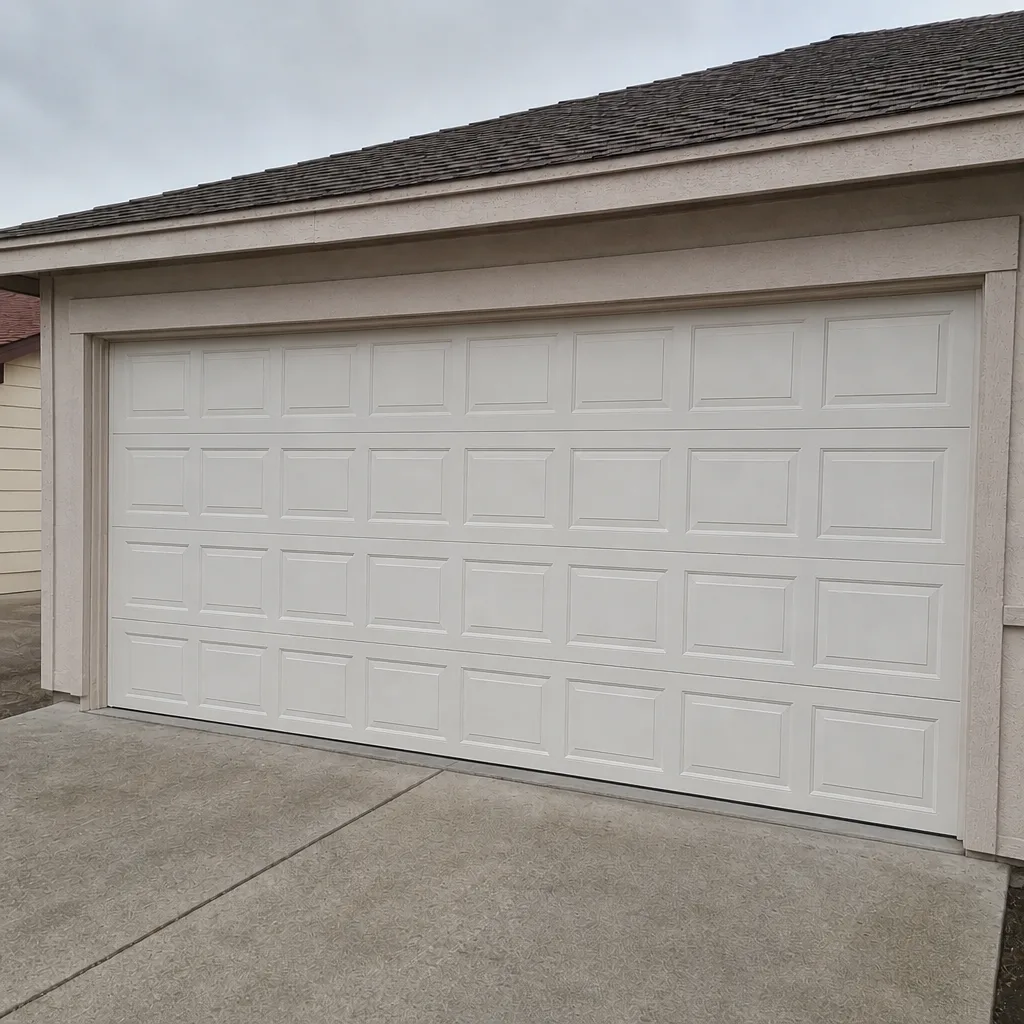
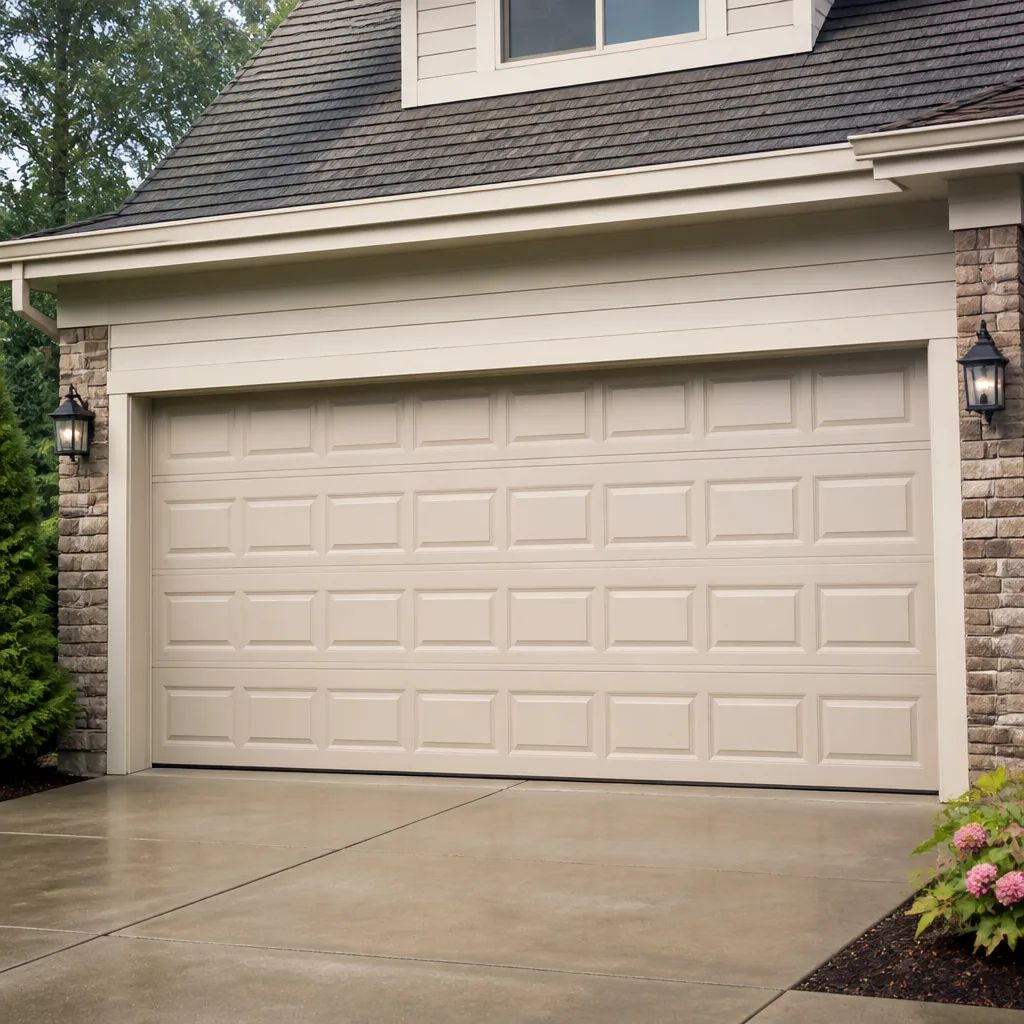 Raised-panel steel
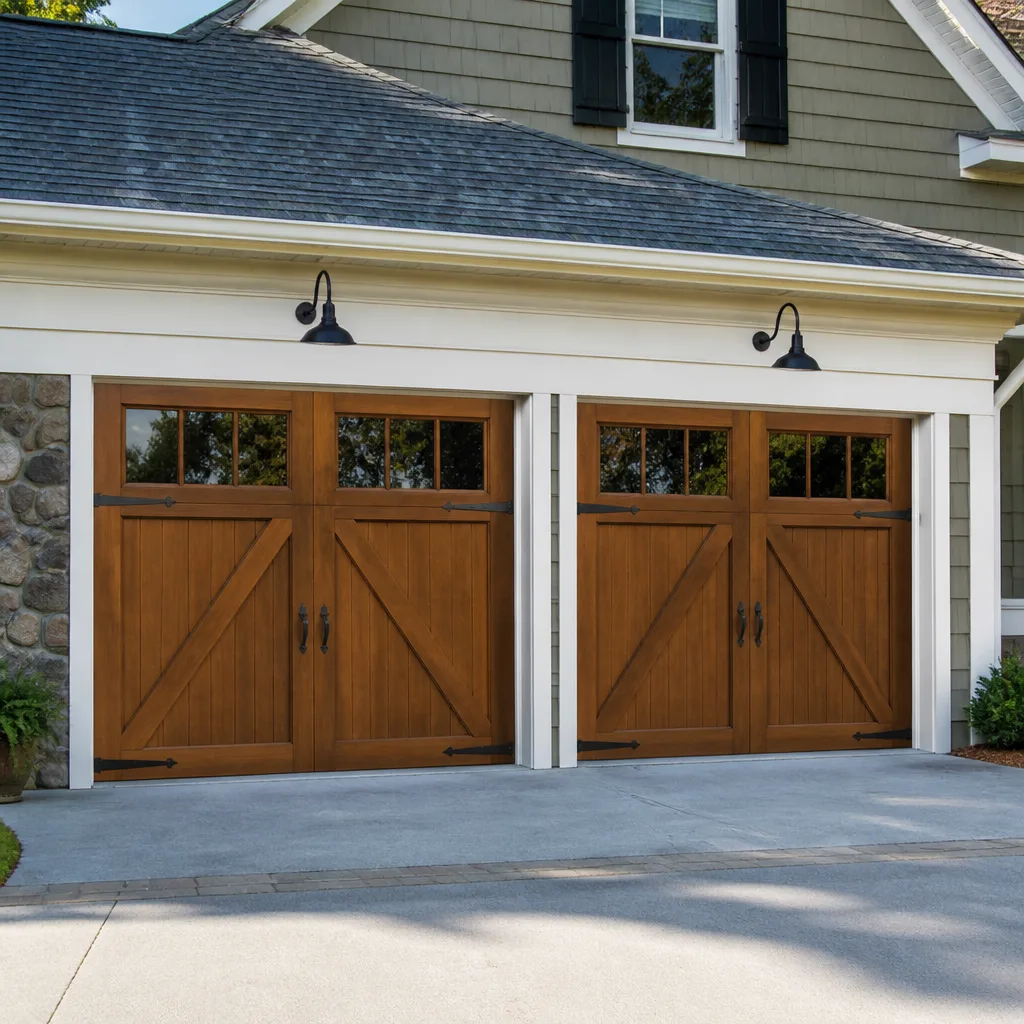 Carriage house
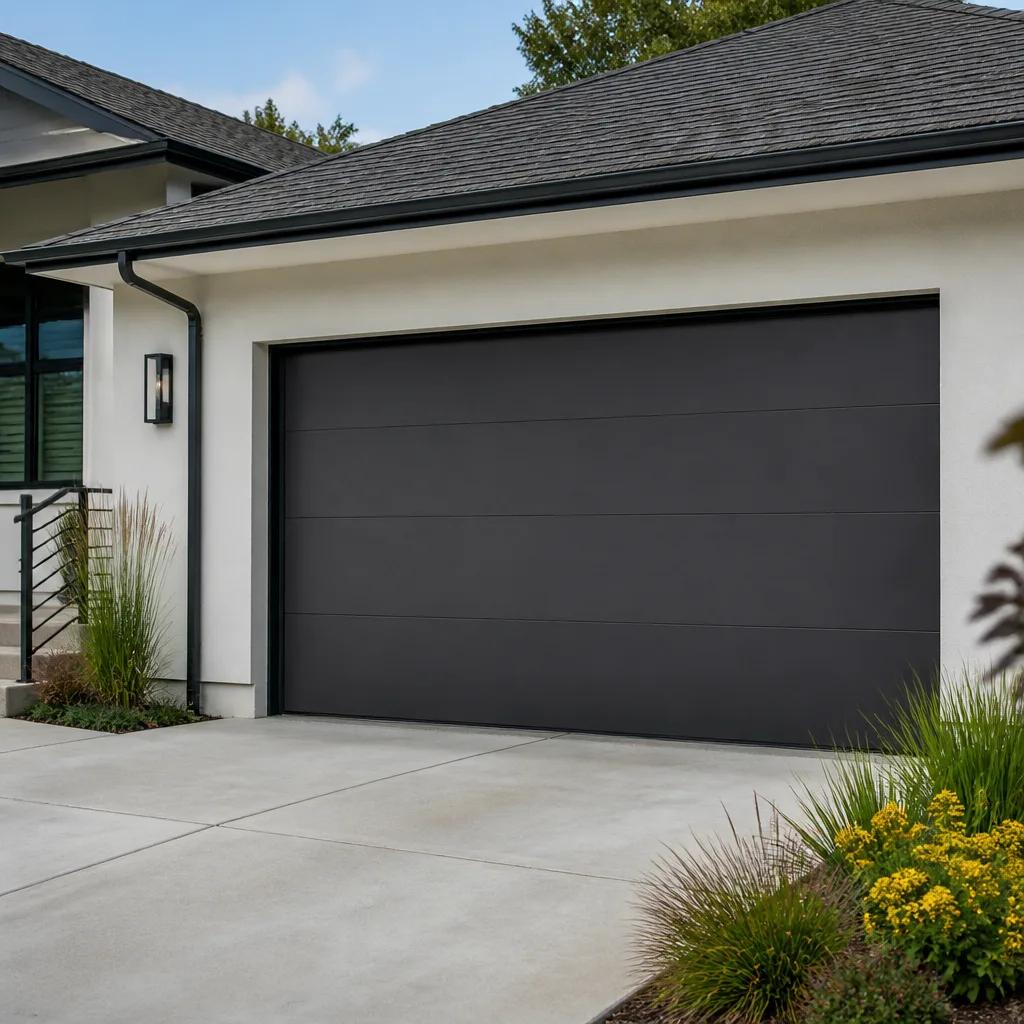 Modern flush
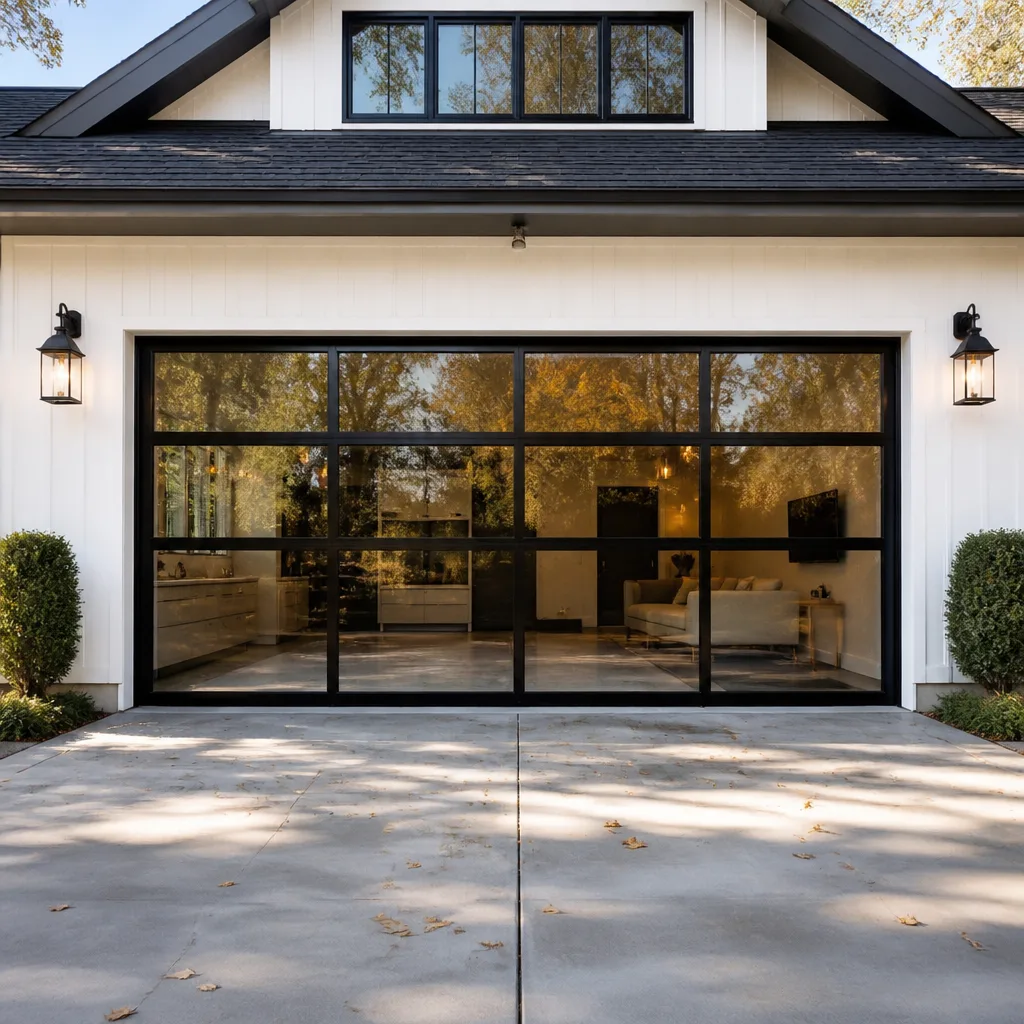 Full-view glass
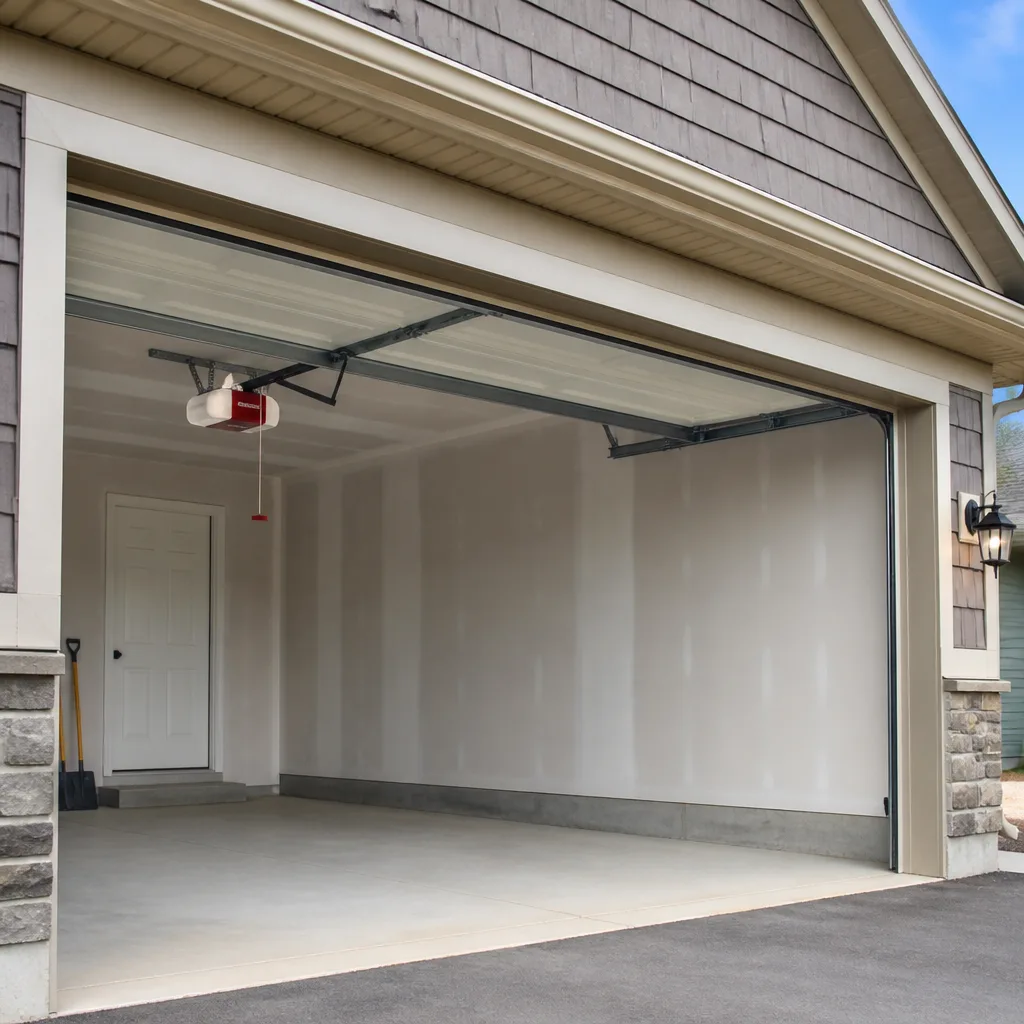 LiftMaster openers
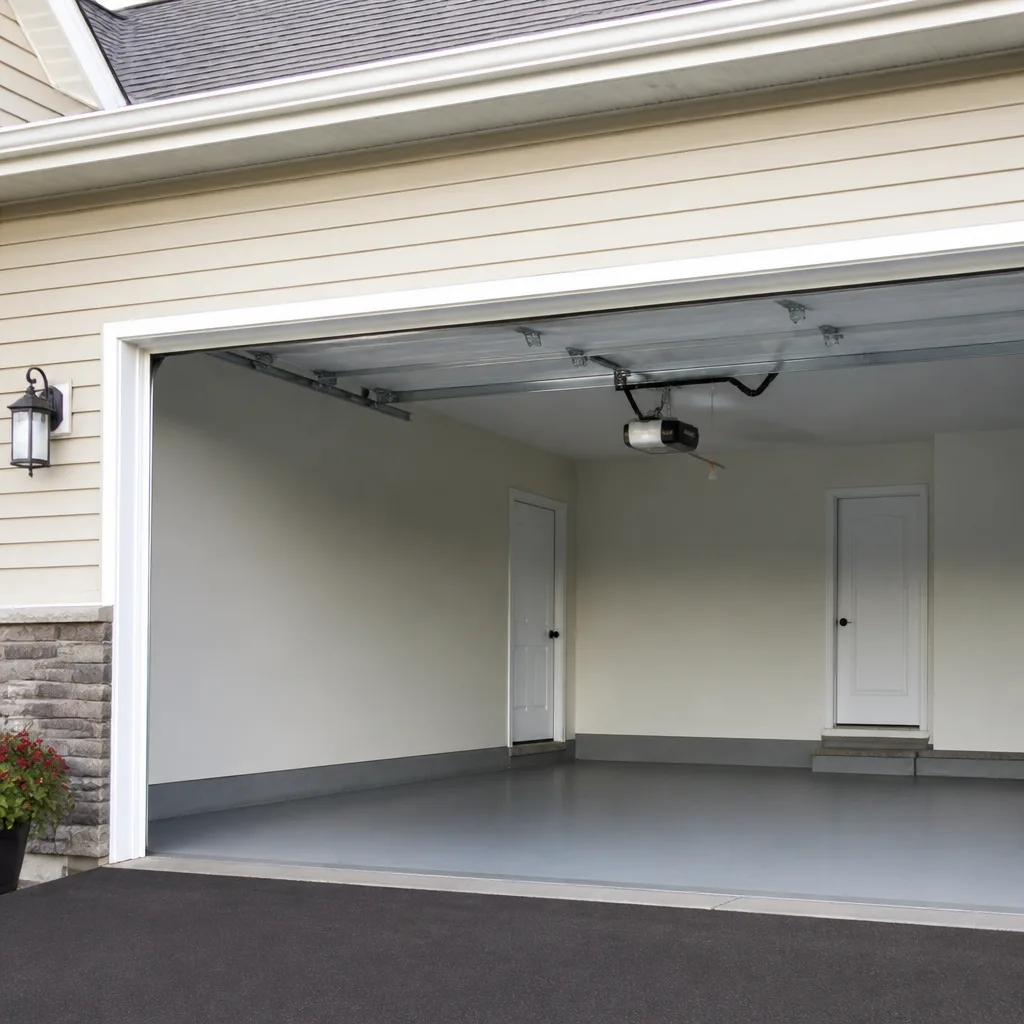 Chamberlain openers
Full 25-point door and opener safety check with every visit - springs, cables, rollers, tracks, and your LiftMaster or Chamberlain opener included
You get a price before we start. It does not change when the pro arrives.
Get your free estimateGarage Door Warning Signs: A Mesquite Homeowner’s Reference Guide
The door that failed at 9 p.m. on a Sunday gave three separate warnings in the two weeks before it happened. A little pop when it started up. A bottom panel that stopped sitting flush. A remote that took two pushes instead of one. The homeowner didn’t know what any of it meant, so nothing got checked, and then a torsion spring let go and the car was sealed inside until Monday morning.
That is the whole reason for this guide. Warning signs only help if you know what normal looks like first. What follows is a baseline for how a healthy door should sound, feel, and move in Mesquite, so you can spot the deviation before it turns into a late-night call.
Styles & brands we work with
- Raised-panel steel
- Carriage house
- Modern flush
- Full-view glass
- LiftMaster openers
- Chamberlain openers
Quick Answer
The most reliable garage door warning signs are grinding or popping you didn’t hear last year, a door that travels unevenly or stops sitting flush, and a door that won’t hold its position when you lift it halfway. If the door is slow, loud, or jerky, schedule service within two weeks. If a spring is broken, a cable is hanging slack, or the door is coming off its track, stop using it and call the same day.
Table of Contents
- What Does a Healthy Garage Door Actually Sound and Feel Like?
- What You Hear: Grinding, Popping, and Slapping
- What You See: Gaps, Rust Streaks, and Uneven Travel
- What You Feel: Resistance, Vibration, and Jerking
- Signs That Are Unique to Mesquite’s Heat and Dust
- How to Run the Balance Test (and Read the Result)
- Failing Spring or Misaligned Track? Why the Two Look Alike
- Two Weeks or Today: Sorting Your Warning Signs
- Common Mistakes to Avoid
- When to Call a Professional
- Frequently Asked Questions
- The Bottom Line
What Does a Healthy Garage Door Actually Sound and Feel Like?
Before you can spot a problem, you need a reference. A well-adjusted residential door is unremarkable. That’s the point. In our experience, a healthy door in Mesquite makes a low, even hum from the opener with a soft rumble of rollers in the track. No squeal. No bang at the top or bottom. The door rises and settles in roughly ten to fifteen seconds and lands flat without shoving the frame.
Here’s the baseline we’d ask any Mesquite homeowner to hold in mind:
- Sound: a steady motor hum and a rolling, not scraping, track sound. Nothing that makes you look up.
- Speed: consistent from start to finish. No slow crawl in the middle, no sudden grab near the top.
- Feel at the panel: a firm door that doesn’t flex or bow when you press it.
- Ground line: the bottom seal meets the slab evenly across the whole width, with no daylight showing underneath.
- Manual lift: a door in balance stays where you put it, roughly, when lifted by hand.
If any single item on that list has changed in the last season, you have a warning sign. One is worth watching. Two or three together is worth scheduling. More than that, and it’s time to stop guessing. Our Garage Door Repair in Mesquite page walks through how a service call sorts these out, but the checklist above is what lets you describe the problem clearly when you call.
What You Hear: Grinding, Popping, and Slapping
Sound is usually the first warning sign because it changes before anything visibly breaks. Each noise tends to point at a specific cause, and knowing which is which saves a lot of guesswork.
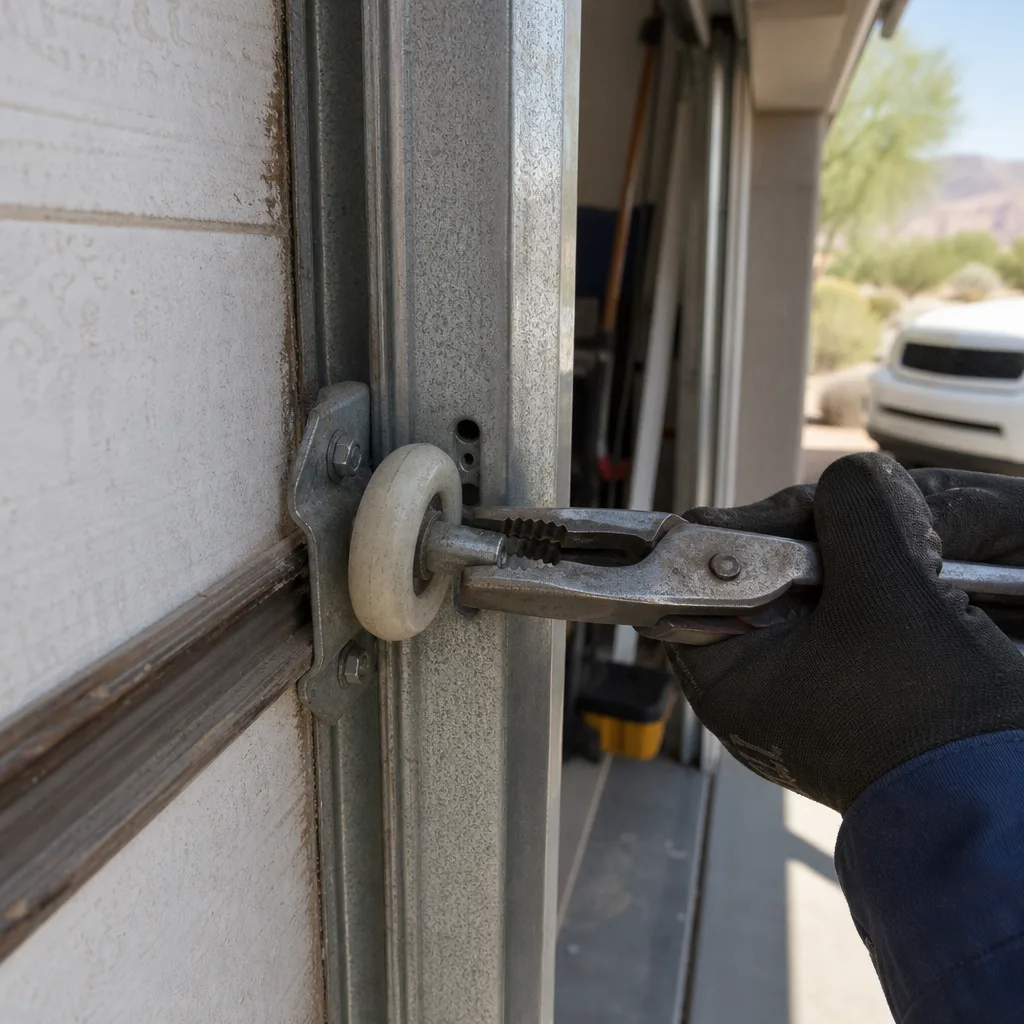
- Grinding that rises and falls with the door’s travel usually means dry or worn rollers, or a torsion spring winding tighter than it should. It sounds like metal on metal and gets worse near the top.
- A sharp pop, once, right as the door starts up points at a spring or a cable under sudden load. This is the one to take seriously. It’s often the last warning before a break.
- Slapping or banging at the floor means the door is hitting the slab too hard, so the down travel is set wrong or the bottom seal has stiffened up.
- A high squeal while the opener runs is usually the opener’s gear or rail, not the door. If the opener is straining, the problem is almost never the opener alone.
In Mesquite we hear a specific version of this in summer. The metal track and the door panels both expand in the heat, and that changes the clearances between rollers and track. A door that rolled quietly in March can develop a grinding scrape by July, once the tolerances tighten. It’s not a manufacturing defect. It’s the door riding a hotter track than it was adjusted for. If you want the mechanical detail on how an opener loads up against that friction, our page on Garage Door Opener Repair & Installation in Mesquite covers it.
What You See: Gaps, Rust Streaks, and Uneven Travel
Visual warning signs are easier to catch once you know where to look. Walk out to the driveway, close the door, and study it the way you’d study a fence line.
- A horizontal gap at the bottom means the seal is worn, the door is out of adjustment, or the slab has settled unevenly.
- Rust streaks running down from a hinge or roller show moisture where it shouldn’t be, usually from a bearing that’s failed and started to corrode.
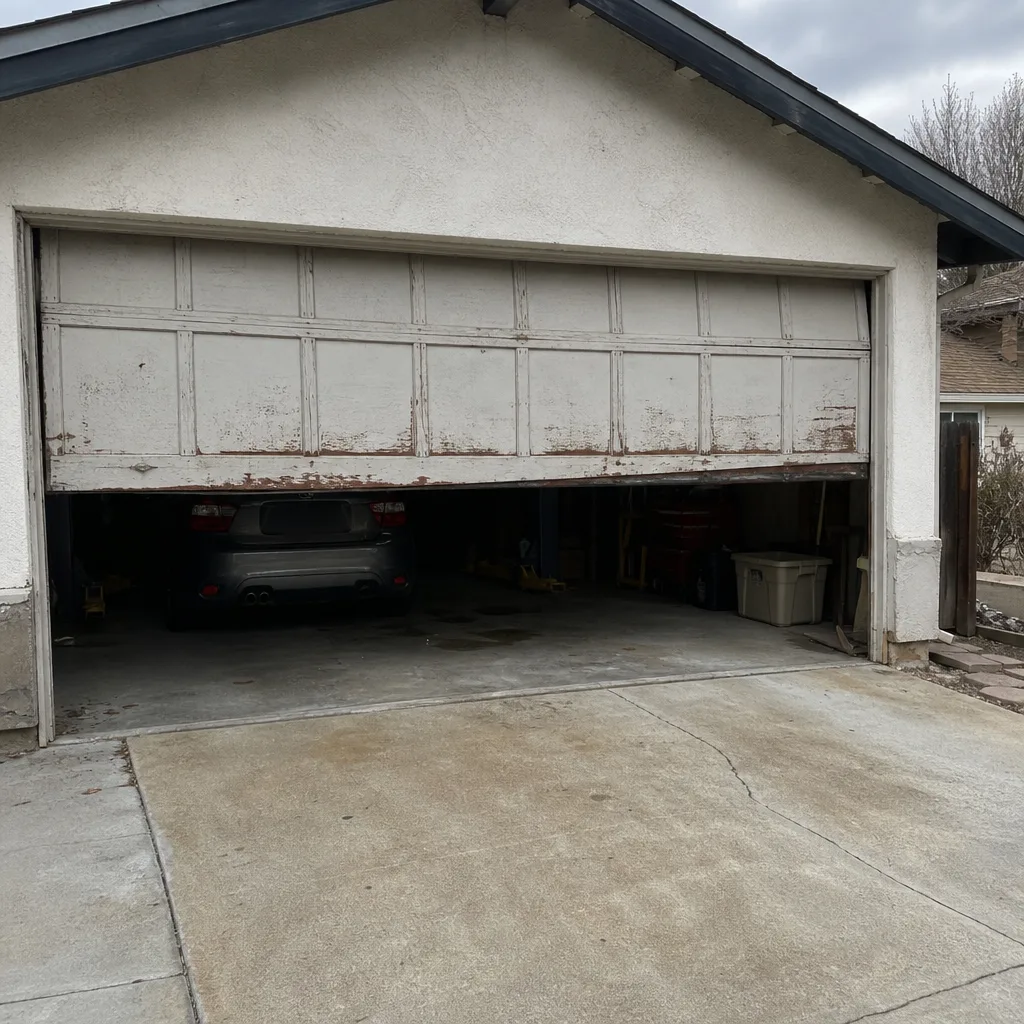
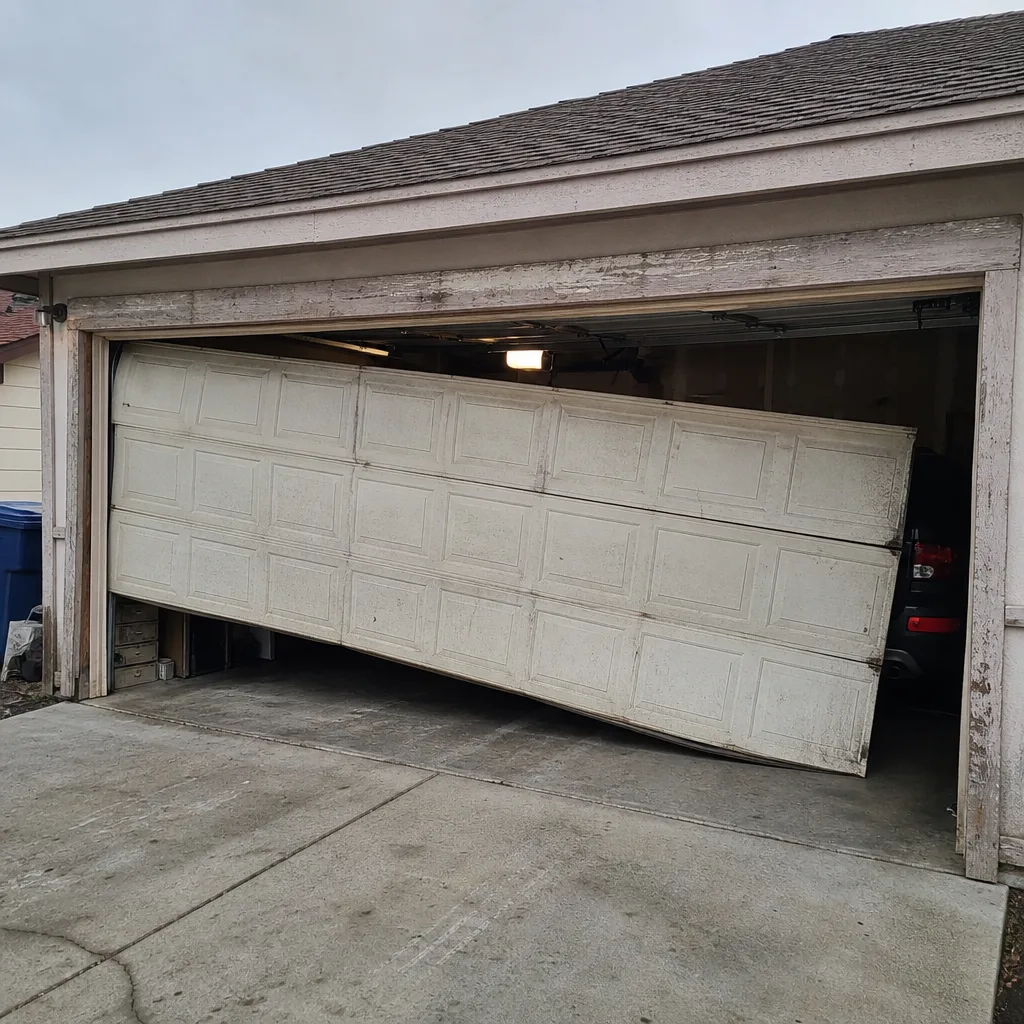
- Uneven travel is the big one. Watch the top edge as the door rises. If one side climbs ahead of the other, the track, the cable, or the spring tension is off.
- A cracked or bowed bottom panel is common on west-facing doors in Mesquite, where afternoon sun bakes the same panel for hours.
- A door that won’t close the last few inches is a sign the safety reverse is misreading, or the track has pinched near the floor.
Watch for that unequal travel carefully, because it’s the one visual sign that turns into a real hazard. A door that tilts as it rises puts uneven load on both springs and both cables at once. Left alone, it can drop one side free of its track. Stop using it and call the same day. The people on your street likely already know us, but if you’re new to the area, start at the Otto’s Garage Door Mesquite home and work from there.
What You Feel: Resistance, Vibration, and Jerking
Touch is the sense homeowners use least and learn the most from. Do this safely, with the door open and the opener disconnected, and you’ll get a feel for the door’s health within a single test. Never put your hands near the springs, cables, or hinges, and never under a door that’s in motion.
- Run your palm lightly along a panel as the door cycles. It should feel solid with no give.
- Listen and feel for vibration in the frame while the door runs. A shudder in the wall usually means a loose mount or a worn roller.
- Notice any jerking in travel. A smooth door doesn’t lurch, and a lurch points at a binding track or a failing spring.
- The balance test (covered next) is the touch test that matters most. It tells you more about spring health than anything else you can do safely.
One thing to understand before you go further: a door is 200 pounds riding on two springs. Respect that. Springs and cables are under high tension and can cause serious injury if you handle them wrong. That’s not a line we say to sell a service call. It’s the reason we never walk a homeowner through a spring fix, and the reason a real garage door professional handles that part of the job.
Signs That Are Unique to Mesquite’s Heat and Dust
Mesquite’s desert climate wears on a garage door in ways a milder location doesn’t. A door on a west-facing slab along a street like the ones off West Mesquite Boulevard can take all the afternoon sun there is. That produces its own set of warning signs.
- Heat-expanded frames causing binding. The metal track grows in the summer heat, the gap between roller and rail closes, and the door starts to bind. You’ll hear the grind before you see it.
- UV-dried seals letting in desert dust. The rubber bottom seal cracks and hardens from sun and dry air. Once it stops flexing, dust blows in under the door, and it turns up as a fine grit film on the floor.
- Sun-warped bottom panels losing alignment. The lowest panel spends the most time in direct sun and can bow or twist. When it does, the door doesn’t sit flush and no amount of remote pushing fixes it.
- Corroded fasteners at the track mounts. Dry heat alone doesn’t rust metal, but morning moisture from an overnight wash or a nearby irrigated yard can, and the screws holding your track up are the first to go.
Spring cycling is the other Mesquite fact worth knowing. Springs fail on cycles, not on a calendar, and a busy household doing four or five open/close cycles a day wears them faster than a household doing one. When we look at a door, we count spring cycles the way you count tire miles. A spring that is close to its limit will show it as a slight sag in the door’s balance test long before it breaks, and that’s a warning sign you can catch early if you know to look.
How to Run the Balance Test (and Read the Result)
The balance test tells you what state your springs are in without touching them. It takes two minutes and is the single most useful check a homeowner can safely do. Steps:
- Close the door and pull the opener’s release cord to disconnect it from the door, so the door is running on springs alone.
- Lift the door by hand, with a firm grip at a panel, about halfway up.
- Let go. Keep your hands clear of the door as it settles.
- Watch the result. A balanced door stays roughly where you put it, or drifts a few inches on its own. An unbalanced door drops fast or feels heavy on the way up.
- Reconnect the opener and cycle the door to confirm it re-engages.
What the result tells you: if the door falls quickly or you have to heave it up, the springs are losing tension and have probably been doing it for a while. That’s a schedule-a-call sign, not an emergency, as long as the door still operates and no spring is visibly broken. If a spring is already broken (you’ll see a clean gap in the coil) or you find the door won’t stay up at all, don’t run it. Stop and call. A door that can’t hold position can come down on its own.
Failing Spring or Misaligned Track? Why the Two Look Alike
Here’s a problem we see constantly: a homeowner describes a door that’s jerky, leans to one side, or won’t sit flat, and it turns out there are two totally different causes with almost identical symptoms. A failing torsion spring and a misaligned track both make a door bind, both make it travel unevenly, and both make it feel heavy.
The difference is what the fix actually is, and that changes the response.
- A spring problem shows up as a door that’s heavy to lift, drops when let go, or drifts unevenly across its whole width. If it’s a broken spring you’ll see a visible gap in the coil. Springs are under high tension and dangerous to touch. This calls for a trained professional, full stop.
- A track problem shows up as a door that binds at one point in its travel, or that pops back into line at a specific height. The door may be otherwise light to lift. Tracks can be knocked out of alignment by a car bumper, a hit from a bike, or simple heat sag over a Mesquite summer.
From the driver’s seat they look the same: a door that won’t go up straight. That’s exactly why we don’t want you guessing. On the phone we can usually narrow it down with a couple of questions, and on site we can tell you for sure in minutes. A wrong guess on a track could be a cheap fix. A wrong guess on a spring is a hazard. Our technicians have up to 22 years of experience sorting exactly this kind of thing, and the answer we give you is the one that’s actually true about your door.
Two Weeks or Today: Sorting Your Warning Signs
Not every warning sign is an emergency. Some you can watch for a few days. Others you need to stop using the door for, today. Here’s how we sort them.
Schedule something in the next two weeks if you notice:
- Grinding or squealing that’s new since last season
- A slow or labored door that still goes up and down
- A worn or cracked bottom seal letting in dust
- A door that shakes or vibrates but stays in the track
- A remote that’s gone sluggish or needs a second push
Stop using the door and call today if you notice:
- A broken torsion spring (a visible gap in the coil, or the door will not lift)
- A cable that’s popped off its drum or is hanging slack
- A door that has come off one side of its track
- A door that drops on its own, or won’t hold a raised position
- Any noise that sounds like a bang and is followed by the door not opening
If you find yourself in the second list, don’t run the opener again to see if it fixes itself. It won’t, and every cycle loads a weakened spring or a loose cable a little more. Call us at (844) 320-6569 and a live person picks up around the clock. We’ll quote it on the call and hold that number. In Mesquite, our no-trip-charge policy inside the county means getting a professional out to look costs you nothing.
Common Mistakes to Avoid
- Trying to fix a broken spring yourself. Springs and cables are under high tension and can cause serious injury. The few dollars saved on a DIY spring is never worth the risk.
- Ignoring one small warning sign and waiting for a second. A single pop or a door that’s gone slow is the door telling you something. Waiting until two problems show up just means two repairs instead of one.
- Using the door repeatedly to see if it “fixes itself.” If it’s weak, every cycle weakens it more. Stop cycling it once you’ve found a real warning sign.
- Assuming a loud opener means the opener is the problem. If the opener is straining, the problem is almost never the opener. It’s usually the door fighting the opener.
- Skipping the balance test because “it still opens.” A door in balance and a door about to fail both go up. The balance test is how you tell them apart before the failure.
- Letting a corner of the bottom seal stay cracked through a Mesquite summer. Dry UV heat makes it worse every week, and once it stops flexing, desert dust blows in under every door on your street.
- Calling a national number and getting a quote that changes at the door. Ask for the price before the truck arrives, and ask for it in writing. That’s the way it should work everywhere.
When to Call a Professional
Call a professional if a spring is broken, a cable is loose, the door has jumped its track, or the door won’t hold a raised position. Those are stop-using-it-today situations, and we answer the phone around the clock for them. Call too if the door has been binding or jerking for more than a week, if two or more warnings show up together, or if the balance test tells you the door is heavy or falling on its own. If you’re not sure, call anyway. We’ll ask you a couple of questions and tell you straight whether it’s an emergency or something that can wait a few days.
Every job we do gets the same written guarantee: the 90-Day Done Right Promise. If it’s not done right, we make it right, backed by one call to the person who owns the company, not a customer-service queue. Otto’s Garage Door Mesquite offers free estimates in Mesquite. Call (844) 320-6569, and a live person will quote the job and hold the number.
Frequently Asked Questions
A new grinding or popping sound is usually the first warning sign, and it tends to show up before any visible damage. Grinding means worn rollers or a spring working harder than it should, and a pop points at a spring or cable taking sudden load. If the sound is new since last season, schedule a check within two weeks. Call (844) 320-6569 for an exact quote, which is free.
A broken torsion spring shows a clear gap in the coil, and the door will feel very heavy and likely won’t stay up. Never try to lift a door with a broken spring or touch the spring itself, because it’s under high tension and can cause serious injury. Stop using the door and call the same day. Call (844) 320-6569 and we’ll quote the repair on the call.
Metal track and door panels expand in Mesquite’s summer heat, which closes the gap between rollers and rails and makes a door scrape or bind that rolled quietly in spring. That extra friction wears the rollers and loads the springs faster. It’s a normal desert effect, but it’s also a real warning sign worth checking. A quick service visit in early summer is the fix. Call (844) 320-6569 for a free estimate.
No, a torsion spring is not a safe DIY repair. Springs and cables are under high tension and can cause serious injury if they slip, so this is a job for a trained professional. Our technicians have up to 22 years of experience and handle spring and cable work across all major brands. Call (844) 320-6569 to get a quote before anyone comes out.
Check it once a season, and definitely at the start of summer when the heat climbs in Mesquite. A quick walk around the door and the balance test takes two minutes and catches most problems before they turn into a 9 p.m. emergency. If something looks off, call (844) 320-6569 and we’ll tell you whether it can wait.
Uneven travel usually means the door is binding on one track, a cable is loose, or one spring is weaker than the other. A door that tilts as it rises puts extra load on both sides and can drop one side out of its track. Stop using it and call today. Call (844) 320-6569, and we’ll quote the fix before the visit starts.
The Bottom Line
Warning signs are only useful if you know what your door is supposed to sound, feel, and look like in the first place. A healthy door in Mesquite is quiet and even. It rises smoothly, sits flush, and holds its position in a balance test. When it stops doing any of that, you have a signal to watch or a signal to call on. What you should not do is run the door and hope. A broken spring or a loose cable is a hazard, and a trained professional is the right person to handle it. Our technicians have up to 22 years of experience, we answer the phone around the clock, and every job gets the 90-Day Done Right Promise in writing. If you are thinking about a new door instead of a repair, our Garage Door Installation in Mesquite page covers measuring and scheduling. Ready to start? Call (844) 320-6569 for a free estimate from Otto’s Garage Door Mesquite.
Written by the team at Otto’s Garage Door Mesquite.
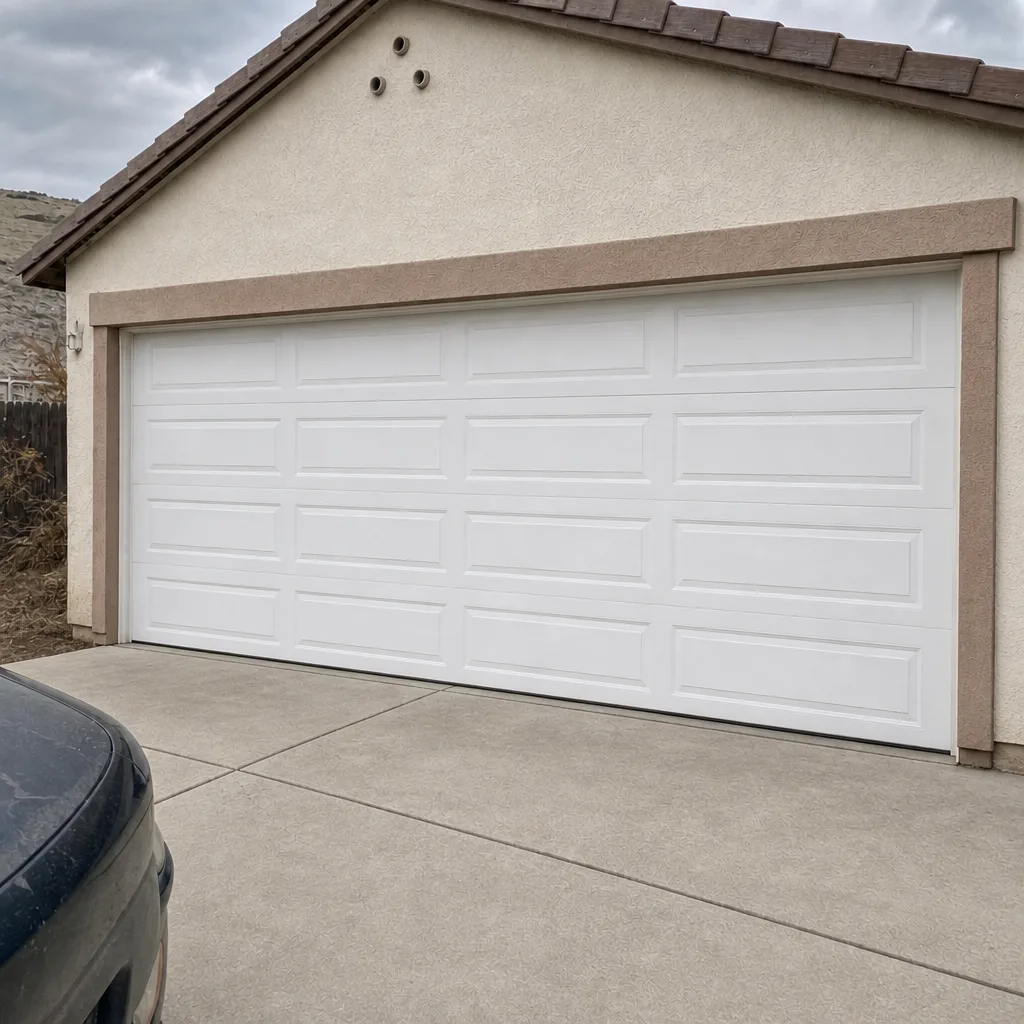
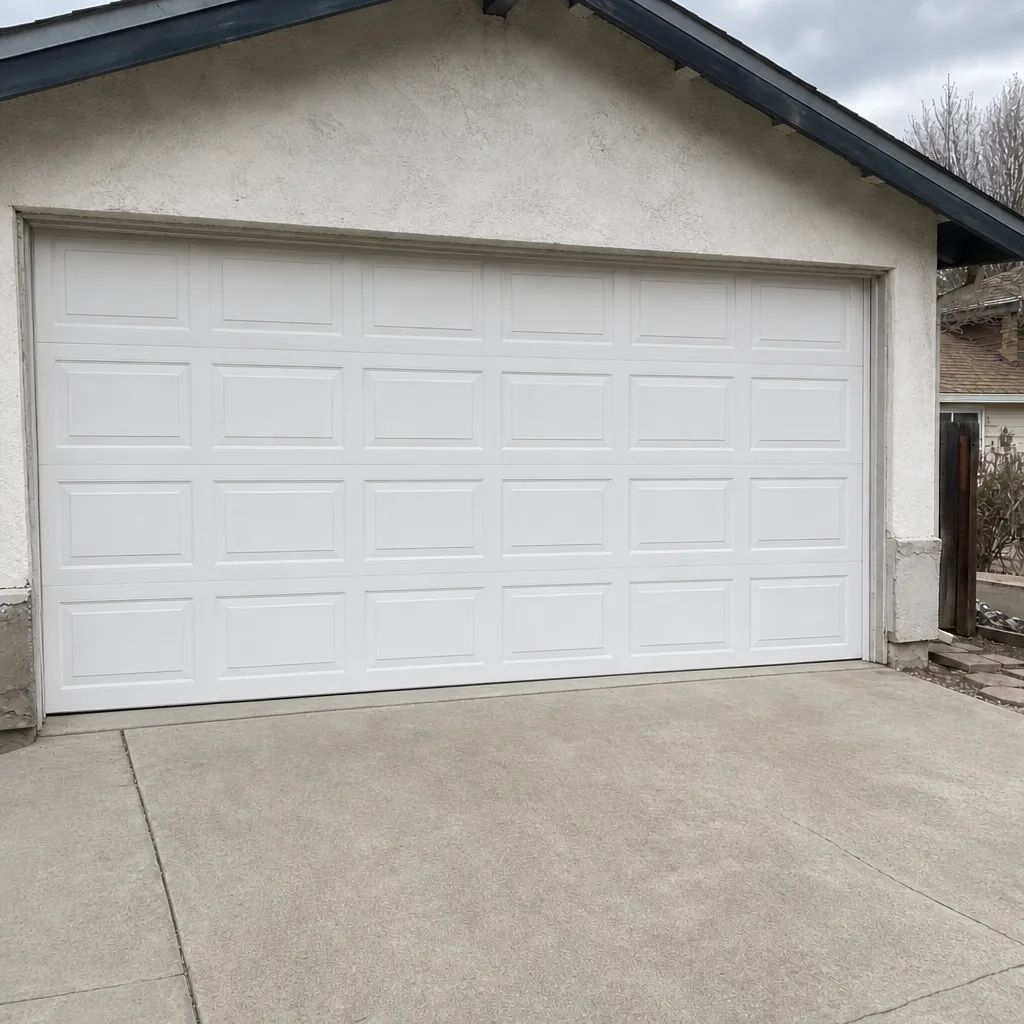
See the difference
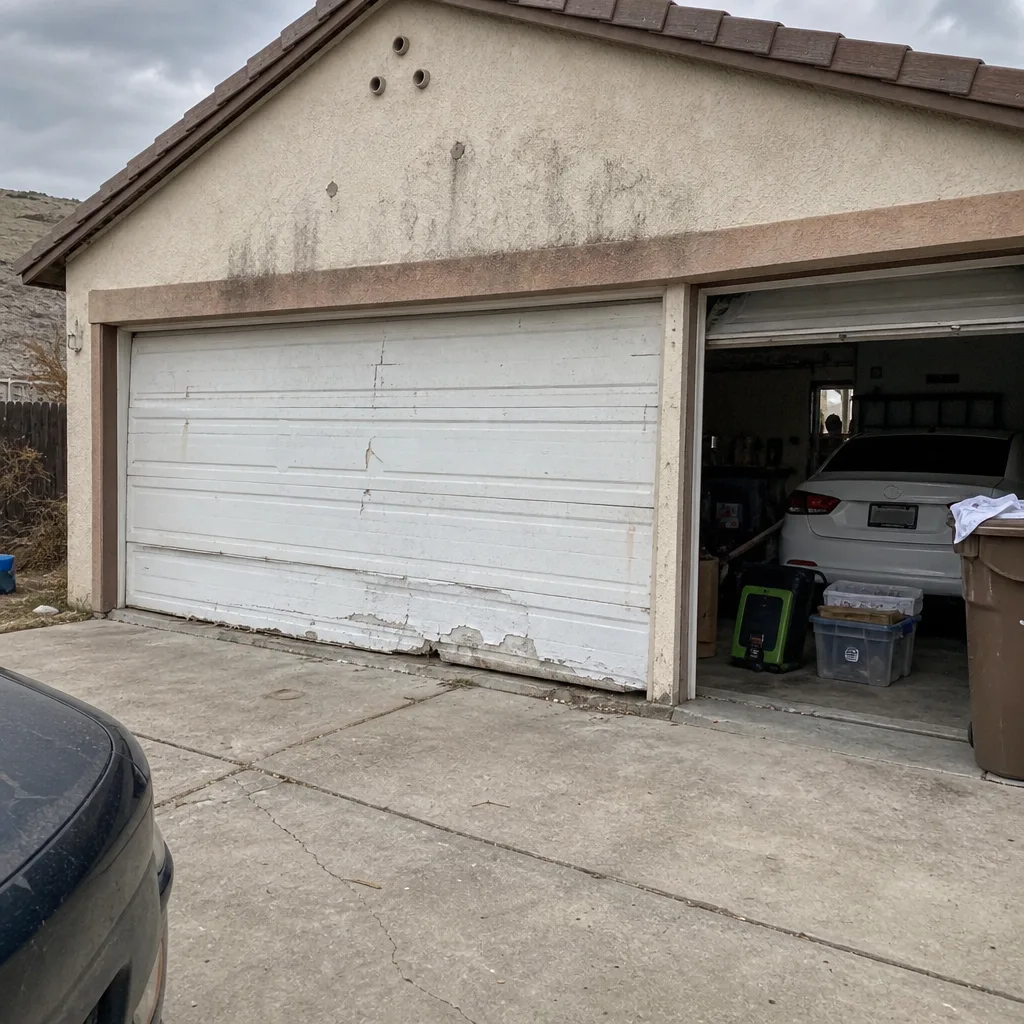 Before
 After
 Before
 After
 Before
 After