
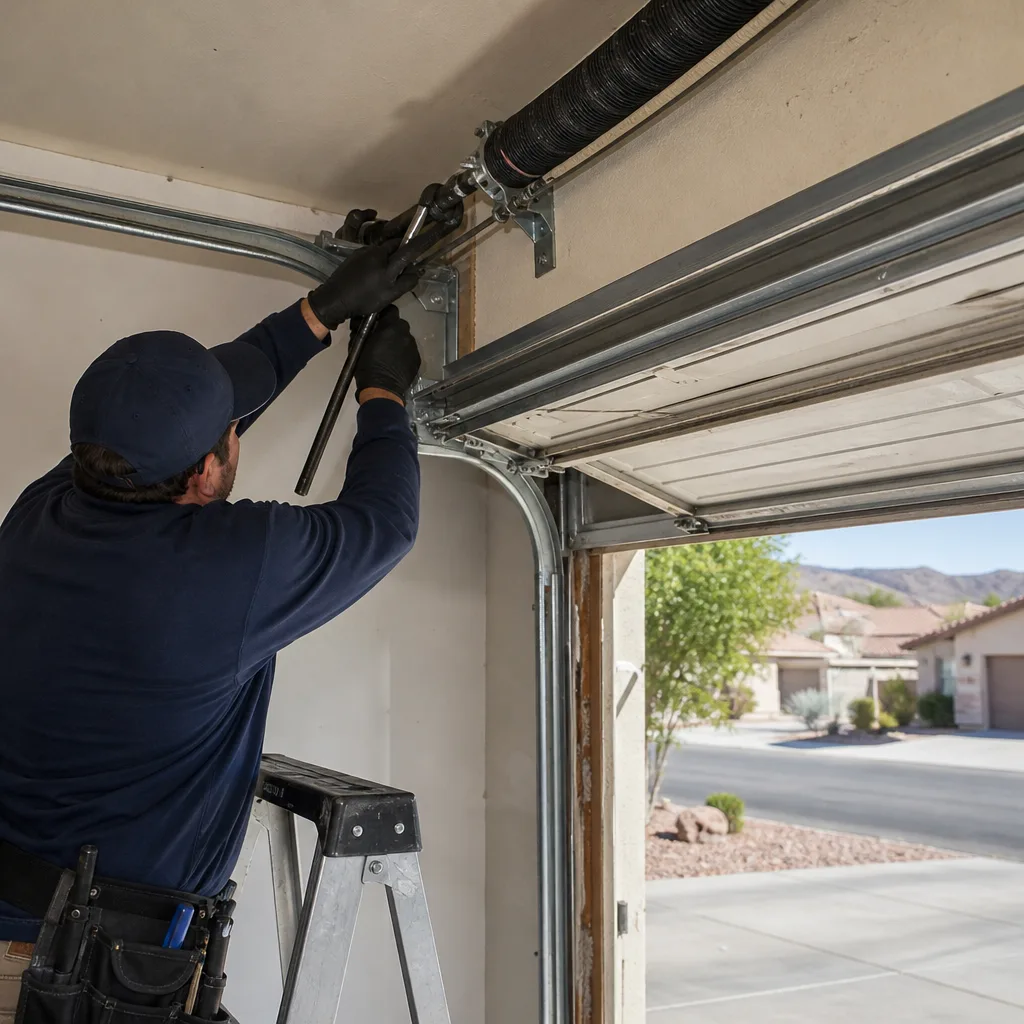
Last updated November 17, 2026
 Raised-panel steel
 Carriage house
 Modern flush
 Full-view glass
 LiftMaster openers
 Chamberlain openers
Full 25-point door and opener safety check with every visit - springs, cables, rollers, tracks, and your LiftMaster or Chamberlain opener included
You get a price before we start. It does not change when the pro arrives.
Get your free estimateSeasonal Garage Door Care for Mesquite: Year-Round Homeowner’s Guide
Your garage door’s worst enemy in Mesquite isn’t winter ice. It’s what eight months of UV does to the bottom seal while you’re not looking. Most seasonal garage door guides are written for places with four equal seasons – they talk about salt on the roads and ice in the tracks. Mesquite doesn’t work that way. We get “hot,” “very hot,” “cooling down,” and “the two months when it’s actually pleasant.” Each phase stresses a different part of the door. This guide walks you through what to do in each one, which fifteen-minute tasks you can handle yourself, and which jobs are worth paying for before a small problem turns into a Saturday emergency.
Quick Answer
In Mesquite, garage door care is less about winterizing and more about heat and dust management. The two highest-value seasonal tasks are lubricating the rollers and hinges before peak summer (April), and clearing sand and grit from the track grooves every few weeks during the dry months. A bottom seal that looks fine in March can be cracked and letting in hot air by July – check it by hand in spring, not with your eyes.
Styles & brands we work with
- Raised-panel steel
- Carriage house
- Modern flush
- Full-view glass
- LiftMaster openers
- Chamberlain openers
Table of Contents
- Why Mesquite Doors Age Differently Than the Rest of the Country
- Spring in Mesquite: What to Do Before Peak Heat
- Summer in Mesquite: What to Watch When It’s 110 Degrees
- How Thermal Expansion Affects Your Tracks (and When a Gap Is a Problem)
- The UV Degradation Timeline for Bottom Seals in Mesquite
- Blowing Sand, Dust, and What It Does to Your Rollers
- Fall in Mesquite: Prep Before the Cold Snap
- Winter in Mesquite: The Short Prep List
- Free Fifteen-Minute Tasks vs. Jobs Worth Paying For
Why Mesquite Doors Age Differently Than the Rest of the Country
Most garage door care advice you’ll find online is written for climates with hard freezes, road salt, and months of snowpack. That advice doesn’t apply here. Mesquite’s garage doors face a different set of stressors: intense UV radiation year-round, summer temperatures that regularly push past 110 degrees, low humidity, and constant wind carrying fine desert dust from the surrounding Virgin River valley and the open land east of town.
A door that would last fifteen years in a milder climate can show serious wear in ten under these conditions. Not because the door is weak, but because the rubber seal dries out faster, the metal tracks expand and contract more aggressively, and the grit that blows in during a spring wind event doesn’t leave on its own.
We see the results of this every week. Seals that crumble into pieces after four or five summers. Rollers that grind because the bearings have packed with fine dust. Tracks that pull out of alignment because the anchors have worked loose after years of thermal cycling. None of these are unusual in Mesquite – they’re the normal wear pattern for this climate.
The good news: if you know what to look for and when, you can get ahead of nearly all of it. That’s what the rest of this guide is about.
Spring in Mesquite: What to Do Before Peak Heat
Late March through April is the most valuable maintenance window of the year. The door isn’t yet under summer stress, but the heat is coming. Anything you fix now won’t fail on you in July.
Here’s the spring checklist we recommend to Mesquite homeowners:
- Lubricate every moving part. Use a silicone-based or lithium garage door lubricant (not WD-40 – it’s a solvent, not a lubricant) on hinges, rollers, and the torsion spring coils. This takes fifteen minutes and buys you the entire summer.
- Inspect the bottom seal by hand. Run your fingers along the full length. If it feels brittle, hard, or has visible cracks at the corners, replace it before summer. In Mesquite, seals that look fine in spring can fail by mid-summer once the sun gets serious about them.
- Test the balance of the door. Pull the manual release and lift the door to the halfway point. If it stays put, it’s balanced. If it drops or rises on its own, the springs need attention. Don’t try to adjust springs yourself – they carry a dangerous amount of stored tension, and a door is 200 pounds riding on two springs. Respect it.
- Clear the tracks. Sweep out any dust and grit with a dry rag. Don’t use oil in the tracks – it attracts more dust and makes things worse.
- Check the opener’s safety reverse. Put a two-by-four flat under the door and close it. If it doesn’t reverse on contact, that’s a repair, not a maintenance item.
- Test the weatherstripping around the frame. Hot-air intrusion in summer is a real energy cost in Mesquite. A five-dollar piece of foam tape can fix a gap that’s been letting 105-degree air into your garage for years.
None of this is complicated. If you’re a homeowner who’s comfortable on a step ladder with a can of lubricant, you can handle the spring checklist yourself. The two items worth a professional look are the balance test and the opener safety reverse – because those are the parts where a small error is a real safety risk.
Summer in Mesquite: What to Watch When It’s 110 Degrees
Summer in Mesquite is the season your door works hardest. The motor runs longer on every cycle. The metal expands. The rubber seal takes a beating. The dust blows. And the door still gets used two, three, four times a day like it’s any other season.
Here’s what to watch for between June and September:
- Odd noises from the opener. If the opener is straining – grunting, hesitating, or sounding like it’s working harder than it used to – the problem is almost never the opener. It’s almost always a door balance issue or a spring that’s losing tension. A strained opener is your door telling you something else is wrong.
- Door switching to “manual” on its own. If the opener’s safety mechanism kicks in and the door reverts to manual operation mid-cycle, don’t override it. That’s a strain or balance issue that needs a look.
- Visible track gaps or bends. More on this below – it’s a whole section.
- Daylight visible around the bottom seal. If you can see light coming in under the door in July that wasn’t there in March, the seal has degraded from UV and heat. Get it replaced before the wasp and dust season.
- Grinding or squealing rollers. In summer, the lubricant you applied in spring is working overtime. If rollers start howling, they’re telling you the lubricant has dried out or the bearings have grit in them.
One specific thing about Mesquite summers: the daily thermal cycle is extreme. The door and track expand through the day and contract overnight. Over one summer that’s roughly 180 expansion-contraction cycles. Over ten summers, that’s 1,800 cycles. That’s why you see track issues in Mesquite that you wouldn’t see in a milder climate in the same amount of time.
How Thermal Expansion Affects Your Tracks (and When a Gap Is a Problem)
This is the part of Mesquite garage door care most homeowners never hear about, and it’s the part that causes the most confusion. Metal tracks expand in the heat and contract in the cool. That means a gap between the track and the door that you didn’t see in January can show up in July, and vice versa.
So how do you tell normal thermal movement from a real problem?
Normal movement: The track has slight side-to-side play, moves less than a quarter-inch when you push on it, and the door still rolls smoothly with no binding.
A real problem: The track has visible bends, the door catches or binds at a specific point in its travel, you can see the roller has popped out of the track, or the gap between the door and the wall is more than about three-quarters of an inch at any point along the travel.
Thermal expansion alone doesn’t bend tracks. It can reveal a bend that was already there, or it can loosen anchors that were already weak. If you’re seeing a track problem in July that wasn’t there in spring, the answer isn’t “wait until winter – it’ll fix itself.” It won’t. Thermal movement doesn’t self-correct; it compounds.
If you’re not sure whether what you’re seeing is within tolerance, this is exactly the kind of question that’s worth a free second opinion on. Garage door repair in Mesquite covers this on almost every hot-weather call we run. It takes five minutes to look at, and it’s worth knowing whether the answer is “nothing to worry about” or “this needs attention before it gets worse.”
The UV Degradation Timeline for Bottom Seals in Mesquite
Here’s the thing about bottom seals: they’re cheap, they’re easy to replace, and they’re the part of your door that ages fastest in Mesquite. But different materials age very differently here, and what works in Ohio doesn’t necessarily hold up in Nevada.
Here’s the timeline we see, by material:
- Basic rubber seal: 3 to 5 years in direct sun in Mesquite. Begins to harden around year 2, starts cracking visibly by year 3 or 4. Cheap to install, frequent to replace. Some homeowners replace these every few years as part of spring maintenance.
- Vinyl or TPE (thermoplastic elastomer) seal: 5 to 8 years. More UV-resistant than basic rubber, holds flexibility longer. Better choice for a south-facing door that gets hammered by sun all day.
- Brush-style seal: 7 to 10 years if the bristles are UV-stabilized. Doesn’t form a perfectly tight seal against every door and isn’t the right choice for every opening, but it handles the heat and dust better than solid rubber in a windy location. Worth considering if you’re on the east side of town or anywhere that gets regular wind from the open desert.
The timeline changes based on which direction your door faces. A door facing south or west in Mesquite gets far more direct UV than one facing north. If your door gets morning sun from the east and you live on the edge of town without shade trees, expect the lower end of these ranges.
How to check your seal without removing it: run your fingers along the bottom, folding the rubber slightly at various points. If it cracks or feels stiff, replace it. If it’s still flexible and bounces back, it’s fine. Do this once in spring and once in fall.
Blowing Sand, Dust, and What It Does to Your Rollers
One of the biggest differences between Mesquite garage door care and care in wetter climates is the dust. Fine desert grit blows in during spring wind events, gets into the track grooves, and then works its way into the roller bearings as the door cycles. Over one season, that grit acts like a slow abrasive, and by fall the rollers will grind, squeak, or fail outright.
The fix is simple and cheap: clear the track grooves regularly. Every two to three weeks during the dry season, take a dry rag or a shop vacuum and sweep out the tracks. Especially after a wind event. This takes about five minutes and it prevents most premature roller failures.
What not to do: don’t spray lubricant down into the tracks to “flush out the dust.” That’s a common mistake, and it makes things worse – the lubricant catches more dust, holds it against the rollers, and turns fine grit into grinding paste. Lubricate the rollers themselves, not the tracks.
If your rollers are already grinding after a season of dust exposure, that’s usually a sign the bearings have packed in. It’s not a dangerous problem the way a spring issue is, but it’s a cheap fix now versus an annoying one later. Replace them before they score the track – that turns a fifteen-dollar roller replacement into a several-hundred-dollar track job.
While you’re inspecting the rollers, it’s worth having someone qualified look at the whole opener assembly. If you’re seeing grinding, hesitation, or the door reversing on its way down, those are all signs the opener is working against a binding door. Garage door opener repair & installation in Mesquite is the page that covers that in detail.
Fall in Mesquite: Prep Before the Cold Snap
Mesquite doesn’t have a hard winter, but it does get cold nights. The cold isn’t the problem – the swing from 85-degree days to 45-degree nights is. That’s the same thermal expansion issue that causes summer track problems, just running in reverse.
Before the nights cool down in October and November:
- Recheck the balance. Springs that held the door fine in summer can lose tension as the temperature drops. Same manual-release test as spring: halfway up, door stays put.
- Inspect the seal again. This is your second check of the year. Catch a failing seal in fall and it’s a cheap fix before winter; catch it in January and you’re doing it in the cold.
- Re-lubricate. Summer heat dries out lubricant. A fresh application in fall gets you through the winter cycling and into spring.
- Test the auto-reverse again. Same test – two-by-four under the door, but if the door reverses in July, that’s a safety setting, not an operational one. It should reverse in any season. If it doesn’t, that’s an urgent fix.
- Check the emergency release. Pull the manual release cord and make sure the door moves freely on the manual track. Then re-engage it and cycle the door. A release that jams mid-cold-snap is a real inconvenience.
One Mesquite-specific fall item: if you use your garage as a workshop or a place for outdoor gear, do a general cleanup before the wet season. Garage doors and door frames are the entry point for mice and insects when the weather cools. Seal up gaps around the door frame before the cold pushes them inside.
Winter in Mesquite: The Short Prep List
Winter in Mesquite is two months of what the rest of the country would call “pleasant.” There’s not much to winterize. But there are a few things that need attention once the truly cold nights arrive.
- Lubricant check: Cold weather stiffens lubricant. If your door starts to feel sluggish on the first cold mornings, that’s why. A silicone-based lubricant handles cold better than a heavier grease.
- Seal check: If you’re losing heat from the garage into the house in winter, your bottom seal is likely the culprit. In Mesquite, cold air leaking in is as much a seal problem as hot air leaking in during summer.
- Roller check: Cold mornings are when failing rollers are most obvious. If you hear a grinding sound on the first cold cycle of the day, that’s a roller telling you it’s time.
- Opener check: Openers work harder in cold weather. Cycle the door a few times on the first cold morning and listen. Any new noise is worth investigating before it fails.
That’s it. Winter is low-maintenance in Mesquite. The rest of the year, you’ll do more of the work.
Free Fifteen-Minute Tasks vs. Jobs Worth Paying For
Not every seasonal task is worth a service call, and some are worth paying for because they’re either risky or easy to get wrong. Here’s the split we recommend to Mesquite homeowners.
Do it yourself – these are fifteen minutes and low risk:
- Lubricating rollers and hinges
- Sweeping out track grooves
- Visual inspection of the seal by hand
- Weatherstripping around the door frame
- Testing the opener’s auto-reverse with a two-by-four
- Listening for odd noises on the first cycle of the day
Pay a professional – these are worth doing right:
- Replacing the bottom seal (easy on paper, but easy to install incorrectly and create a new gap)
- Any spring adjustment or replacement – this is genuinely dangerous work
- Track realignment
- Opener repair beyond a simple battery swap
- Roller replacement on all rollers at once
- Any repair where you’re not sure what the correct answer is
If you’re not sure which category a task falls into, ask. A free second opinion costs you nothing and can save you a lot. We offer that on any written estimate because we’d rather look at something and tell you it’s fine than have you guess. Calls are answered by a live person around the clock, and if you catch us on a Saturday and the answer is “that can wait until Monday,” we’ll tell you that.
A door install or replacement is a different animal than a repair. That’s not a same-day job and it shouldn’t be – it’s measured, ordered, and scheduled so the door fits your opening correctly the first time. Garage door installation in Mesquite covers what to expect and how the timeline works.
Common Mistakes to Avoid
- Spraying WD-40 on the tracks. It’s a solvent, not a lubricant, and it attracts dust. On a Mesquite door, that means grinding paste in your tracks by week two. Use a proper silicone or lithium lubricant on the moving parts only.
- Using a garden hose to “wash out” the track grooves. You’ll get fine grit into the roller bearings, which is worse than leaving it there. Dry brush or vacuum only.
- Relying on visual inspection for the bottom seal. Mesquite UV degrades rubber from the inside out. A seal that looks fine can feel brittle to the touch. Run your fingers along it – the hands know before the eyes do.
- Overriding the opener’s safety reverse because it’s “annoying.” That mechanism exists because a garage door can crush a child. If it’s engaging regularly, the door needs a look – not a bypass.
- Ignoring a small track gap until it becomes a bend. Thermal expansion in Mesquite is aggressive. A gap that’s within tolerance today can become a bend in six weeks. Check it, mark it, and if it’s growing, get it looked at.
- Skipping fall maintenance because “winter is mild.” Fall in Mesquite is the window between the last hot stretch and the first cold snap. It’s the cheapest repair window of the year. Miss it and you’re doing the work in January.
- Assuming “we’re in the desert, so moisture doesn’t matter.” Mesquite’s winter morning condensation can be significant. That moisture finds its way into the roller bearings and hinges and does more damage than most homeowners realize.
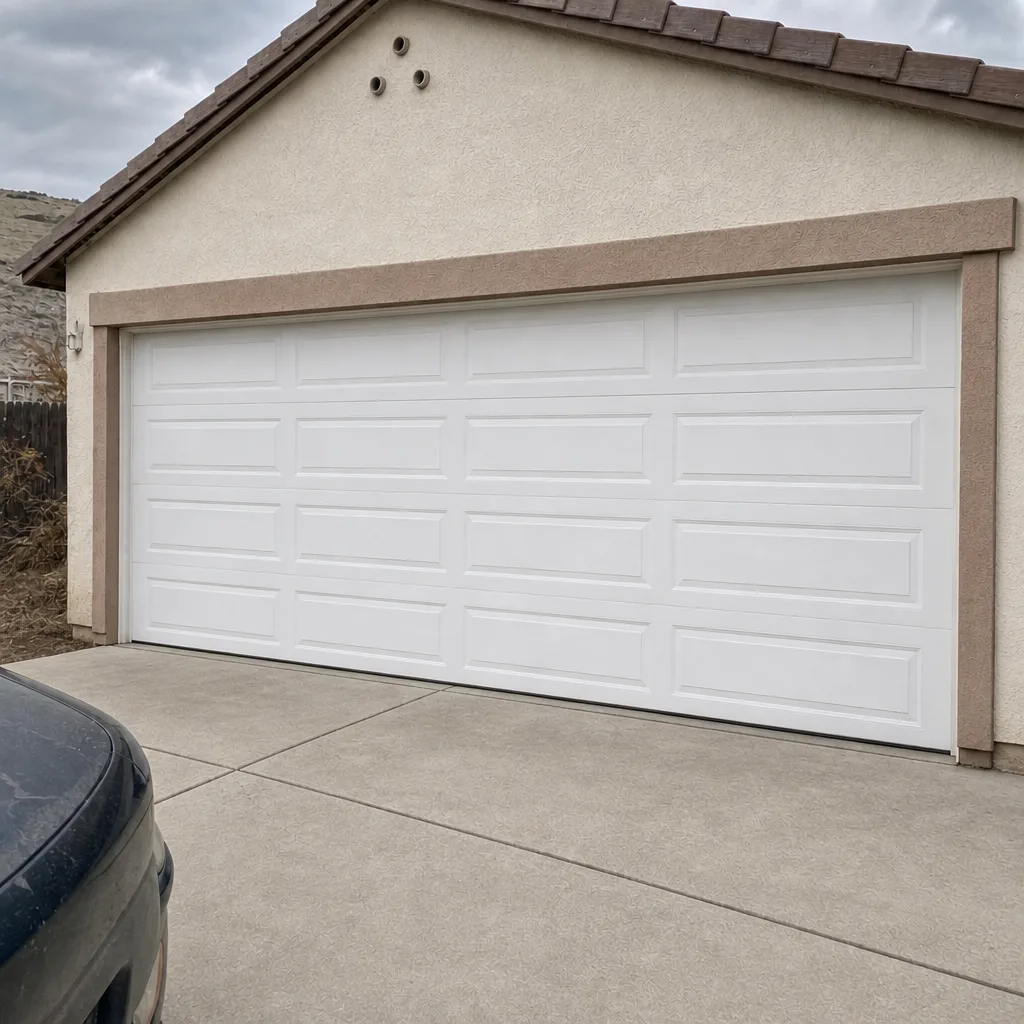
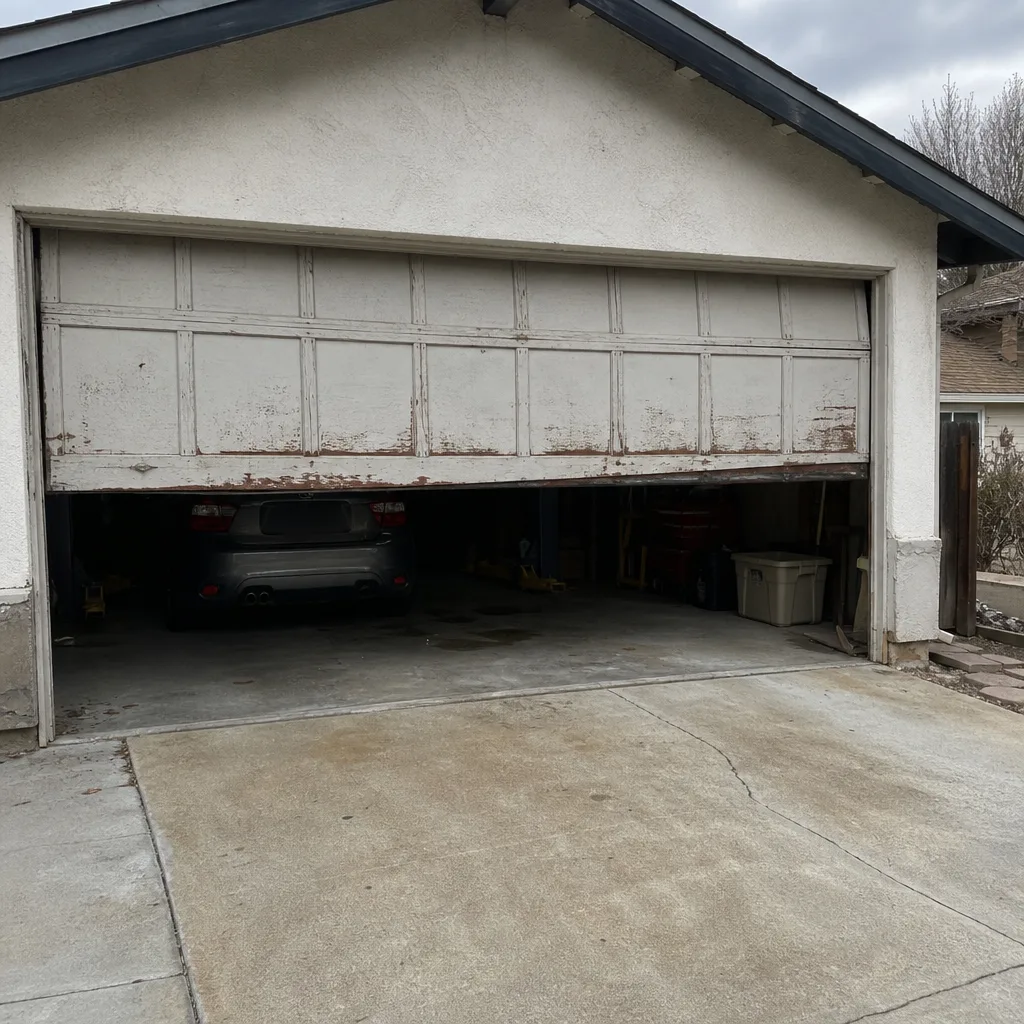
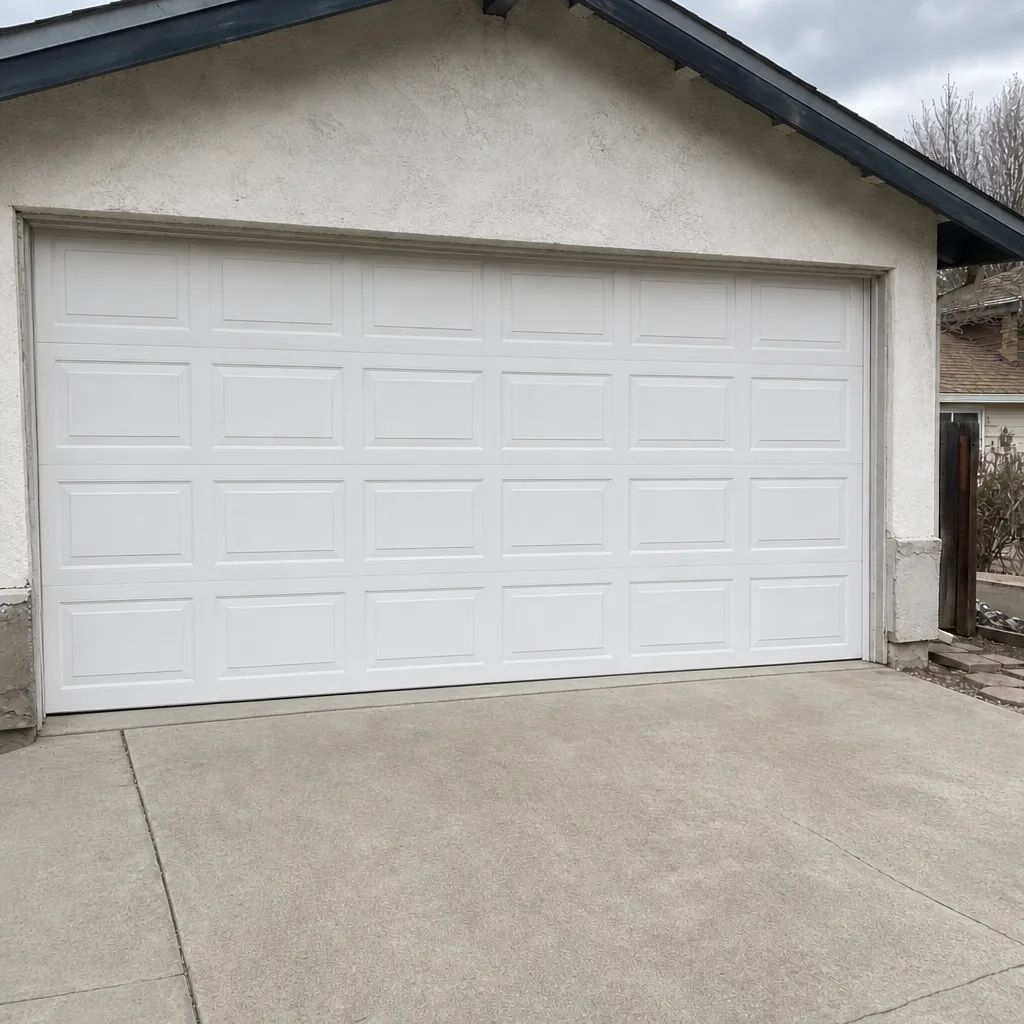
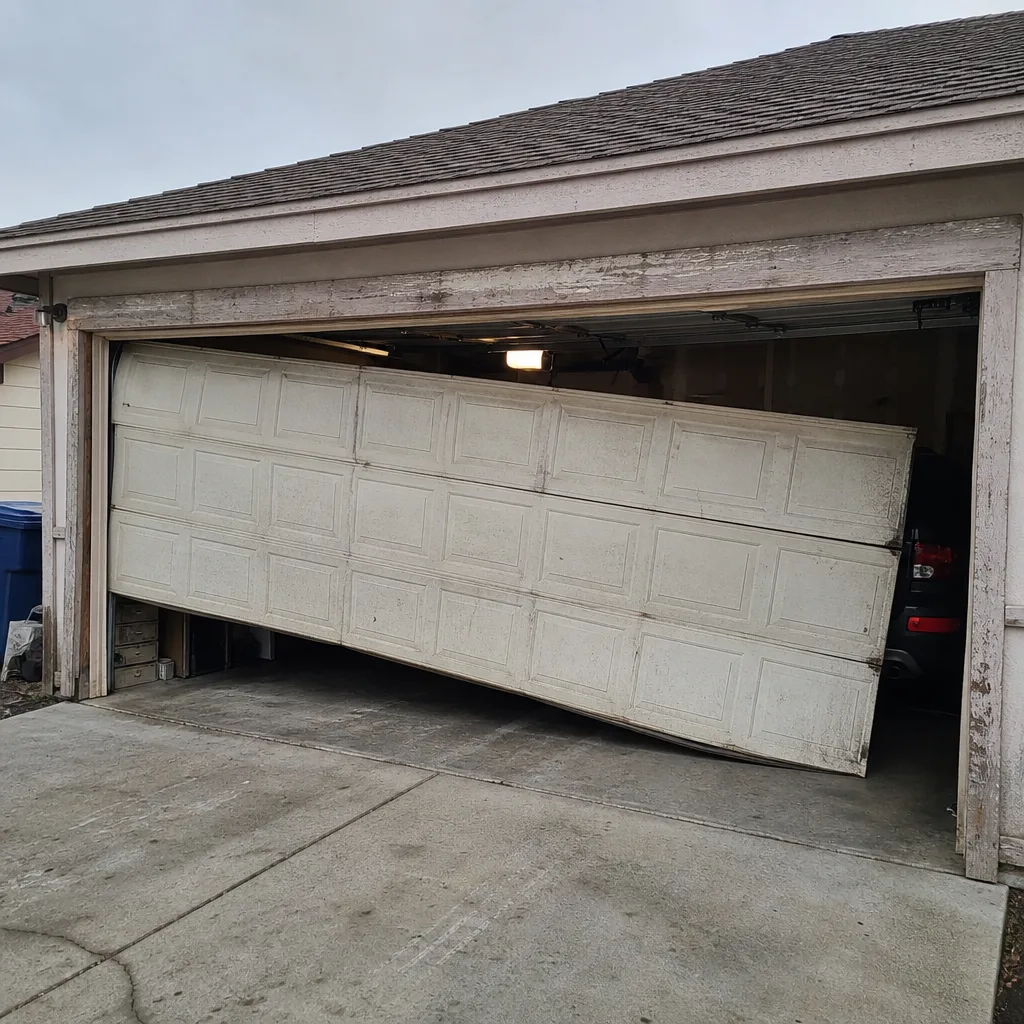
See the difference
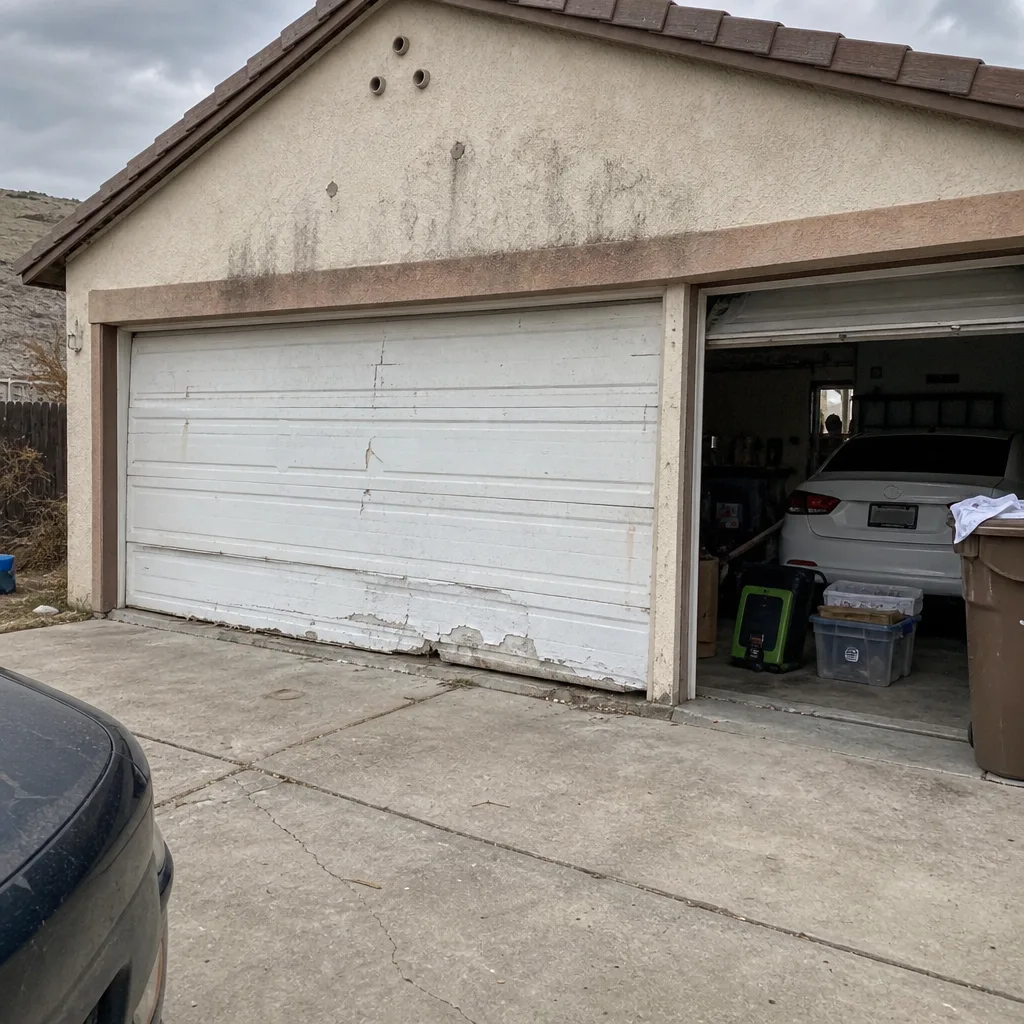 Before
 After
 Before
 After
 Before
 After
When to Call a Professional
Some garage door issues are a step-ladder job and a can of lubricant. Others are dangerous or easily made worse. Call a professional for: any spring adjustment or replacement, visible cable fraying, the door binding or refusing to move in one direction, the opener’s safety reverse failing, a track that’s bent or has fully left the wall, or any noise or behavior that’s new and unexplained.
The general principle is that if the task involves the torsion spring system, the cables, or the track alignment, it’s not a homeowner-safe job. Those components carry serious stored energy. A door is 200 pounds riding on two springs – one mistake and you’re looking at an injury or a much bigger repair than the one you started. Get a trained professional on it.
Otto’s Garage Door Mesquite offers free estimates in Mesquite – call (844) 320-6569. We’ll tell you straight whether it’s a repair, a maintenance item, or something you can safely wait on. Every job is backed by our 90-Day Done Right Promise in writing, and our technicians have up to 22 years of experience with the brands you’ve actually got on your door: Raynor, LiftMaster, Chamberlain, and Genie among them.
Frequently Asked Questions
Twice a year is the right cadence here – once in spring before the heat hits, and once in fall before the cold snap. The heat in Mesquite dries out lubricant much faster than in cooler climates, so a once-a-year schedule that works in the Midwest usually isn’t enough here. Use a silicone-based or lithium garage door lubricant on the hinges and rollers, not WD-40.
Basic rubber seals last three to five years in direct sun; vinyl or TPE seals last five to eight; brush-style seals last seven to ten if they’re UV-stabilized. South- and west-facing doors get the shortest life. Check the seal by hand once in spring and once in fall – the hands catch brittleness the eyes miss. If you’re not sure how much life is left, call (844) 320-6569 for an honest answer.
Both. Slight movement – less than a quarter-inch, no binding – is normal and harmless. Real problems are visible bends, the door catching at a specific point, rollers popping out of the track, or gaps that grow over a single season. If you’re not sure which category you’re looking at, a free second opinion on any written estimate is worth the phone call. Call (844) 320-6569.
You can, but it’s easier to do wrong than most homeowners expect. Seals have to seat correctly around the door panel or they create a new gap that’s worse than the old one. If you’re confident with the specific profile on your door, go for it. If not, this is a cheap fix done right versus an annoying one done twice. Free estimates are available – call (844) 320-6569.
Lubricating the moving parts before summer hits. Spring lubrication is the task that prevents the most downstream problems – failing rollers, strained openers, grinding tracks. It’s fifteen minutes and it’s free if you do it yourself. If you skip it, you’re often paying for a repair by July or August.
Yes, if you’re in a spot that gets regular wind from the open land east of town. Sand and dust loading in the track grooves is more aggressive in those spots, so track cleaning every two to three weeks during the dry season is worth doing instead of just once a month. Roller bearings wear faster with more dust, so check them for grinding more often. Call (844) 320-6569 if you want a second opinion on your specific door’s wear pattern.
The Bottom Line
Mesquite garage door care is heat-and-dust care, not winterization. Spring lubrication, summer track clearing, fall seal inspection, and winter fast checks cover 80% of what your door needs. The rest is knowing which jobs to hand off – anything involving the torsion springs, cables, or track alignment belongs with a trained professional. Our technicians have up to 22 years of experience, we’re locally owned and owner-operated here in Mesquite, and we answer the phone around the clock because garage doors don’t fail on a schedule. Start with Otto’s Garage Door Mesquite home if you’re new to us, or skip straight to the repair page if you’ve already got a specific problem.
The 90-Day Done Right Promise is on every invoice, in writing. If it’s not right, one call brings us back – and yes, we mean a call to the owner’s phone, not a customer service line. Active offers include $40 Off Any Repair Over $200, a Free Second Opinion on any written estimate, no trip charge inside our county, and a standing Senior & Veteran 10% discount, always.
Contact Us
If your door needs a look before the next phase of Mesquite weather hits, call us. We’ll quote the job on the call, hold that price when we get there, and tell you straight whether it’s a real problem or a maintenance item. Call (844) 320-6569 for a free estimate.
Written by the team at Otto’s Garage Door Mesquite.